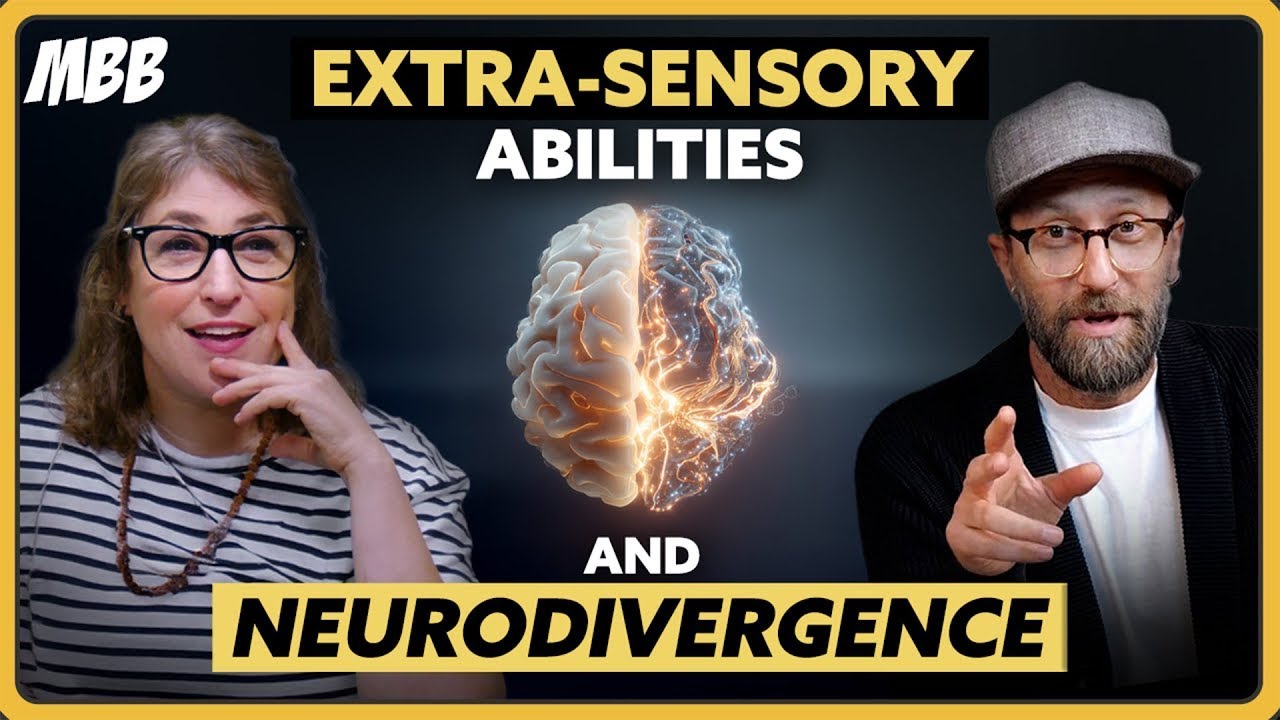
Neurodivergence affects an estimated 15–20% of the global population and encompasses a wide range of neurological differences—from autism and ADHD to dyslexia, sensory processing disorder, OCD, bipolar disorder, Down syndrome, and even social anxiety. This episode of Mayim Bialik’s Breakdown explores what it means to be neurodivergent, the risks of self-diagnosis through social media quizzes, the real strengths and challenges involved, and how understanding your unique brain wiring can unlock potential rather than signal deficiency.
The Neurodivergence Umbrella Is Vast—and Often Imprecise
The term “neurodivergent” functions as a broad umbrella covering many distinct conditions, including:
Williams syndrome, Prader-Willi syndrome, Down syndrome
Intellectual disabilities
Mental health conditions like bipolar disorder and OCD
Because the category is so wide—grouping someone with Down syndrome alongside someone with dyslexia—it lacks clinical specificity. A label like “neurodivergent” alone doesn’t guide treatment or support; identifying the specific condition does.
There’s significant overlap between these conditions (e.g., someone might have autism + ADHD + OCD), making diagnosis complex. Social media trends amplify certain labels (autism has 14.5 million hashtags vs. 200,000 for Tourette’s), which doesn’t reflect actual prevalence but does shape public perception.
Self-Diagnosis and Social Media: Validation vs. Over-Pathologizing
Online quizzes promising to identify neurodivergence are popular—and often unreliable. Mayim took one that suggested she likely has Tourette’s, despite not meeting clinical criteria when assessed properly.
A 20-question quiz used in the episode asks about traits like:
Social overwhelm
Intense focus on niche interests
Discomfort with eye contact
Routine dependence
Sensory sensitivities
Literal thinking
Emotional exhaustion after socializing
Scoring high only matters if those traits cause functional impairment in work, relationships, or daily life. If not, they may simply reflect personality or a well-suited environment—not a disorder.
A recent study warns that social media acts as an incubator for psychopathology: teens exposed to symptom content during key developmental windows are more likely to develop those very symptoms. Flattened, decontextualized content invites over-identification.
Casual use of terms like “I’m so OCD” trivializes clinical conditions. Being neat or particular isn’t the same as having obsessive-compulsive disorder.
Masking: The Hidden Labor of Fitting In
Many neurodivergent people engage in “masking”—pretending to understand, suppressing reactions, or mimicking neurotypical behavior to avoid judgment.
Examples include:
Enduring loud chewing (misophonia) without reacting
Creating symmetry through touch or eating in sets of three (Mayim’s private ritual)
Forcing eye contact despite discomfort
Masking is exhausting and often invisible. Relief comes in spaces where masking isn’t required—like schools designed for neurodivergent learners, where Mayim first felt permission to say, “I don’t understand the assignment.”
Strengths and Superpowers of Neurodivergent Brains
Neurodivergence isn’t just about deficits—it often comes with heightened abilities:
Pattern recognition: Noticing subtle changes (e.g., a fresh haircut others miss), sensing shifts in energy or mood, detecting inconsistencies in language or behavior.
Deep focus: Prolonged, intense concentration on topics of interest (hyperfocus), common in ADHD and autism.
Creative and nonlinear thinking: Imagining what doesn’t yet exist—many innovators (Einstein, Dickinson, Warhol, Gates) are believed to have been neurodivergent.
Empathic sensitivity: Some neurodivergent individuals report feeling others’ emotions or “sensing energy,” possibly due to brains that prioritize non-standard perceptual pathways.
These traits have driven cultural, scientific, and artistic progress. As Eric Weinstein notes, the kids struggling at the edges of classrooms often become the ones solving problems others can’t see.
The Brain Science: Connectivity Over Structure
Neurodivergent brains aren’t broken—they’re wired differently. It’s less about which regions are active and more about how regions connect.
Increased cross-talk between brain areas can enable:
Multithreaded conversations that jump topics but reveal hidden connections
Enhanced intuition or spiritual experiences
Greater openness to altered states (e.g., meditation, psychedelics)
Environment shapes expression: stress, sleep, diet (sugar, artificial additives), and emotional state can worsen symptoms—even if they don’t cause the underlying condition.
Practical Strategies for Thriving
For Jonathan:
Leaned into his strength in auditory learning.
Reframed differences as advantages, not disabilities.
Chose collaborative work over solitary writing to match his interpersonal wiring.
For Mayim:
Practiced acceptance—moving from self-criticism (“What’s wrong with me?”) to understanding.
Prioritized safety—through nature, faith, creativity, and sleep—as a foundation for stability.
Sought joy intentionally, reducing the sense of constant struggle.
General advice:
Identify where you need help (e.g., form-filling, focus) and seek support—not to “fix” yourself, but to function better.
Supplements, caffeine, medication, or therapy may help manage symptoms without erasing identity.
You’re not broken. Support exists to help you live fully, not to make you “normal.”
Final Thought
Neurodivergence reflects natural human variation. The goal isn’t to eliminate differences but to understand them, reduce unnecessary suffering, and harness unique strengths. Whether you’re neurodivergent or in relationship with someone who is, empathy, specificity, and self-awareness are key to turning potential into power.