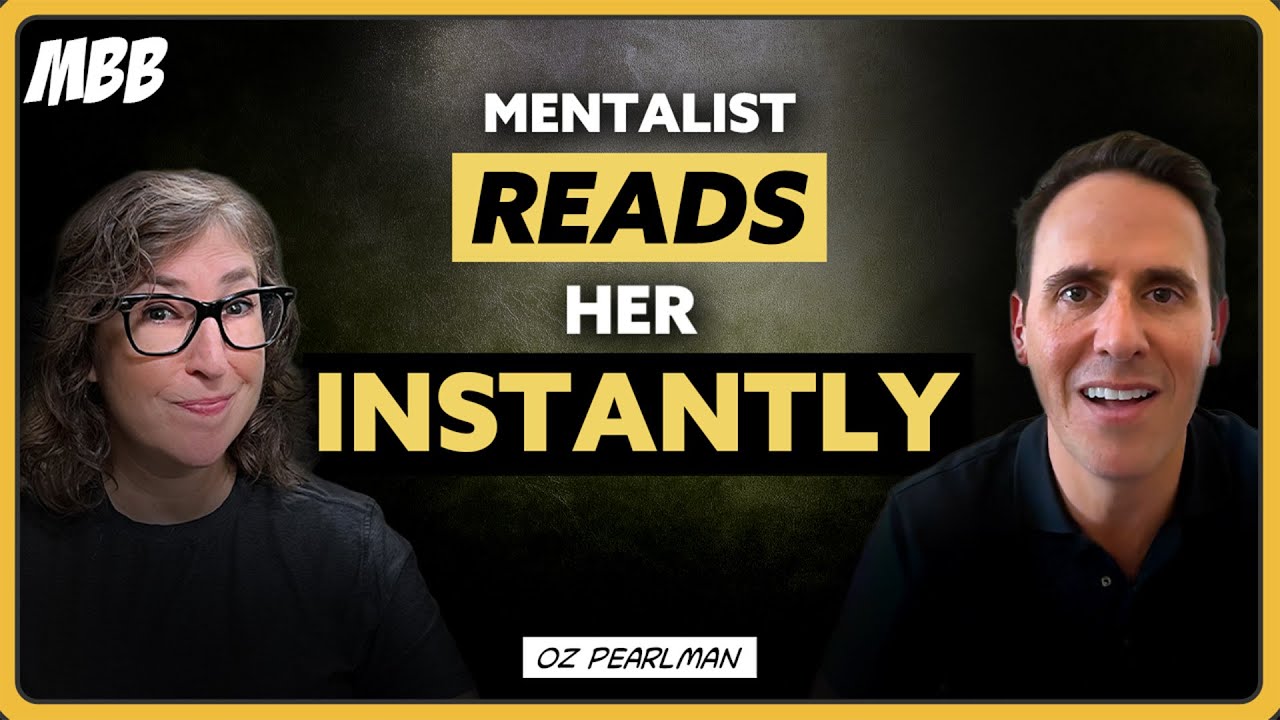
Oz Pearlman, known as “Oz the Mentalist,” is a world-renowned mentalist and entertainer whose performances—guessing names, PIN codes, and personal details of celebrities like Snoop Dogg and Joe Rogan—have led many to believe he possesses psychic abilities. He insists he does not. Instead, his craft is built on decades of studying human psychology, body language, misdirection, and influence. His book Read Your Mind: Transformative Success Habits from the World’s Greatest Mentalist distills these skills into practical life strategies anyone can learn, focusing on confidence, memory, authentic connection, and fear elimination.
What Mentalism Actually Is
Mentalism is a form of magic centered on the mind, relying on reading people, misdirecting attention, deceiving perception, and influencing behavior—not supernatural powers.
Oz emphasizes that his abilities are learned skills, not innate gifts, developed over 30 years starting from age 13 when he became obsessed with magic after seeing a magician on a cruise ship.
He began working as a strolling magician in restaurants at age 14, which he describes as a “master class in human psychology” because it forced him to quickly overcome rejection and read strangers under pressure.
Core Principles Behind His Success
Make it about the other person: Whether performing or in business, Oz tailors his approach to what the audience or individual cares about. On CNBC, he performed mentalism tied to stocks and interest rates rather than generic tricks—this relevance is why he succeeded where others hadn’t.
The most interesting person is the most interested: People remember those who ask unexpected questions and make them feel seen. Generic small talk is forgettable; curiosity creates connection.
Power dynamics shape interactions: In sales, dating, or parenting, whoever needs something less holds more power. Oz flips this by making others want his presence—e.g., telling restaurant diners, “It’s your lucky night,” so they feel privileged, not pitched to.
Practical Techniques for Reading and Influencing People
Control first impressions: Approach at an angle (not face-to-face) to reduce tension. Use time constraints (“I only have a minute”) to lower resistance. Avoid yes/no questions that let people shut you down.
Ask unanswerable-positive questions: Instead of “Want to see magic?” say “Did you hear what’s going on? It’s your lucky night.” This frames the interaction as exclusive and exciting, making “no” feel like missing out.
Read micro-reactions, not fixed tells: There is no universal sign of lying. Instead, establish someone’s baseline behavior when truthful (cadence, detail level, pauses), then detect deviations. Lying often speeds up speech or adds unnecessary details—but varies by person.
Use strategic vulnerability: Oz opens his shows by saying, “I don’t read minds—I’m not psychic.” This disarms skepticism and builds trust, making the audience more receptive to being amazed.
Memory, Focus, and How Stories Are Shaped
Attention dictates memory: In a card trick where a signed card sticks to the ceiling, Oz realized that if he didn’t look up when throwing the deck, audiences wouldn’t remember the throw—making the trick seem miraculous. What you emphasize, others remember; what you downplay, they forget.
Memory is reconstructive, not recording: Eyewitness testimony is unreliable because stress hormones distort recall. Post-event questioning can implant false memories—this is how false confessions happen.
You can shape how others retell your story: At peak amazement, Oz retells the trick’s narrative, omitting key mechanical details. Later, audiences repeat his version, unknowingly amplifying the mystery.
Instinct, Intuition, and Self-Trust
First instincts are usually correct: Oz argues that children have sharp instincts (e.g., sensing dishonesty), but adults second-guess themselves due to social conditioning and overthinking. Most regrets come from ignoring initial gut feelings, not following them.
Instinct is honed through iteration: Choosing the right audience member in a crowd of thousands isn’t formulaic—it’s pattern recognition built over years. He reads subtle cues (eye movement, smile timing, gaze aversion) to predict emotional responsiveness.
Charitable interpretation reduces conflict: Assuming others’ rudeness stems from external stress (“Maybe their kid is sick”) prevents personalization and preserves your own emotional energy—a tactic Oz used as a teen to stay positive between restaurant tables.
Detecting Lies and Understanding Deception
Polygraphs work by comparison, not absolutes: They measure deviations from a person’s truthful baseline, not universal signs of lying. Similarly, you can only spot lies by knowing someone’s normal behavior.
Cold reading ≠ psychic ability: Psychics use feedback loops—watching for leans (interest) vs. leans back (boredom)—to refine guesses. Oz uses the same technique but rejects exploiting grief or belief for profit.
Pathological liars distort their own reality: Chronic liars may genuinely believe their fabrications, making them unreliable narrators even to themselves—a form of self-gaslighting that complicates detection.
Applying Mentalist Skills Beyond Performance
In relationships: Timing matters. Don’t ask for a raise when your boss is stressed. Frame requests around their needs. Give grace (“I bet you’ve had a lot going on”) to avoid escalating misunderstandings.
In sales and teaching: Everyone is in sales—teachers sell attention, parents sell homework compliance. Success comes from identifying the other person’s pain point and aligning your message with their values.
In self-presentation: Analyze yourself as others see you. Are you approachable? Do you create tension or ease? Small shifts in body language and phrasing dramatically alter how people respond.
The Ethics and Limits of Influence
Oz distinguishes entertainment from manipulation: His stagecraft relies on willing participation. In real life, people resist being guided—so his “powers” don’t translate to casinos or coercion.
Remote vs. in-person dynamics: Performing over Zoom limits access to full-body cues. Close-up magic (like pickpocketing watches) requires physical proximity and misdirection impossible through a screen.
Humility in skill: Oz acknowledges natural limits—just as he’ll never play Carnegie Hall as a violinist, not everyone will reach his level. But core habits (observation, empathy, timing) are learnable and universally valuable.
Final Reflection from Mayim and Jonathan
Mayim figured out how Oz guessed her first crush’s name (Tacy) during the live demonstration—not through eye movements, but another subtle cue she chose not to reveal, respecting the craft.
They reflect that mentalism highlights how much we sense beneath conscious processing: intuition, sensitivity to micro-signals, and shared reality construction are ancient human tools, now refined into art and strategy.
The episode underscores a central theme: you reveal more than you think, and you perceive more than you realize—the key is learning to trust and refine that hidden awareness.