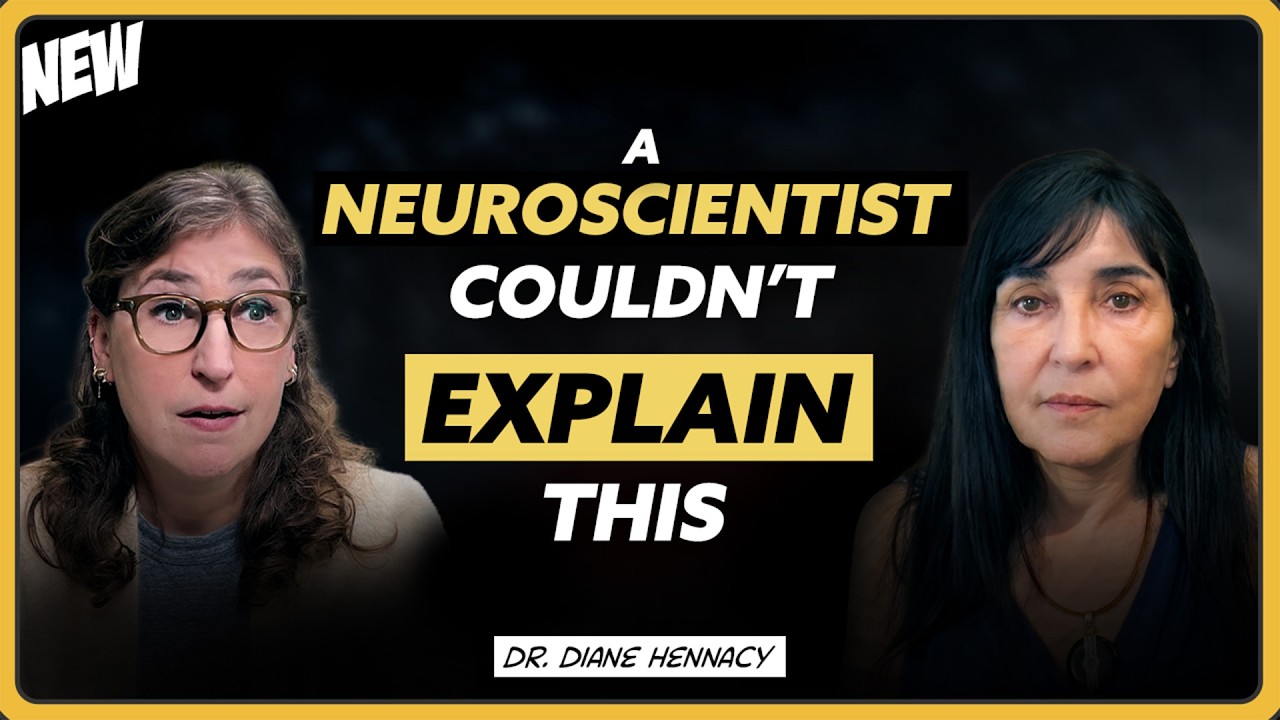
Dr. Diane Hennessy, a neuropsychiatrist and consciousness researcher, has documented telepathic abilities in non-speaking autistic savants with 97% accuracy in controlled experiments, challenging conventional neuroscience and suggesting human consciousness operates through shared synchrony rather than isolated brain processing.
From Neuroscience to Savant Research
Hennessy’s path combined rigorous scientific training with openness to anomalous phenomena.
Trained as a neuroscientist before neuroscience was a formal major; residency at Johns Hopkins in neuropsychiatry (1986).
Early theoretical interest: savant abilities might reveal the brain’s capacity for quantum computation, influenced by family background in physics and AI.
Met Oliver Sacks; studied behavioral neurology to link brain function to cognition and emotion non-invasively.
Initially skeptical of telepathy; viewed psychic experiences as cultural or hallucinatory until a pivotal clinical encounter.
The Pivotal Psychic Encounter (1989)
A patient at Harvard Medical School demonstrated precise, verifiable precognition and telepathy, shifting Hennessy’s framework.
Patient admitted for suspected heart attack; claimed to be psychic, saw ghosts, described a white aura above Hennessy’s head.
Correctly identified Hennessy’s husband as a biochemist applying for postdocs at Hopkins and UCSD; predicted he would get his preferred choice (Hopkins) but they would end up in San Diego.
Named specific future cities for Hennessy; predicted Hennessy would leave psychiatry to write books.
Every prediction proved accurate (“batted a thousand”); Hennessy, trained in statistics, recognized the probability was infinitesimal.
Ethical dilemma: patient was rational, not psychotic; Hennessy documented cultural context, avoided forced medication, patient stayed voluntarily and left after normal tests.
Hennessy hypothesized this might be a savant skill — a latent human capacity expressed without filters.
Field Observation Methodology
Hennessy studies savants in natural settings, prioritizing relationship and safety over laboratory control.
Describes herself as “Jane Goodall for autism”: spends time with children, builds trust, observes in home/school environments.
Autistic children have high anxiety, OCD, sensory dysregulation; performance depends on feeling safe with a synchronized partner.
Critics demand Faraday cages and double-blind labs; Hennessy argues the relational field is the enabling condition, not a confound.
Uses multiple cameras, timestamps, randomized stimuli (random.org numbers, nonsense words, flash cards); witnesses include Darold Treffert (savant syndrome expert) and other scientists who confirmed the phenomenon.
Current retrospective video analysis with researchers at University of Oregon and DOPS (Division of Perceptual Studies) shows robust data; publication strategy avoids the term “telepathy” due to gatekeeping.
Quantifiable Telepathy Experiments
Non-speaking autistic individuals demonstrate 95–97% accuracy identifying hidden information held by a partner.
Haley: independently typed on a talker (iPad with voice output); therapist behind her, out of sight, picked random cards and asked “What am I thinking?” — Haley typed exact content.
Visual barrier introduced: Haley regressed to letterboard (earlier, familiar mode), but still achieved 97% accuracy over six hours with two different therapists.
Akheel (featured in The Telepathy Tapes): typed on keyboard while mother thought random numbers, words, sentences.
Other cases: at least a dozen children tested; some write with pen unaided; one boy’s telepathic partner is his adoptive father (no biological link).
Accuracy far exceeds chance; consistency across partners, settings, and stimulus types.
Physics, Nonlocality, and Shared Consciousness
Hennessy grounds the phenomenon in established physics: quantum nonlocality, entanglement, and higher dimensions.
Entangled particles remain a single system regardless of distance; no signal travels between them.
String theory posits 11 dimensions; adding just one dimension could explain nonlocal information transfer in consciousness.
Mainstream physics accepts nonlocality for particles but resists it for human cognition — a double standard.
Brain as navigator of consciousness (like iPhone accessing cloud), not generator; consciousness is a field the brain interfaces with.
Synchrony and the Interconnected Whole
Telepathy emerges from neural and interpersonal synchrony — a natural, evolutionarily conserved process.
Primates and mammals synchronize to form coherent systems; human social bonding relies on this.
Monkey experiments: two monkeys with tied arms controlled a robotic arm via motor cortex electrodes; each controlled a different dimension; they succeeded only by entering synchrony, not explicit coordination.
Human brain uses synchrony to integrate modules; interpersonal synchrony extends this to a group intelligence greater than individual parts.
Modern individualism and chaos disrupt this; reclaiming synchrony could unlock collective problem-solving.
The therapist-child pair achieves a shared waveform; information transfers because they are momentarily one system.
Filter Theory: Brain as Gatekeeper, Not Creator
Savant and psychic abilities appear when inhibitory filters are reduced, revealing latent perception.
Sensory gating (thalamus, frontal lobes) normally excludes most information to prioritize survival-relevant input.
Autistic individuals have impaired filtering: sensory overload (tags on clothes, poor sleep), but also access to broader information bandwidth.
Acquired savant syndrome (Jason Padgett — fractal vision after head trauma; lightning-strike composer; frontotemporal dementia artists) shows filters can be disrupted by injury, revealing specific skills.
Psychedelics (psilocybin, ayahuasca) act on 5-HT2A receptors in thalamus and frontal cortex — the same gating system — producing synesthesia, time blindness, boundary dissolution, and telepathy reports.
Hennessy hypothesizes gut microbiome dysbiosis in autism produces endogenous psychedelics (e.g., bufotenin, more potent than DMT) via altered tryptophan metabolism, chronically reducing filters.
Gut Microbiome and Psychiatry
Hennessy’s new institute aims to revolutionize psychiatry by treating gut-brain axis as root cause.
Modern diet, antibiotics, chemicals, C-sections, reduced microbial diversity (indigenous populations have 10–15x more species) cause dysbiosis and leaky gut.
Restricted diets in autism worsen microbiome; neurotransmitter production (serotonin, etc.) shifts toward neuroactive compounds with psychedelic properties.
Proposed study: RNA sequencing of stool, host genetics (neurotransmitter metabolism), metabolites, and behavioral correlation — a systems approach replacing symptom-based diagnosis.
Some children improve dramatically with aggressive gut healing (diet, probiotics, fecal transplants), gaining independent lives; comorbidities, not neurodivergence itself, are the target.
Dreams, Precognition, and Right-Hemisphere Dominance
Dreaming sleep naturally shifts brain dominance to the right hemisphere (intuitive, pattern-based) and reduces frontal lobe activity — the same profile seen in savants and psychic states.
Left hemisphere (language, logic) quiets; right hemisphere (gestalt, visual-spatial) dominates; frontal lobes (expectation, filtering) dampen.
Children report psychic abilities more; some outgrow them as left-hemisphere dominance consolidates.
Savants show reversed waking dominance: right-hemisphere strengths (perfect pitch, pattern recognition, visual thinking) with left-hemisphere deficits (language).
Precognitive dreams: recurrent or emotionally potent dreams often rehearse future events (e.g., chemist who dreamed of lab accident and acted correctly when it occurred).
Practice in dreams builds real-world response capacity; dream journaling and personal symbol decoding are learnable skills.
Evolutionary Context: Cognitive Diversity as Adaptation
Rising autism prevalence (1 in 10,000 → 1 in 30) reflects environmental pressure shifting human cognitive style.
Verbal, linear, left-hemisphere thinking dominated historically; now text-based communication strips context and inflection, increasing miscommunication.
Language enables spin, self-deception, and manipulation; right-hemisphere gestalt processing is more accurate and efficient.
Environmental toxins, EMFs, ultrasound, C-sections, dietary changes, microbiome disruption alter gene expression and neurodevelopment.
Autistic individuals represent a shift toward holistic, perceptual, pattern-based cognition — closer to pre-literate human consciousness.
“We have been talked out of” innate telepathic/intuitive abilities during plastic developmental windows; education suppresses them.
Telepathy as Infant Language Acquisition
Telepathy is universal in infancy; it is how children acquire language without explicit instruction.
Infants “download” language through shared consciousness and synchrony with caregivers — pairing meaning directly with sound, bypassing grammar rules.
Modern parenting (picture books, explicit labeling) replaces this natural osmotic process.
The ability goes underground due to social pressure, not loss; it remains latent in all humans.
Implications for AI, Education, and Human Potential
AI handles linear, language-based processing; humans must cultivate higher consciousness — intuition, holistic thinking, synchrony.
AI output quality depends on user’s question quality; sophisticated consciousness yields better AI collaboration.
Education should restore play, arts, nature, and self-directed discovery; let AI do memorization and rule-following.
Non-speaking savants want to contribute to science; their insights have already aided researchers.
Goal: address medical comorbidities (pain, gut issues, sensory overload) without eliminating neurodivergent gifts.
Personal Catalysts: Near-Death Experiences
Two formative NDEs shaped Hennessy’s worldview and scientific courage.
Age 13: drowned in canoe accident; life review, peaceful acceptance, rescued by bystander.
Age 20s: hit by car while crossing street; severe concussion, hours unconscious; awoke with inexplicable belief in God despite atheist upbringing — traced to a conversation the night before where a classmate challenged her to wish for faith.
Post-NDE: studied Eastern traditions (Buddhism, Vedanta); found convergence with early quantum physicists (Bohr, Schrödinger, Heisenberg) who met with mystics and described reality identically — matching autistic savants’ descriptions.
The Telepathy Tapes and Cultural Impact
The Telepathy Tapes podcast brought Hennessy’s work to millions; validated countless people who felt pathologized for psychic/spiritual experiences.
Not just autistic individuals: neurodivergent people, “hippies,” religious experiencers — all silenced by psychiatric or religious dogma.
Hennessy focused on autistic savants because “extraordinary claims require extraordinary evidence” — they provide the most rigorous, reproducible proof.
The phenomenon is widespread; savants are simply the clearest window into a universal human capacity.
Closing Synthesis
Autistic savants are a gift to humanity: they reveal suppressed innate abilities, alternative information processing, and scientific insights — while suffering treatable medical comorbidities.
The rise in autism reflects environmental damage and an evolutionary opening; the two need not be coupled.
Humanity’s task: heal the biology, reclaim the consciousness, and synchronize — because we are not separate, but one interconnected system.