-
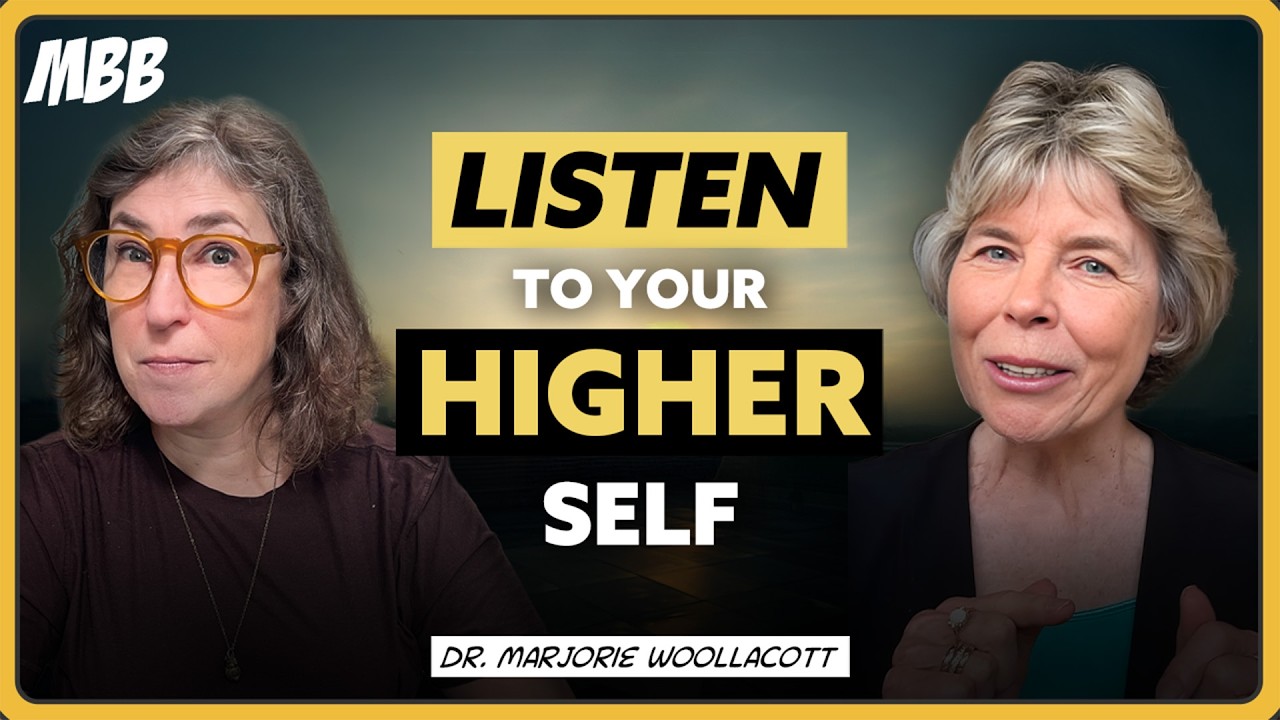
Dr. Marjorie Walcott is a neuroscientist at the University of Oregon who began her career as a committed materialist and atheist, but a profound personal experience during a meditation retreat fundamentally changed her understanding of consciousness, reality, and the limits of the five-sense worldview. She now works to bridge rigorous neuroscience with the study of spiritual experiences, psi phenomena, and non-local consciousness, arguing that the brain does not produce consciousness but rather filters a more fundamental, infinite awareness.
-
Her awakening experience: During a meditation retreat early in her career, a swami touched her forehead and she felt what she describes as a “mini lightning bolt” of electric current travel from the point between her eyes to her heart, where it opened into an overwhelming sensation of love and homecoming. She was not on any drugs, had no prior spiritual practice, and was a self-described skeptical atheist neuroscientist. The experience was so powerful that she began meditating spontaneously the next morning and never stopped, though she kept it secret from her scientific colleagues for years to protect her credibility.
-
The core shift in her worldview: She moved from believing that only objective, material reality exists to understanding that consciousness is fundamental and that our beliefs actively shape our reality. She now sees the five senses as a limiting belief system that keeps us feeling separate, and argues that practices like meditation can quiet the brain’s filtering mechanisms, allowing access to a wider, interconnected awareness.
-
She frames the brain as a filter, not a generator of consciousness. Drawing on research and theory, she suggests the brain’s default mode network (responsible for egoic self-narrative) quiets during deep meditation, psychedelic experiences, and near-death experiences, which is when people report expanded awareness, telepathy, and connection beyond time and space. She argues that correlation between brain activity and experience does not prove the brain produces consciousness.
-
Terminal lucidity as a challenge to materialism: She points to cases of terminal lucidity—where people with severe Alzheimer’s or brain damage become suddenly lucid and communicative in their final hours—as evidence that consciousness cannot be fully explained by brain function, since the brain is documented to be severely impaired in these cases.
-
Near-death experiences (NDEs) and non-local consciousness: She discusses cases like Dr. Betina Payton, a physician and atheist who had a profound NDE during a surgical emergency, left her body, observed the operating room, and even guided doctors to insert a needle at her elbow when they couldn’t access her wrist. Payton later corroborated with the medical team on a Boston TV show. Walcott emphasizes that NDEs often occur when the brain should have no functional activity, and that experiencers frequently return with lasting psi abilities like telepathy and precognition.
-
Psi phenomena she considers real and worth studying:
- Telepathy: Especially common in emotionally charged situations and dream states. She notes that lab studies fail to replicate it because they lack emotional intensity.
- Remote viewing: She describes her own experience at a Dean Radin workshop in New Zealand where, after letting go of intellectual effort, her hand spontaneously drew an image that matched the next slide in the presentation.
- Telekinesis: She references Julia Mossbridge’s research showing that consciousness can influence physical objects, and raises the theoretical possibility that consciousness could alter neuronal receptor channels through micro-telekinetic effects.
- Synchronicity: She believes meaningful coincidences increase when a person is open and less controlling, and shares personal examples including meeting her future husband immediately after her meditation teacher asked if she was getting married.
-
Populations with more fluid access to expanded consciousness:
- People who have had NDEs (often return with unwanted psi abilities)
- Deep meditators
- Non-speaking autistic individuals (some of whom, once able to communicate, demonstrate telepathic abilities)
- People born with naturally open “filters” (some mediums and intuitives)
- Those who have spontaneous awakenings, often triggered by dissatisfaction with material success
-
Practical guidance for people seeking expanded awareness:
- Quiet the mind through meditation, mantra repetition, or breath focus—different tools work for different people
- Reduce distractions: excessive screen time, shopping, social overstimulation, and caffeine all make it harder to access stillness
- Spend time around people who have had awakenings, as there appears to be a transmission effect
- Honestly assess whether your lifestyle supports inner quiet or constantly pulls you toward distraction
- Balance spiritual openness with practical groundedness—she warns against the extreme of abandoning all material responsibility in favor of “letting the universe provide”
-
Ethical considerations: She shares a story of a friend who, as a child, discovered he could place thoughts in other people’s minds but was warned by an inner voice not to use this ability to control others. She believes that as people develop a genuine sense of interconnection, they naturally lose the desire to use psi abilities for harmful purposes.
-
On mediumship and energy boundaries: She was initially afraid of mediumship due to concerns about negative entities, but after reviewing the research—including a study of nearly a thousand people who had mediumship experiences with deceased loved ones—she finds the evidence compelling. She also notes the importance of energetic boundaries in practices like Reiki, where practitioners are taught to create symbolic safety barriers and perform purification afterward to avoid absorbing negative energy from those they heal.
-
Her theoretical framework: She draws on Bernardo Kastrup’s analytic idealism, which posits that infinite, unbounded consciousness is fundamental, and that all individual points of consciousness, as well as all matter, arise within it. Time, space, and the five senses are belief systems that consciousness adopts to operate in the material realm. She adds a phenomenological dimension, arguing that subjective experience must be taken seriously alongside analytical philosophy.
-
Her mission: She wants people to know that it is possible to move beyond the limited five-sense worldview, that doing so reduces suffering and increases fulfillment, and that we can hold both objective scientific rigor and deep experiential openness simultaneously. She maintains her career as a rehabilitation neuroscientist (working on stroke, Parkinson’s, and cerebral palsy) while devoting her primary energy to understanding consciousness.
-
Practical applications discussed by the hosts:
- When passing an accident, silently wishing well-being to those involved
- Approaching people with unresolved conflicts in the non-physical realm first—sitting quietly, placing attention on them, and opening the possibility of communication without trying to control them
- Noticing when someone repeatedly comes to mind as a potential signal to reach out
- Using synchronicity as a guidepost for decision-making
- Actively questioning self-imposed limits (the “sponge” metaphor: we assign rigid uses to things based on inherited beliefs, and can choose to re-examine those assumptions)
-