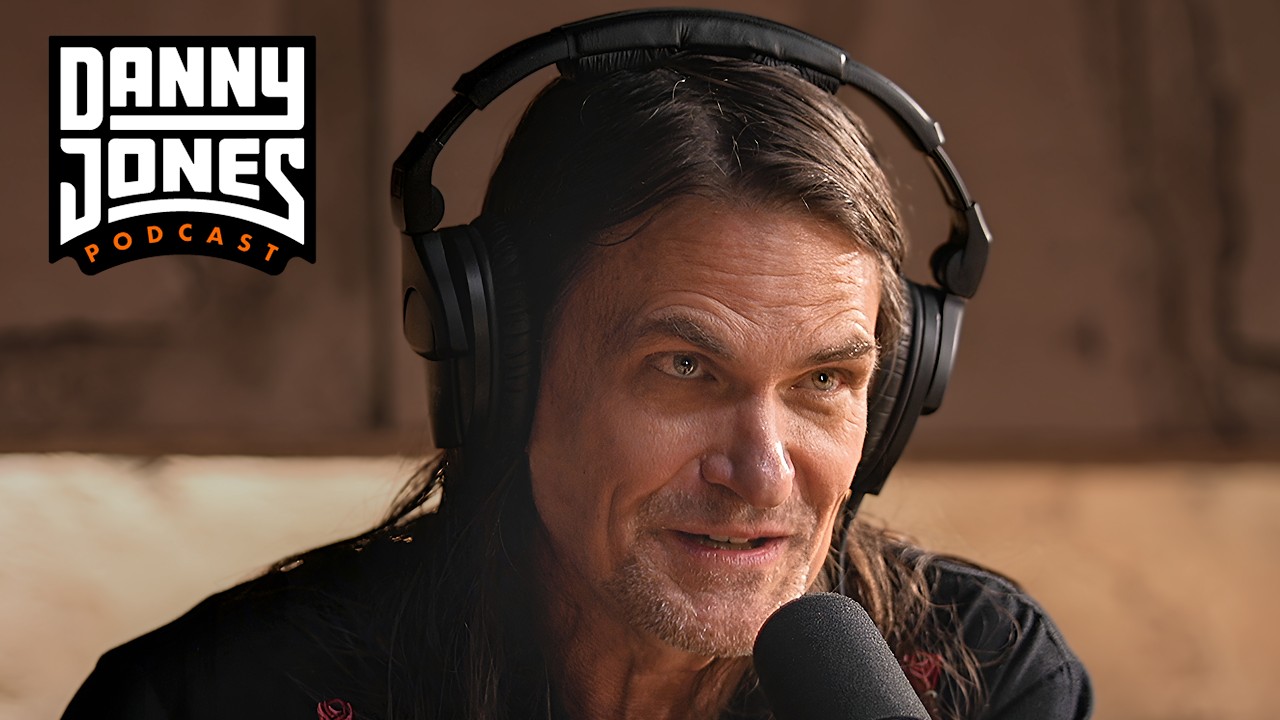
David Holthouse is a veteran investigative journalist and documentary filmmaker known for embedding himself in dangerous criminal subcultures — from cartels and neo-Nazis to meth addicts and underground weed growers — to tell stories that mainstream media can’t or won’t touch. Over a 30+ year career, he’s built a reputation as a modern Gonzo journalist who gets access by mirroring the people he covers, often at serious personal risk. This conversation ranges across his most notable projects, the evolving threat landscape of cartels and intelligence operations, and his current work investigating California’s energy dependence on Middle Eastern oil.
Operation Odessa and the Russian mob connection
Operation Odessa was a documentary directed by Holthouse’s longtime collaborator Tiller Russell about a real arms-for-cocaine deal brokered in post-Soviet Miami. A Russian gangster named Ludvig “Tarzan” Finkelstein, Colombian trafficker Juan Almeida, and Cuban intelligence agent Tony Estes formed a trio that moved from shipping surplus Soviet military hardware to the Cali cartel, to brokering a heavy military transport helicopter, to ultimately being asked to procure a submarine.
The story illustrates the chaos of the post-Soviet era, where unpaid military officers were selling anything — including, in one sauna meeting, offering to sell a nuclear weapon. Tarzan asked Tony Estes if they should buy a nuke; Estes said no, they were there for a submarine.
Holthouse and Russell traveled to Moscow in 2014 to interview Tarzan, staying at the Four Seasons. They were warned by a DEA source to assume they were under constant surveillance by Chechen secret police — bearded, muscular men in ill-fitting suits who monitored Westerners in tourist hotels.
They thought they had three copies of their footage safely distributed, but discovered the hotel was holding two copies under orders from unknown authorities. They pulled the plug on the final day of interviews and fled Moscow with the single copy their line producer had, sweating through security but making it out.
While in Moscow, Tony Estes — then on the FBI’s Ten Most Wanted list — contacted them and told them to meet him in Johannesburg. Russell eventually convinced him to do an on-camera interview by appealing to his regret about being absent from his children’s lives as a fugitive.
Cartel technology, narco-influencers, and the Mennonite cartel
Cartels have access to extraordinarily sophisticated surveillance and intelligence technology sourced from Israel, Europe, and Africa, along with ex-intelligence operatives from Mossad, CIA, and Special Forces on their payroll. Holthouse notes they have “unlimited funding” and actively recruit these people both for training and for access to hardware.
A recent shift in cartel culture: the old guard wanted to die old and rich, but the current generation is younger, often addicted to cocaine or meth, and motivated by social media clout — “narco influencers” posting TikTok videos of golden AK-47s, Lamborghinis, and shoe collections for millions of views.
Holthouse’s most recent series, Narco Mennonites (2026, on Canadian streamer Crave), investigates a Mennonite drug cartel based in Cuauhtémoc, Chihuahua, Mexico. Mennonites migrated from Canada to Mexico about a hundred years ago and settled near the “Golden Triangle” poppy and marijuana region.
In the 1980s, the Guadalajara cartel used Mennonites to smuggle weed into the US because they had special visas allowing transit between Canada and the US, and border guards would wave them through — often with furniture packed full of marijuana.
When high-quality Canadian “BC bud” undercut their outdoor product in the 1990s, the Mennonites pivoted to cocaine and eventually to money laundering. Today, nearly every business in Cuauhtémoc is Mennonite-owned, and they serve as the financial backbone for cartel operations while carefully navigating shifting cartel alliances.
Holthouse says he was more frightened for his safety in Chihuahua City than he was in Kyiv, Ukraine, where he was reporting on intelligence agency corruption. Chihuahua City is supposedly neutral territory where cartel leaders’ kids attend private school, but the atmosphere of palpable fear was unlike anything he experienced in a war zone.
The Last Narc and the murder of DEA agent Kiki Camarena
The Last Narc (2020) is Holthouse and Russell’s series about the 1985 kidnapping, torture, and murder of DEA agent Enrique “Kiki” Camarena in Mexico. Holthouse believes Camarena was killed because he stumbled onto the CIA’s cocaine trafficking pipeline from Colombia to Mexico to the US, with proceeds funding the Contras in Central America.
Camarena was focused on drug lord Rafael Caro Quintero and had been surveilling an airfield where he saw planes he thought were cartel-operated but were actually CIA. He didn’t know what he’d found.
Holthouse obtained what he believes are the actual transcripts of Camarena’s torture sessions. The questions being asked of Camarena were about things he clearly didn’t know, suggesting the interrogators were after information about the CIA operation, not cartel business.
Holthouse does not think the CIA as an institution ordered the killing, but believes CIA operative Felix Rodriguez was involved in the abduction and interrogation. Rodriguez was a paramilitary asset — not a career CIA officer — who had a long history with the agency, including directing operations that led to Che Guevara’s capture in Bolivia.
Holthouse interviewed Rodriguez in Miami at a Cuban anti-communist museum surrounded by Bay of Pigs veterans. Rodriguez denied being present, claiming he was in Miami that day and producing an alibi involving a phone call with the White House and a meeting about wounded Contra fighters. However, multiple on-the-record cartel enforcers — former police officers working for the Guadalajara cartel — consistently placed Rodriguez at the mansion where Camarena was held over several days of torture.
Holthouse has complicated feelings about Rodriguez: he believes he was likely there, but also received a heartfelt personal letter from Rodriguez expressing empathy about Holthouse’s childhood sexual assault, which he genuinely appreciated.
Sasquatch murders in the Emerald Triangle
Sasquatch Murder (2021, Hulu) began with a memory Holthouse had from 1993, when he was in his early twenties visiting a weed plantation in California’s Emerald Triangle (Mendocino and Humboldt counties). Two meth-addled men burst in claiming three people had just been killed by a Sasquatch — bodies mutilated, Bigfoot footprints everywhere.
Years later, Holthouse partnered with filmmaker Josh Rofe and started making calls to people in the Emerald Triangle weed trade, trying to trace the story. After many dead ends, they found people who confirmed: three men were killed, and the rumor was that a Sasquatch did it. The legend had grown to include a whole tribe of Sasquatch angry at encroaching dope farms, hurling rocks and bluff-charging growers.
They ultimately tracked down the real killer — a biker-connected figure whose name they bleeped throughout the film. The motive involved a version of events where the three victims had abused someone the killer considered his “daughter” (in biker slang, a young woman under one’s protection, not necessarily biological).
Holthouse’s scariest moment filming was going alone to a remote dope farm on Spyro Rock to interview two heroin-addicted women with pit bulls, wearing a hidden camera and a key-fob camera. One woman casually described how she and biker friends had murdered Black men from Los Angeles who came up to buy drugs, buried them on her property, and laughed about how one of her pit bulls dug up a victim’s shoe after he’d pissed himself before being executed. The footage couldn’t be used because she dropped an N-bomb that Hulu wouldn’t air even bleeped.
The Emerald Triangle remains a lawless zone where police won’t go without SWAT-level force, trimmigrants disappear every year, and bodies are buried in redwood soil that decomposes them rapidly. Holthouse describes it as “outlaw country” existing in plain sight alongside state parks where families camp.
Chinese cartels and other emerging threats
Holthouse notes that Chinese organized crime groups are running large indoor marijuana growing operations on Native American reservations in New Mexico and Arizona’s Four Corners region — a story he hasn’t been able to fully investigate yet.
Beyond weed, Chinese organized crime is involved in offshore fishing operations in Mexico, buying lithium mines in Mexico (using cartels as security), bringing fentanyl into Mexico, and purchasing US real estate.
Gonzo journalism methodology
Holthouse considers himself a Gonzo journalist in the tradition of Hunter S. Thompson, even though his medium has shifted from print to film. The key is “mirroring” — adopting the slang, dress, mannerisms, and mindset of the subculture you’re embedding with to gain trust and access.
He describes the psychological toll of this work: each embedding extracts a cost, his risk tolerance is lower now than in his twenties, and the darkness of these worlds is hard to sustain. He doesn’t do drugs during embed stories (though he has used crystal meth in his life), relying instead on staying observant and building genuine relationships.
His early career included a 72-hour embed with affluent meth users in Denver who used “Shaboo” — high-purity crystal meth. Holthouse stayed awake using Modafinil, and his notebook from the experience starts lucid and devolves into gibberish by hour 60+, which he deliberately mirrored in the story’s structure.
He also went undercover as a neo-Nazi skinhead in Denver in the early 2000s, getting a crash course from an Anti-Defamation League investigator on how to dress, talk, and act. He was eventually suspected by a Klansman at an event in Arizona but talked his way out by getting in the man’s face and insulting the Klan. After the story published, he revealed himself to the organizers — who weren’t angry, just impressed he had the nerve, and warned him he would have been “curb stomped” if they’d known.
His takeaway from covering white supremacist groups: many are “lost souls” seeking belonging and identity, seduced by the intense community and sense of power. Some leaders are true believers; others are opportunists who saw a path to status and followers they couldn’t achieve elsewhere.
Scientology and the Hare Krishna
Holthouse lives near Scientology’s headquarters and describes the organization as uniquely successful at evading consequences — they obtained tax-exempt status by flooding the IRS with lawsuits until the agency caved. He speculates they survived by deliberately avoiding the sexual abuse scandals that destroyed other cults, though their membership is now dwindling. He can spot Scientologists by a robotic look in their eyes, even when they’re dressed normally.
His Peacock series Krishnas investigated organized crime within the Hare Krishna movement. While he found most Krishna devotees to be genuinely happy and well-adjusted, the movement had a dark side after founder Prabhupada died and appointed young disciples in their twenties as gurus. One, Keith Ham (Kirtanananda), ran a commune in West Virginia called New Vrindaban where child abuse was rampant and a Vietnam vet enforcer carried out killings on his orders. Another guru became known as the “Machine Gun Swami” for running guns. The movement has since confronted its abuse problems more directly than the Catholic Church did.
The Phoenix Lights and UFOs
Holthouse personally witnessed the Phoenix Lights on March 13, 1997, one of the most widely documented UFO sightings in history. He saw a massive V-shaped craft at low altitude over Tempe, moving slowly and noiselessly for several minutes. The craft’s lights went out and it appeared to morph into an even larger shape, visible as a dark silhouette blocking background sky.
He initially believed it was likely a military stealth airship with a cloaking device that malfunctioned, but after the Iraq and Afghanistan wars revealed no such technology, he became less certain. He rejects the official explanations (flares, balloons) as inconsistent with what he saw.
He’s reluctant to talk publicly about it because of the cultural stigma — the government’s Project Blue Book deliberately ridiculed UFO witnesses — but feels compelled because he knows what he saw.
He sees a connection between the Epstein files and UFO disclosures: both involve evidence that’s been hidden in plain sight, both suggest layers of power operating above elected governments, and both are being released into an information environment so saturated that people can’t distinguish signal from noise.
California’s energy dependence on Middle Eastern oil
Holthouse is currently producing a documentary with director AJ Carter investigating California’s energy policy. Despite being seen as a green leader moving toward “net zero,” California still burns as much oil as it ever has — it has simply shut down domestic production and now imports 40% of its oil from Iraq.
This creates national security vulnerabilities (dependence on Middle Eastern oil shipped on tankers burning dirty fuel) and environmental contradictions. The recent war in Iran immediately caused Southern California gas prices to hit $8.20/gallon, vindicating a USC professor who had been ridiculed by Governor Newsom for predicting exactly this scenario.
Holthouse’s research has convinced him that the idea of simply switching from fossil fuels to renewables is a fantasy with current technology. Solar and wind can only address electricity (about 30% of energy use), not transportation or manufacturing. Fossil fuels still account for about 86% of global energy consumption — slightly more than in the 1970s. He now believes nuclear power must be part of any realistic energy strategy.
The documentary is independently financed to maintain editorial control and is expected to be released later in 2026 or early 2027.