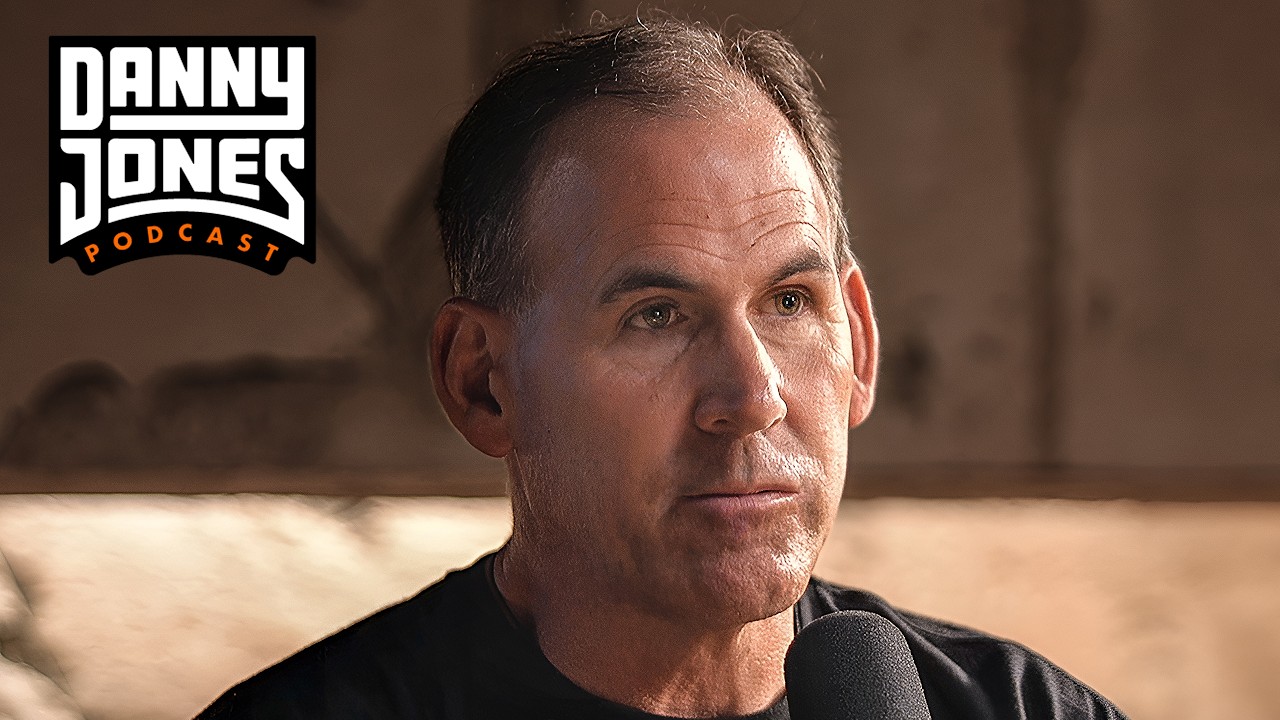
John Nores, a retired California game warden, spent nearly 30 years fighting Mexican drug cartels and Chinese criminal organizations that set up illegal marijuana grow operations in California’s forests and beyond. What started as a traditional wildlife enforcement career turned into a quasi-military campaign against heavily armed cartel growers who were poisoning America’s public lands, diverting endangered waterways, and trafficking fentanyl precursors in collaboration with Chinese state-connected actors. The problem has gotten worse over time, not better, and has now spread to nearly every state in the country.
How a game warden stumbled into the cartel war
Nores grew up in Silicon Valley in a hunting and fishing family, went to San Jose State for engineering, but met a game warden by chance on a winter backpacking trip in Henry Coe State Park and immediately changed his major to criminal justice.
California game wardens are full peace officers trained to the same standard as state police, plus two additional months of wildlife forensics and exotic weapons identification.
He spent his first three years in Southern California doing traditional enforcement: poaching cases, water pollution, illegal hunting, trespassing.
After 9/11, Nores and a handful of other wardens proactively sought out Tier 1 SWAT and sniper training from Bay Area sheriff’s departments on their own time and dime, anticipating a domestic tactical need. This training would prove critical.
The first cartel grow site: 2004
In 2004, a biologist friend called Nores to report that a creek he was studying for endangered steelhead trout and red-legged frogs had gone bone dry. Someone had dammed it and diverted the water through a single garden hose into black poly pipe, the telltale signature of a cartel grow.
Nores and the biologist hiked in with an AR-15 and found two Sinaloa cartel growers in Vietnam-era OD green battle dress uniforms moving tactically through the creek bed, one with a pistol and trimmers, the other with an AK derivative covering the rear. They were silent, used hand signals, and checked their six o’clock, just like trained tactical operators.
The wardens held concealed about 50 yards away and let them pass. Nores later coordinated a 30-person multi-agency raid that eradicated about 7,000 plants, but the task force had no interest in environmental cleanup or restoring the creek flow. Nores decided that had to change.
The first shooting: August 5, 2005
A year later, Nores led a small team of game wardens and sheriff’s deputies into the Los Gatos foothills, a stone’s throw from Silicon Valley, to hit another cartel grow.
A young warden named Mojo was hit by a steel-core AK round that passed through both legs, causing massive tissue damage and nearly killing him before the team could get a helicopter extraction three hours later. He survived by millimeters from a femoral artery hit.
Nores and sheriff’s deputies exchanged gunfire with the cartel gunmen. It was the first time any law enforcement officer in the U.S. had been shot by a cartel-connected marijuana grower.
The mountain held roughly 32,000 plants across five grow sites with about 20 armed defenders. It became national news and forced California’s leadership to acknowledge the scale of the problem.
The environmental and chemical warfare
Cartels divert entire creeks and drain reservoirs to feed outdoor grows, killing endangered species like steelhead trout and amphibians. A single steelhead trout has been valued at $35,000–$40,000 in environmental loss terms.
They use EPA-banned nerve agent insecticides, primarily carbofuran and methaphos, which they call “el diablo” (the devil). A single 12-ounce container is meant to be diluted with 6,000 gallons of water for legitimate agriculture, but cartels concentrate it and spray it directly on plants and around perimeters.
Black bears that lick even a drop froth at the mouth and die from central nervous system seizure within 15 minutes.
Officers who unknowingly walked through contaminated grows later suffered blindness, respiratory failure, and nerve damage for days or weeks.
Cartels set Vietnam-era punji pits on hiking trails near grow sites, coating sharpened sticks with these same nerve agents as anti-personnel weapons. One was discovered by a K9 named Phoebe before a sniper stepped into it.
Nores’s team eventually had to wear Tyvek hazmat suits and N95 respirators to raid contaminated sites, and even then often had to back out and wait for chemicals to dissipate because the suits caused dangerous overheating.
The Sinaloa cartel’s “Mexico North” strategy
Nores sat in on a DEA interview with a Sinaloa cartel plaza boss who oversaw roughly 50 grow sites across Northern California. The boss openly called California “Mexico North” and said he could move any grower across the border for $7,000 cash via vehicle, tunnel, or any means necessary.
Many of the growers were deportable felons with murder, rape, or narcotics charges in Mexico who were sent back into California within days of arrest.
The cartels had a sophisticated vetting system: growers proved themselves in Michoacán for years without getting caught by Mexican federales before being deployed to California.
They also engaged in human trafficking, forcing Mexican nationals to work in grows under threat of harm to their families.
How legalization made the problem worse
When California passed Proposition 64 in 2016, legalizing recreational cannabis, the legislature simultaneously reduced illegal growing from a felony to a misdemeanor, and for juveniles to an infraction roughly equivalent to a $400 seatbelt ticket.
A 14-year-old armed sicario guarding 40,000 plants with an AK faces a lesser penalty than the weapons charge alone.
Legal growers face 10–11 permits and $80,000–$200,000 in costs before selling a single plant, while cartel growers face virtually no deterrent.
Other states like Oklahoma, Maine, and Michigan copied California’s model, and cartels and Chinese criminal organizations have now moved into those states as well, in some cases outproducing California’s black market.
Nores had warned legislators before the vote that reducing penalties would be catastrophic. He was ignored.
China’s strategic entry into the black market
Starting around 2018, Chinese criminal organizations began appearing in remote Northern California counties like Siskiyou, partnering with rather than fighting the Mexican cartels.
The Chinese strategy is financial: black market cannabis cash is untraceable, can be laundered through Chinese banking institutions, and converted to help China move toward dominating the global currency standard by 2035, displacing the U.S. dollar.
In exchange, the Chinese supply Mexican cartels with fentanyl precursors at a 5% laundering fee instead of the normal 6%, creating a symbiotic financial relationship.
Chinese growers bring their own suite of heinous nerve agent poisons and antifungals, separate from the Mexican chemicals, and have been documented building decontamination rooms inside their grow houses where growers suit up in Tyvek and rebreathers before spraying.
Chinese-connected groups are buying large tracts of land in rural counties, displacing multi-generational ranching and farming families, and influencing local politics to operate with impunity.
The northern border is now the primary threat
With the southern border significantly more secure under recent enforcement, cartels have redirected trafficking to the U.S.-Canada border, which is roughly 5,000 miles of mostly wooded, mountainous, and virtually unprotected terrain.
Canada requires no background check for visitor visas, just payment. Fentanyl precursors from China are now being shipped to Canada, manufactured into pills in Canadian labs, and smuggled south through the northern border.
Nores lives 30 miles from the Canadian border in Lincoln County, Montana, and has documented fentanyl reaching even the smallest rural communities. Narcan is now freely available at every pharmacy in his town.
The Royal Canadian Mounted Police are not equipped to handle cartel-level threats, and U.S. Border Patrol is stretched thin. Nores has been filming a documentary series called Ironclad Change Agents with Andy Stumpf to expose the northern border vulnerability from the air, showing how the border is literally a two-track trail through Glacier National Park with no barrier.
The MET team and Nores’s legacy
After years of ad hoc operations, Nores was given approval in 2013 to form the Marijuana Enforcement Team (MET), a dedicated statewide tactical unit that didn’t split duties with regular patrol.
The team integrated Tier 1 tactical tracking, K9 units, military special forces-trained trauma medics (PJs), anticoagulant wound sealants like Celox, and Black Hawk helicopter extractions.
They went through four more officer-involved shootings after the 2005 incident, with several close calls, but refined their tactics and equipment each time.
Nores also pioneered a reclamation model: after eradicating grows, his team removed all trash, fertilizer, human waste, and water infrastructure, and restored creek flows. A Sinaloa boss confirmed in his DEA interview that reclamation was the single most effective deterrent against cartels returning to a site.
He spent years doing public outreach, showing photos of poisoned dead bears and their orphaned cubs to audiences ranging from legislators to high schoolers to legitimate cannabis growers, building unlikely coalitions across the political spectrum.
What needs to happen
Nores testified twice before Congress in 2024 and 2025, calling the cartel drug farm problem the number one national priority, above foreign military threats.
He advocates for nationwide regulated cannabis legalization with reasonable taxation and oversight (similar to tobacco and alcohol under the ATF) to undercut the black market, combined with serious felony deterrents for illegal grows.
He argues the northern border needs the same level of technology, personnel, and attention the southern border has received, and that cartels must be classified as foreign terrorist organizations to unlock military asset support.
His second book, Hidden War (second edition), documents the full scope of the campaign. A scripted project based on his experiences is in development, and the Ironclad Change Agents documentary series is in post-production.