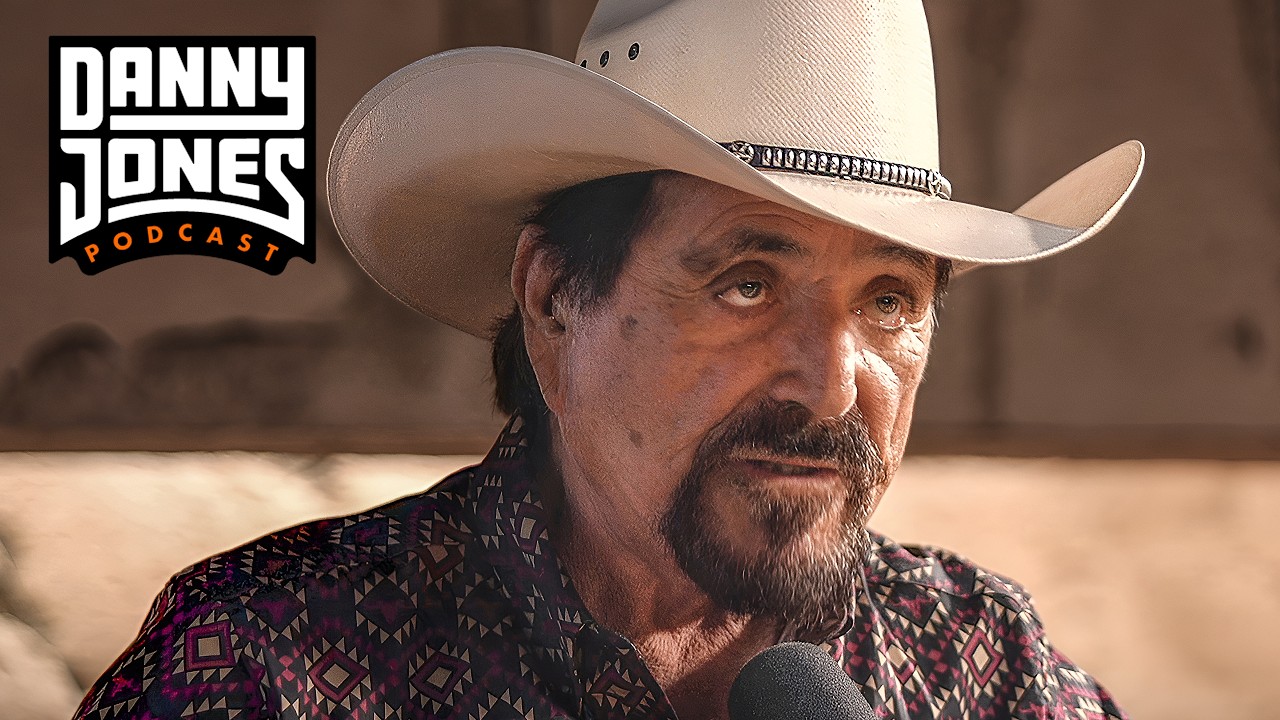
Hector Berrellez, a retired DEA special agent who supervised Operation Leyenda (the task force investigating the kidnapping, torture, and murder of DEA agent Enrique “Kiki” Camarena), reveals that the CIA partnered with the Guadalajara cartel in the 1980s to move weapons to Nicaraguan Contras using cartel infrastructure, then began trafficking cocaine into the U.S. to fund the unauthorized war, and that CIA operative Felix Rodriguez (alias Max Gomez) directly participated in Camarena’s interrogation and murder to protect the operation.
Hector Berrellez’s background and Operation Leyenda
Berrellez served 27 years in the DEA, working extensively in Mexico and Central America, and was one of the most highly decorated agents in the agency’s history.
He was appointed to supervise Operation Leyenda after being evacuated from Mexico when the Guadalajara cartel targeted him for assassination.
The DEA director, Jack Lawn, gave Berrellez a direct line to headquarters and authorized extraterritorial renditions, including the kidnapping of Dr. Alvarez Machain, the physician who injected drugs into Camarena during torture.
After the kidnapping, the Mexican government issued a 20-year arrest warrant for Berrellez, which the DEA used as leverage to silence him until it expired around 2013.
The Guadalajara cartel in the 1980s
The Guadalajara cartel, led by Ernesto Fonseca Carrillo, Miguel Ángel Félix Gallardo, and Rafael Caro Quintero, was the single dominant drug trafficking organization in Mexico at the time.
Fonseca Carrillo ran the cartel with an iron fist: no killing without permission, no assaults on civilians, and near-total corruption of government officials.
The cartel enslaved over 7,000 campesinos at Rancho Búfalo in Chihuahua, a massive marijuana plantation discovered after a worker escaped and reported it to the DEA in Hermosillo.
Camarena was blamed for the Rancho Búfalo seizure but had minimal involvement — he only lent his informant pilot, Alfredo Zavala, to photograph the fields from the air.
CIA’s secret deal with the cartel and Contra weapons pipeline
After Congress refused to fund the Contras, the CIA secretly relocated a weapons-smuggling operation from Mena, Arkansas to Guadalajara, using a front company called Machinery International under CIA pilot Terry Reed’s name.
Mexican Secretary of Government Manuel Bartlett Díaz brokered a meeting between CIA operatives (including Felix Rodriguez and Oliver North) and the Guadalajara cartel, agreeing that the cartel would use its secret airstrips and infrastructure to fly surplus Vietnam-era weapons to the Contras in El Salvador.
The CIA established a Contra training camp at Rancho La Víbora in Veracruz, owned by Caro Quintero, chosen for its long airstrip capable of handling U.S. military cargo planes.
As CIA operatives worked alongside cartel leaders, they discovered the immense profits from cocaine trafficking and began flying cocaine north into the U.S. using pilots like Barry Seal, delivering it to Contra-linked distributors Danilo Blandón and Edwin Mena in Los Angeles and San Francisco.
This operation flooded South Central LA with cheap crack cocaine, fueling the 1980s crack epidemic and arming the Bloods and Crips, who spread it nationwide.
Kiki Camarena’s discovery and murder
Camarena, stationed in Guadalajara, learned that cocaine was being flown into Rancho La Víbora and planned to open an investigation.
His boss, DEA Guadalajara chief John Gavin (whom Berrellez believes was on the CIA payroll), was allegedly involved in planning the kidnapping alongside Felix Rodriguez and Oliver North.
In February 1985, Camarena was abducted in front of the U.S. consulate, tortured for over 30 hours, and murdered.
The torture was recorded; Berrellez obtained five recordings with transcripts, but the CIA withheld the tape for one critical transcript.
On the tapes, Caro Quintero asks Camarena, “Why did you betray me? I sent you money,” and Camarena denies ever receiving money.
An argument between Fonseca Carrillo and Caro Quintero is captured: Fonseca wanted to save Camarena’s life, but Caro Quintero refused, saying “the orders are from further up” — meaning the Mexican government, Rodriguez, and Bartlett Díaz.
Flipping CIA agent Larry Harrison
Berrellez recruited a DFS (Mexican federal security) operative known as “Torre Blanca” — CIA agent Larry Harrison (real name George Marshall Davis, born in Pasadena, California).
Harrison initially refused to cooperate; Berrellez threatened to kidnap him as he had Dr. Machain. Three days later, Harrison called back and agreed to defect.
Harrison confirmed: “We killed him. We killed him because he was about to expose Rancho La Víbora where we’re training Contras and bringing in cocaine to support an unauthorized war.”
Harrison identified Felix Rodriguez as his CIA control agent and stated the DEA knew all of this.
Harrison also implicated Rodriguez in the 1984 La Penca bombing in Costa Rica that killed seven people including three journalists, and in facilitating the escape of CIA operative Luis Posada Carriles from a Venezuelan prison after the 1976 bombing of a Cuban airliner.
Felix Rodriguez (Max Gomez) and the evidence against him
Three independent witnesses at the torture site identified a Cuban interrogator named “Max Gomez” — later confirmed as Felix Rodriguez.
A high-level witness, head of Fonseca Carrillo’s security detail, confirmed Rodriguez was CIA, supplied weapons to the cartel, and bragged about his Vietnam Phoenix Program experience.
Rodriguez denies ever being in Guadalajara, claiming he was in Miami at the time, and says he received the name “Max Gomez” months after Camarena’s death.
Pilot Terry Reed, who worked under Rodriguez at Machinery International, wrote the book Compromised detailing how Rodriguez shipped containers of cocaine into the U.S. under the American seal to avoid customs inspection; Reed was later acquitted on what he claims were trumped-up charges.
Rodriguez also participated in the capture of Che Guevara in Bolivia but did not pull the trigger — he ordered a Bolivian soldier to shoot Guevara from the neck down to simulate combat death.
CIA infiltration of the DEA
The CIA placed operatives inside the DEA under DEA credentials in foreign assignments (Mexico, Bolivia, Colombia) to bypass country limits on CIA station personnel.
The CIA also recruited DEA agents as paid contractors, offering Berrellez $3,500/month to divulge his sources and operations; many agents accepted.
Compartmentalization meant most DEA agents were unaware of these operations; Berrellez reported directly to the DEA director and was sworn to secrecy.
DEA Director Jack Lawn, previously assigned to the CIA’s counterterrorism unit, has consistently denied Berrellez’s allegations and used reporter Elaine Shannon to discredit him.
The kidnapping of Dr. Alvarez Machain
On DEA Director Jack Lawn’s orders, Berrellez hired a Mexican commandante for $250,000 to kidnap Dr. Machain from his clinic in Guadalajara.
The commandante flew Machain to El Paso, threw him on the tarmac, and Berrellez arrested him.
Machain cooperated, confirming Fonseca Carrillo tried to save Camarena and Caro Quintero refused, slapping Fonseca and saying orders came from higher up.
The Mexican government issued a kidnapping warrant for Berrellez; the pilot who flew Machain was later beaten to death in Mexican custody.
Caro Quintero’s recent expulsion to the U.S.
Caro Quintero was rearrested in Mexico about 18 months ago and expelled (not extradited) to the U.S. along with 18 other cartel figures.
He is held in New York on Continuing Criminal Enterprise and RICO charges — neither carries the death penalty.
The capital murder warrant for Camarena’s killing remains outstanding in the Central District of California; Berrellez suspects the U.S. will avoid trying him there to prevent exposure of CIA involvement.
El Mayo Zambada was not kidnapped — he surrendered
Berrellez asserts Ismael “El Mayo” Zambada voluntarily surrendered in July 2024 at Santa Teresa, New Mexico, after coordinating with the DEA and CIA.
Evidence: 50+ agents waited for the plane; the pilot was released and later deported back to the U.S. without interrogation by Mexico; Zambada’s son and brother were already cooperating witnesses against El Chapo.
Zambada had a longstanding relationship with U.S. intelligence; he used the DEA to call his son Vicente from a detention cell and urge him to testify against El Chapo.
Mexican President Claudia Sheinbaum accused the U.S. of violating sovereignty; Ambassador Ken Salazar denied involvement — Berrellez says Salazar didn’t lie because it wasn’t a kidnapping.
Current cartel landscape in Mexico
Cartels are no longer just drug traffickers: they control human trafficking (charging $5,000–$20,000 per migrant), avocado and oil industries, lithium mining security for Chinese companies, and own U.S. marijuana dispensaries through front men for money laundering.
Cartels have acquired sophisticated military equipment from corrupt Ukrainian officials: drones, night vision, advanced weapons, and reportedly biological weapons.
They are better armed than the Mexican army; the army refuses to engage them directly.
Cartels have infiltrated U.S. law enforcement: multiple DEA, FBI, and CIA agents arrested in recent years for taking cartel money.
Incineration camps (extermination sites) have been discovered in Mexico — four uncovered so far, the latest near Guadalajara with evidence of 400+ people burned alive, including children; whole families executed for opposing cartels.
Violence is extreme: beheadings, face removal, heart extraction, and public displays of decapitated soldiers; cartel culture glorifies this on social media and in corridos.
China’s fentanyl war and U.S. corruption
Berrellez describes a “silent war” by the Chinese Communist Party: providing fentanyl precursors and synthesis training to Mexican cartels to inundate the U.S., killing over 100,000 Americans annually.
He argues the U.S. is more corrupt than Mexico: billions in tax dollars stolen through NGOs, fake contracts, and foreign aid diversion; virtually no high-level officials held accountable.
Both U.S. political parties are complicit; the system protects itself — Berrellez cites the DEA being ordered to return seized CIA cocaine and release pilots, while low-level dealers get 20-year sentences.
How to fix the cartel problem
Berrellez supports Trump’s approach: target the corrupt government officials who create, protect, and profit from cartels — governors, generals, presidents.
Arresting cartel bosses alone creates power vacuums; the structural corruption must be dismantled.
He advocates indicting and extraditing (or rendering) Mexican officials like Sinaloa Governor Rubén Rocha Moya, whom the U.S. has indicted but Sheinbaum refuses to extradite.
Education, rehabilitation, and reducing demand are essential; mass incarceration of addicts has failed.
Legalization alone is insufficient — cartels have diversified into every sector; the root is political corruption on both sides of the border.
Berrellez’s credibility and final statement
Berrellez has testified to these facts in federal court and before Congress multiple times; if false, he would face perjury charges.
He has no personal hatred for Rodriguez or others — he follows the evidence.
The Last Narc book and documentary (on Amazon Prime) document his case; he welcomes a confrontation with Felix Rodriguez and Terry Reed.