-
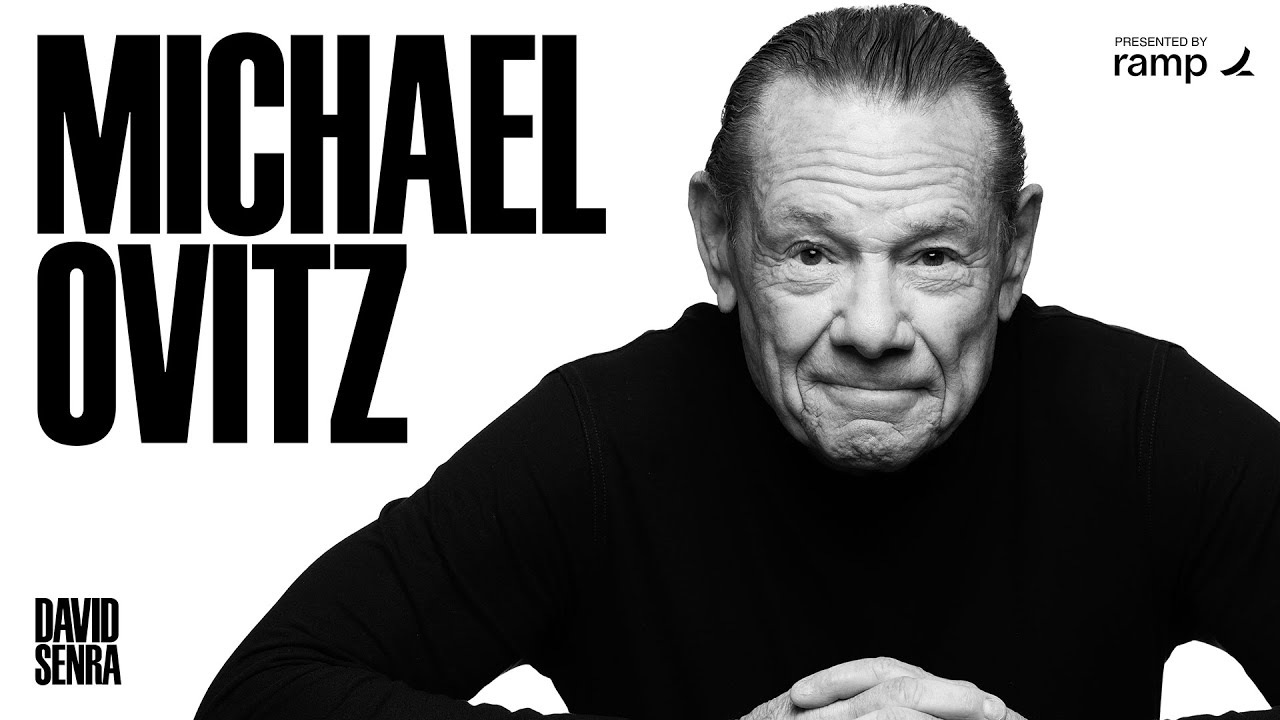
This episode is a deep conversation with Michael Ovitz, co‑founder of Creative Artists Agency (CAA), exploring his experiences with legendary figures (Marc Andreessen, Ben Horowitz, the Michelin brothers, David Rockefeller, Nobu, Wolfgang Puck), his philosophy on talent, partnership, relentless work ethic, and how those ideas shaped CAA’s rise to dominance in Hollywood and beyond.
-
Marc Andreessen’s “exam‑like” conversations
- Ovitz describes Andreessen as a mental multitasker with uncanny recall, making every dialogue feel like a high‑stakes test.
- Similar ultra‑rapid processing and memory are noted in other top innovators (Peter Thiel, Michael Creighton).
-
Adapting conversation style
- As an agent, Ovitz learned to “ratchet” discussions up or down depending on the audience (creatives, buyers, self‑help seekers).
- Successful leaders (e.g., Marc, Ben) gauge how deep to go and adjust tone, showing both intellectual superiority and humility.
-
Early cloud era at Loudcloud
- In 1999, Ovitz sat on the board of Marc Andreessen’s first company, Loudcloud, grappling with an almost undefined concept of “the cloud.”
- He admired Ben Horowitz’s blend of practical brilliance and emotional flexibility, noting their 35‑year friendship as a model of complementary skill sets.
-
Co‑founder dynamics
- Ovitz cites the Michelin brothers as the archetype: clear division of labor (product vs. sales) and a 45‑year partnership that built a century‑long tire empire.
- He estimates ~90 % of co‑founder teams eventually fracture, emphasizing the rarity of truly aligned visions and complementary temperaments.
-
Personal growth at CAA
- Ovitz ran intensive “six‑day weeks” traveling globally, using a 25‑hour joke clock to compress work.
- He prioritized surrounding himself with “A‑players” (Scorsese, De Niro, Crichton, Andreessen, Nobu founder), echoing Steve Jobs’ belief that a small elite team outperforms a larger mediocre one.
-
Rockefeller encounter
- While still in his early 40s, Ovitz received an unexpected call from David Rockefeller, leading to a board seat and a mentorship steeped in meticulous note‑taking (Rockefeller’s 3‑by‑5 index cards).
- The meeting highlighted the power of relentless follow‑up and personal integrity in high‑stakes networking.
-
Spotting talent (Nobu & Wolfgang Puck)
- Ovitz’s “machine‑learning‑like” brain scans 200 images daily, building a mental reference library that lets him instantly recognize extraordinary individuals.
- He leveraged early intuition to introduce Nobu to Robert De Niro, spawning the global Nobu empire, and similarly propelled Wolfgang Puck’s rise.
-
Knowledge as leverage
- At CAA, Ovitz instituted a shared bibliography and required agents to know film history (Capra, Lean, Hawks, etc.) so they could converse fluently with directors.
- He read broadly—automotive mags, women’s fashion, tech journals—to anticipate cultural trends and speak the language of any client.
-
Technology’s impact
- The arrival of personal computers transformed Ovitz’s research speed; he now spends hours nightly aggregating articles, images, and data across domains.
-
Integrity and follow‑up
- CAA’s early culture emphasized note‑taking, transparent answers (“I don’t know, I’ll call you back”), and relentless follow‑up, which built trust in a contract‑light environment.
- Example: returning a $3 million check from Coca‑Cola after clarifying the actual commercial cost ($30 k), reinforcing fair pricing.
-
Mentorship and binary relationships
- Ovitz views relationships as either “friend” or “foe,” inspired by an Errol Flynn movie line, and strives to be the ultimate ally.
- He credits mentors like Herb Allen (who shredded a check to demonstrate integrity) and learns from their uncompromising ethics.
-
Failure is not an option
- Growing up in a low‑income Valley household, Ovitz internalized a binary survival mindset: either succeed spectacularly or not at all.
- This drove a relentless work schedule (20‑hour days, 300 calls) and a refusal to quit, even after achieving wealth.
-
Creative disruption
- Ovitz championed unconventional moves: selling Columbia to Sony, financing Universal, creating a 35‑spot Coca‑Cola campaign (versus the industry norm of six), and expanding CAA into advertising.
- He treated each business as a “transportation” problem—focus on moving people/goods, not on the specific product—mirroring Rockefeller’s self‑disruption.
-
Cultural immersion
- Collecting art, reading fashion magazines, and hosting museum‑level gatherings helped Ovitz and his agents speak the cultural language of directors and actors, deepening trust.
-
Perseverance and focus
- Ovitz attributes his longevity to obsessive focus, relentless curiosity, and a willingness to work “for the love of it” rather than for money.
- He stresses that every business shares the same fundamentals (momentum, focus, loyalty, monopoly), with only the details differing.
-
Legacy and mentorship today
- Now, Ovitz advises founders, emphasizing that failure is a badge of honor and that one must constantly “think out of the box” using a massive personal knowledge base.
- He continues to surround himself with younger, driven people to stay sharp and to pass on lessons learned from his own mistakes.
-
Tribute to Michael Crichton
- Ovitz recounts a lifelong friendship with Crichton, highlighting Crichton’s relentless curiosity, note‑taking habit, and ability to blend scientific depth with blockbuster storytelling.
- Crichton’s mantra—“there’s always another rodeo”—embodied the resilience Ovitz strives to emulate.