-
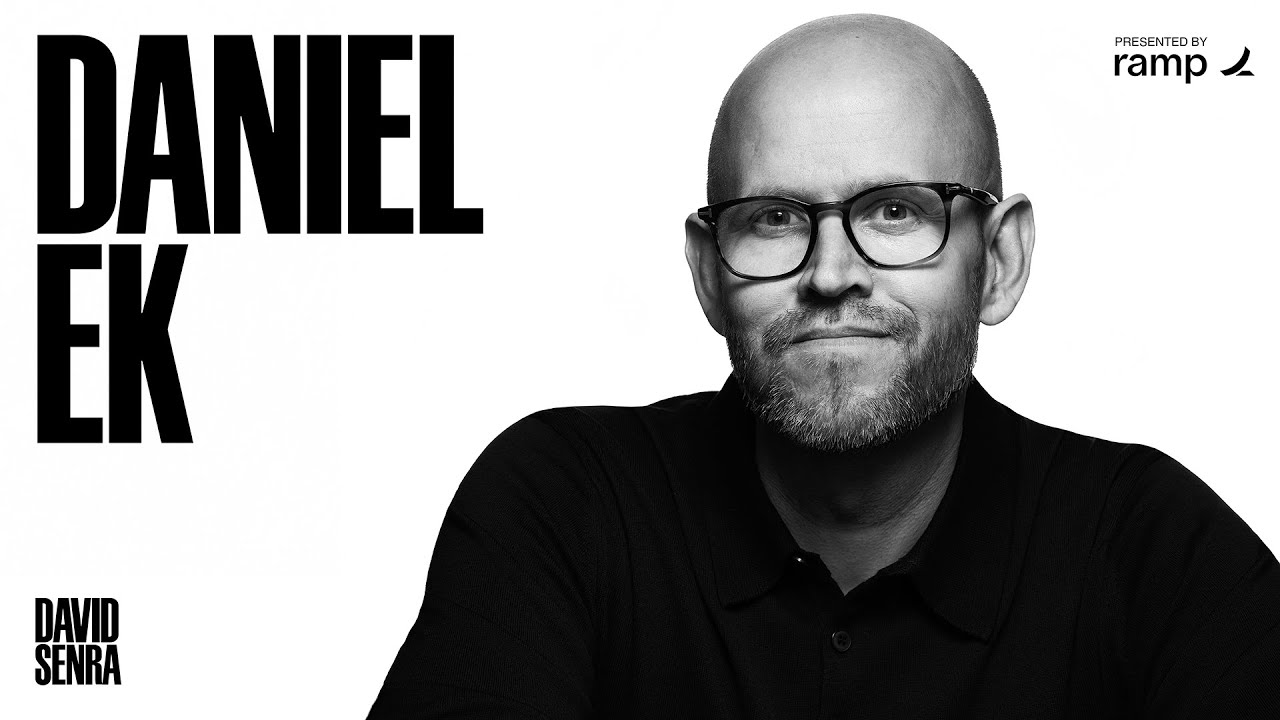
This conversation revisits a pivotal discussion from the previous year, exploring how Daniel Ek’s ideas—especially “optimizing for impact over happiness”—have reshaped the host’s approach to work, entrepreneurship, and life, illustrated through personal anecdotes (e.g., Dara Khosrowshahi’s Uber decision) and broader reflections on leadership, trust, and personal growth.
-
Optimizing for Impact Over Happiness
- Impact is viewed as a personal, long‑term metric; happiness is a trailing indicator that follows sustained impact.
- Dara’s choice to become Uber’s CEO was driven by the realization that a high‑impact role would eventually generate deeper, lasting happiness.
- Impact must be defined individually; it can range from building products to being a great parent.
-
Self‑Motivation and the Outsider Mindset
- The host admits to laziness and a preference for easy routes, but finds greatest joy in solving hard problems that no one else can.
- Feeling like an outsider—from childhood in Sweden to being a non‑American in Silicon Valley—forces a “first‑principles” approach and prevents blind imitation of others.
- Over time, the host sees himself more as a coach than a player, recognizing that drive can be taught and amplified through mentorship.
-
Trust, Relationships, and Craftsmanship
- Daniel Ek’s relentless product focus is likened to Kareem (Ramp CTO) and other founders who treat every product as perpetually improvable.
- Trust is highlighted as a scarce, high‑impact economic force; without it, organizations resort to heavy bureaucracy.
- “Paid critics” (e.g., Sony’s early hiring of a vocal‑arts student) act as mirrors, exposing blind spots and driving higher quality.
-
Founder Archetypes and Personal Fit
- The host argues against a single “Steve Jobs/Elon Musk” template; successful founders must align their style with their personality.
- He identifies his own archetype as a “coach” who thrives on helping others succeed rather than being the sole decision‑maker.
- Recognizing one’s own archetype helps avoid futile imitation and supports sustainable impact.
-
Learning by Shadowing and Direct Observation
- The host describes immersive learning: sitting in Mark Zuckerberg’s meetings, taking notes, fetching coffee—essentially becoming a “mirror” for the leader.
- Such exposure reveals cultural practices (e.g., large‑group meetings) that can be adapted or discarded based on personal fit.
-
Evolution of Leadership at Spotify
- Early on, the host ran product; later he ceded that role to Gustav, realizing his higher‑value contribution lay in bridging creators and consumers.
- This shift illustrates the need to reassess personal value‑add as a company matures (zero‑to‑one → scaling → optimization phases).
-
Building Companies That Outlast Their Founders
- Analogies to parenting: founders must transition from “life‑support” to “guidance” as the organization ages.
- Long‑term vision is prioritized over short‑term gains; the company’s DNA should reflect the founder’s core values, not transient trends.
-
Problem‑Solving as the Core of Value Creation
- The host repeatedly cites the maxim: “The value of a company is the sum of all problems solved.”
- High‑impact ideas often emerge from “tiny” problems or unexpected insights; the creative process thrives on embracing messiness and iterating.
-
Energy Management vs. Time Management
- Instead of rigid schedules (e.g., 4 am wake‑ups), the host emphasizes identifying personal energy peaks and structuring work around them.
- Over‑optimizing sleep or adopting extreme routines (polyphasic sleep) can backfire; sustainable performance comes from respecting individual rhythms.
-
Quality, Simplicity, and Focus
- Quality is intentional effort, not accidental; it emerges from distilling work to its essence (“less is more”).
- The host prefers a few high‑impact ideas over many mediocre ones, mirroring the “one‑good‑idea” approach of innovators like Akio Morita and Jim Simons.
-
Final Reflections
- The host stresses that life is a series of games; choosing the right game (aligned with one’s temperament) is more crucial than mastering any single one.
- He concludes with a personal motto for his future tombstone: “He lived,” encapsulating a philosophy that values authentic, impact‑driven existence over external validation.