-
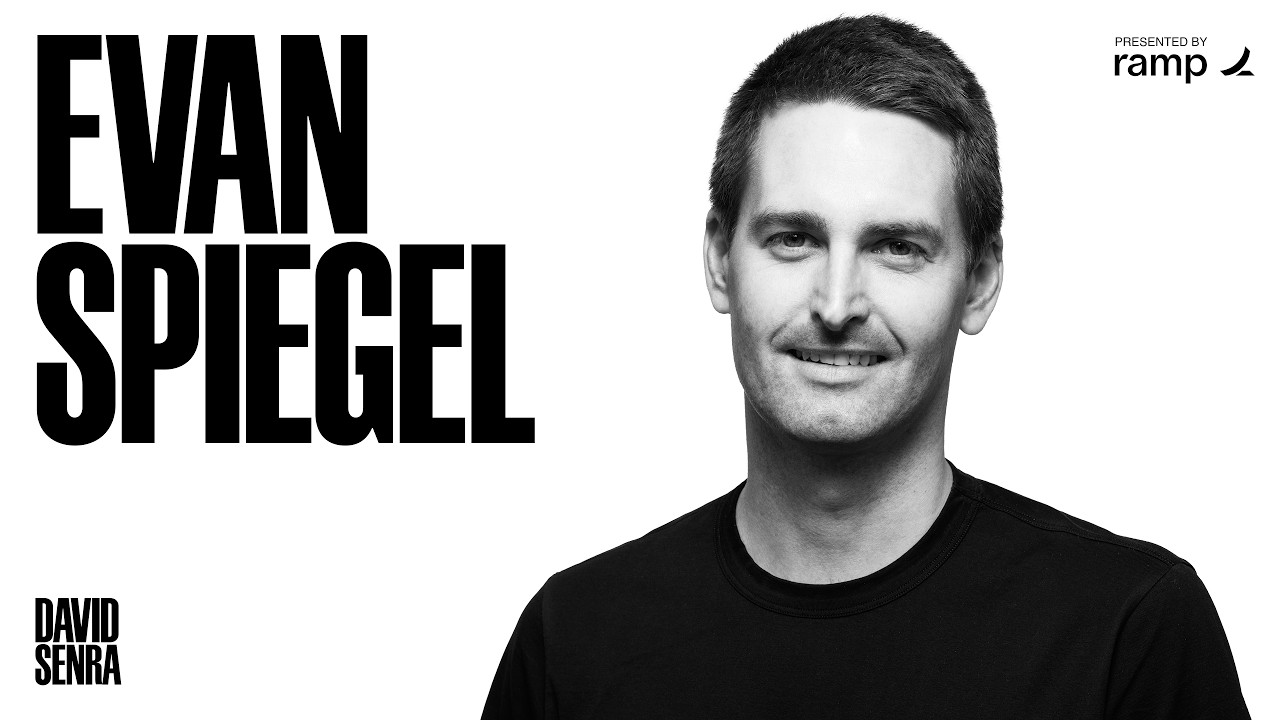
Evan Spiegel discusses how his early education, personal philosophy, and admiration for innovators like Edwin Land shape Snap’s mission to build deeply personal, humanity‑enhancing technology—from the camera‑first design of Snapchat to ambitious AR glasses—while navigating competition with tech giants, scaling a unique culture, and leveraging AI to accelerate product development.
-
Key themes and takeaways
- Foundations in art‑science empathy
- Attended Crossroads School for Arts & Sciences, where a curriculum focused on empathy, relationship‑building, and the intersection of art and technology.
- Early experiences with computers felt isolating; he wanted technology that connects people rather than pulls them apart.
- Edwin Land as a model
- Land’s focus on personal, uplifting photography and his commitment to talent, women in research, and public service inspire Snap’s product‑first, people‑first approach.
- Land’s “invent‑the‑product‑first, then build technology” mindset mirrors Snap’s vision‑driven development.
- From Picaboo to Snapchat
- Early internships (Red Bull, Abraxis, Intuit) taught rapid MVP building and the power of distribution.
- First venture, Future Freshman, failed due to over‑engineering and lack of distribution; the lesson led to the App Store‑centric, friend‑driven launch of Picaboo → Snapchat.
- Snapchat’s core differentiators: camera‑first launch, ephemerality (24‑hour deletion), no likes/comments, and a focus on authentic, chronological storytelling.
- Product innovations
- Stories: pioneered vertical, full‑screen, time‑limited content; later adopted across the industry.
- Vertical video: convinced advertisers that vertical completion rates were 9× higher; invested heavily to re‑format ad creative.
- Lenses & AR platform: acquired Looksery, built Lens Studio, grew to hundreds of millions of daily AR users; later extended to hardware (Specs glasses).
- Hardware philosophy: control of critical components (waveguide display, projector) to deliver a 10× better experience than phone cameras; hardware treated as a separate, high‑precision business.
- Culture of kindness, meritocracy, and flatness
- Values: kind, smart, creative—kindness means honest, growth‑focused feedback, not mere niceness.
- Design team operates with a flat hierarchy; titles are fluid; impact is measured by contribution, not seniority.
- Leadership meetings use a circular table to emphasize equal voice; weekly design sprints generate hundreds of ideas, with <1 % reaching users.
- Leadership and talent
- Leadership team (~10) blends long‑tenured Snap alumni, external hires, and former founders; turnover spikes occurred during rapid scaling phases.
- Core product/design team stays small (8‑12) to preserve Snap’s rapid‑iteration DNA; art‑school backgrounds fit the high‑velocity critique process.
- AI as a force multiplier
- AI dramatically accelerates software development, allowing Snap to “scale engineering resources” and iterate faster than competitors.
- AI‑enhanced design‑to‑code pipelines shrink idea‑to‑product cycles; AI also reshapes advertising, product testing, and internal tooling.
- Business model evolution
- Early ad revenue relied on a few large brand advertisers (upper‑funnel focus); now shifting to a diversified lower‑funnel offering for small‑/medium‑size businesses.
- Launched Snapchat+ (subscription) → 25 M users, ~$1 B run‑rate, 60 % YoY growth; adds premium features and fuels a “direct‑to‑customer” revenue stream.
- Introduced Lens+ and tiered ad‑free plans to monetize high‑engagement AR experiences.
- “No moat in software” mindset
- Early clone by Facebook (“Poke”) taught Snap that pure software can be copied instantly; focus shifted to network‑effects, AR ecosystems, and hardware where barriers are higher.
- Hardware vs. software separation
- Specs (AR glasses) operate as a semi‑independent subsidiary with distinct engineering rigor; mistakes are costly, so a separate org reduces cross‑contamination with the fast‑moving app team.
- Vision: reinvent the computer as a hands‑free, AI‑augmented, socially connected device.
- Strategic focus and decision‑making
- Emphasizes relentless focus (“one word: focus”) and intense concentration, echoing Edwin Land’s advice.
- Uses “In It to Win It” meetings (inspired by Walmart) to surface problems across the organization quickly.
- Personal decision to reject multi‑billion‑dollar acquisition offers in his early 20s stemmed from a desire to preserve vision, privacy‑first values, and control rather than money.
- Personal habits and stress management
- Practices Kriya meditation, regular exercise, and family time (Sunday protected) to handle the high‑stress, 7‑day work rhythm.
- Reframes stress as an opportunity, following examples from Herb Kelleher (Southwest) and other founders.
- Future outlook
- Snap’s profitable core (≈$7 B revenue) funds long‑term AR/AI R&D, positioning the company to “reinvent the computer.”
- Upcoming year is a “crucible” where new Specs consumer products launch while Snapchat continues to grow ad revenue and subscription base.
- Believes that building technology that enhances humanity—private, authentic communication—offers a healthier alternative to the “public, likes‑driven” social media paradigm.
- Foundations in art‑science empathy