-
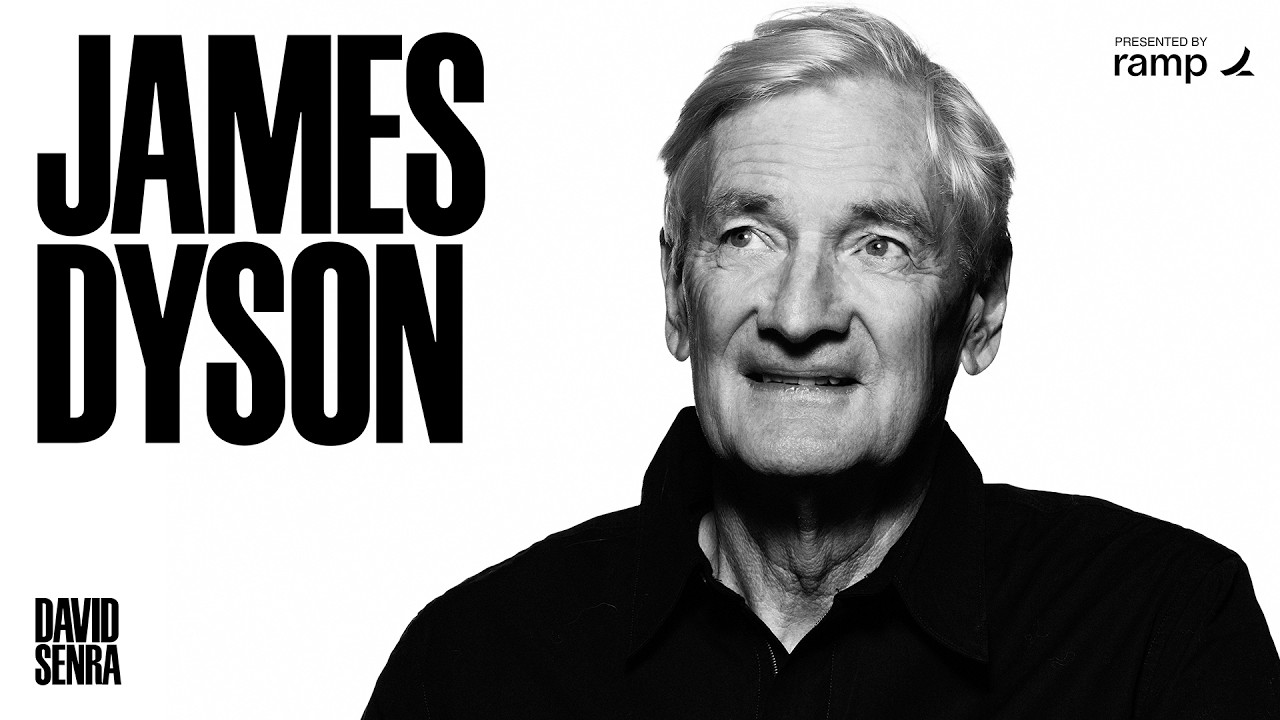
This episode explores James Dyson’s lifelong obsession with history, engineering, and relentless experimentation, tracing how his fascination with past inventions shaped his approach to building Dyson—from early prototypes to the modern company’s culture and products.
- Historical curiosity: Dyson studied classics and ancient civilizations, believing that lessons from history give a strategic “leverage” for inventors.
- Writing “A History of Great Inventions”: Prompted by a newspaper editor, Dyson documented 14 years of work, 5,127 prototypes, and his stubborn “mule‑like” perseverance.
- Core philosophy: Embrace failure, iterate obsessively, and let intuition—grounded in accumulated experience—guide product development.
-
Key phases of Dyson’s entrepreneurial journey
- Early inspiration & education
- Classical studies → discovery of engineering at college.
- Influenced by 1960s British design renaissance (Foster, Rogers, Fuller) and the Mini’s success.
- Mentorship from Jeremy Fry
- Fry hired Dyson, gave him autonomy, and broke down the barrier between engineer and salesman.
- Their discussions on past engineers reinforced Dyson’s “learn from history” mindset.
- Sea‑Truck (1970s‑early 80s)
- Seven years of building, manufacturing, and selling the lightweight amphibious craft.
- Learned the importance of people over company size, and the value of naïve, enthusiastic partners.
- Ballbarrow (mid‑80s)
- Faced funding challenges, high‑interest debt, and a costly lawsuit over a copycat in the U.S.
- Realized the pitfalls of external investors and the advantage of self‑funded decisions.
- Dyson vacuum cleaner (1990s)
- Problem identification: Bag‑clogging and loss of suction in conventional vacuums.
- Accidental discovery: Observing a large industrial cyclone led to the idea of a compact dual‑cyclone separator.
- Prototype sprint: Built cardboard cyclones at home, filed a patent, and eventually created the first working dual‑cyclone unit on 2 May 1992.
- Funding: Secured a £50k loan with Fry’s guarantee and personal mortgage; later obtained a larger loan after a bank officer championed his determination.
- Market resistance: Established manufacturers dismissed the bag‑less concept; Dyson used direct‑mail ads to reach consumers, proving the product’s demand.
- Dyson Institute (2000s‑present)
- Created a tuition‑free university where students split time between work at Dyson (paid £45k yr) and study, preserving hands‑on learning and avoiding “bad habits” from traditional firms.
- Diversification & later projects
- Developed high‑speed electric motors (150 M produced annually).
- Attempted an electric car (2014‑2017) – spent ~£750 M on R&D, but abandoned due to scale disadvantages.
- Expanded into hair dryers, washing machines, and other appliances, always insisting on in‑house engineering rather than licensing.
- Early inspiration & education
-
Recurring themes and lessons
- Failure as a teacher: Each of the 5,127 prototypes offered data; “why did it go wrong?” drove improvement.
- Naïveté vs. experience: Young engineers ask “silly” questions that can unlock breakthroughs; experienced people know what not to try but may miss novel paths.
- Single‑minded focus: Dyson avoids distractions, prefers to control the whole value chain, and rejects external licensing or “me‑too” products.
- Risk tolerance rooted in early life: Father’s death at age 9 and boarding‑school independence fostered a willingness to live on the “knife‑edge.”
- Hands‑on work: Physical prototyping, even with simple tools, builds intuition that pure academic study cannot replace.
- Iterative, data‑driven decision‑making: Record every change, change one variable at a time, and let patterns emerge (e.g., Munger’s incentive insight).
- People over size: Success depends on enthusiastic individuals, not on the prestige of large distributors or partners.
- Dogged determination: Rejection, lawsuits, and debt reinforced Dyson’s resolve rather than discouraging him.
-
Cultural impact and legacy
- Dyson’s approach has inspired other founders (e.g., Charlie Munger’s “learn from history” mantra, Michael Dell’s alternative funding).
- The Dyson Institute demonstrates a new education model that blends paid work with study, aiming to revive practical engineering skills.
- Dyson’s products (vacuum, hair dryer, motors) exemplify the principle: “different for the sake of being better,” even if the difference initially seems odd.
-
Personal reflections
- Dyson admits he never feels “proud” or fully satisfied; perpetual improvement is both a motivator and a source of occasional unhappiness.
- He attributes his relentless drive to early experiences of being the youngest, coping with loss, and constantly needing to “punch above his weight.”
- Despite massive success, he remains focused on curiosity, not on wealth, and continues to prioritize engineering challenges over financial gain.