-
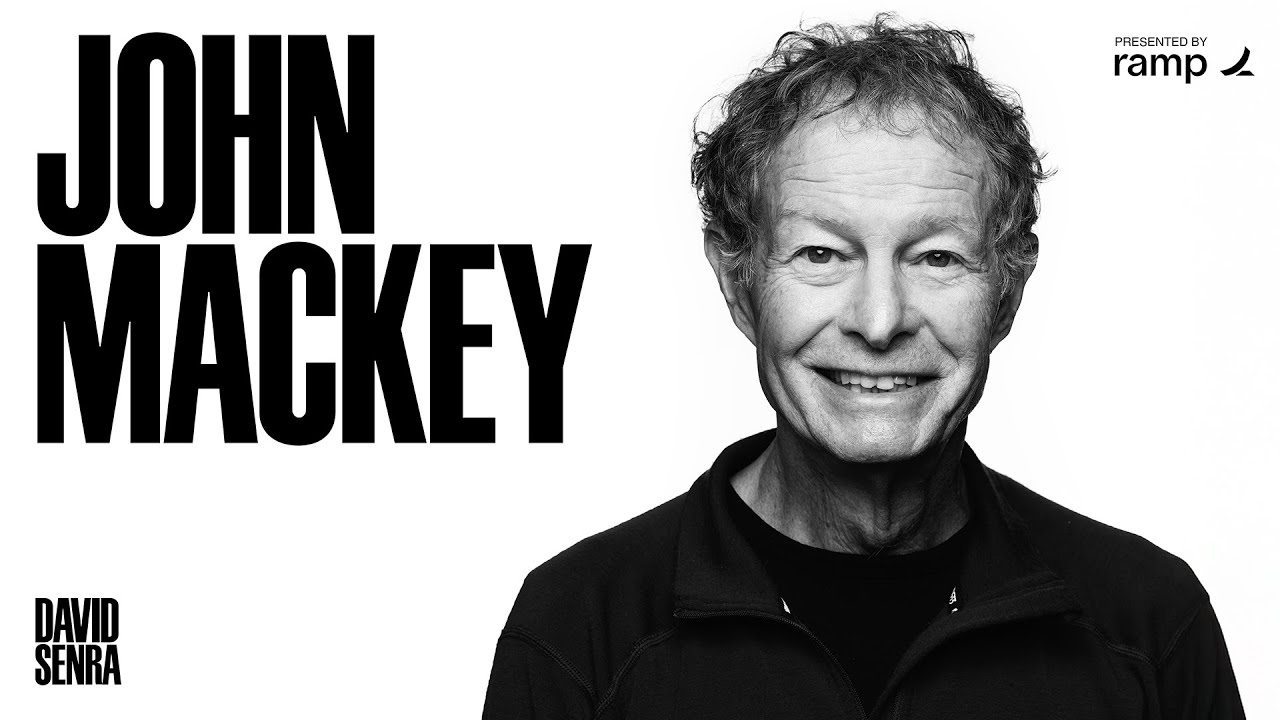
John Mackey’s 44‑year journey building Whole Foods Market – from a shirtless, hitchhiking hippie opening a tiny natural‑food store to a national grocery chain that reshaped America’s eating habits, navigating co‑founder conflicts, venture‑capital pressures, and a surprising partnership with Walmart, while championing a missionary‑driven, employee‑focused culture.
-
Fanatical entrepreneurship
- Successful founders treat work as play; they’re “fanatics” who can spend all day on their business without feeling it’s work (e.g., Michael Dell, Todd Graves).
- This mindset fuels relentless effort and confidence in solving puzzles and “cracking the code” of market needs.
-
Missionary vs. mercenary co‑founders
- Early partner Mark wanted profit and stability; he left when expansion caused short‑term losses.
- Craig shared Mackey’s growth vision and was later bought out; Mackey later called the buy‑out “one of the smartest decisions” of his life.
- The missionary drive—to change America’s diet—clashed with mercenary motives, shaping Whole Foods’ long‑term strategy.
-
The “shirtless hitchhiking hippie” origin story
- Mackey dropped out of college, worked odd jobs, and fell in love with natural‑food retail at a Good Food store.
- With partner Renee, he launched SaferWay, then rebranded as Whole Foods Market in 1980.
- Early confidence, willingness to make mistakes, and belief that “failure isn’t an option” propelled rapid learning.
-
Growth tactics and competitive positioning
- Flying under the radar: No patents; competitors ignored Whole Foods for decades.
- Columbus Circle breakthrough (1998): A risky basement store in Manhattan’s premier location proved the model, attracted media, and sparked an upward spiral.
- Walmart’s indirect help: Supermarkets chased Walmart’s low‑price model, neglecting quality‑focused stores; Whole Foods filled the niche for upscale, service‑rich shopping, attracting affluent, health‑conscious customers.
- Acquisitions as geographic platforms: Early expansion into Texas, Northern California, Chicago; later growth in Boston, LA, Florida, etc., via buying existing natural‑food chains (e.g., Bread & Circus, Wellspring). Roughly 25 % of today’s 550 stores originated from acquisitions.
-
Venture capital perspective
- Mackey calls VCs “hitchhikers with credit cards”: useful for early capital but focused on 100× exits, often pushing premature scaling.
- He warns entrepreneurs to retain control; after Whole Foods went public in 1992, VC influence waned.
-
Founder archetypes
- Builder entrepreneurs (e.g., Dell, Mackey) stay long‑term, grow companies, and care about employee wealth (stock‑option millionaire culture).
- Serial entrepreneurs flip businesses for quick exits; they lack the patience for deep, mission‑driven growth.
-
Time as the ultimate filter
- Mackey trusts only time to judge founders; long‑term commitment correlates with better decisions and lasting impact.
-
Natural Foods Network (secret allies)
- Early natural‑food retailers formed an informal club, sharing financials and scouting each other’s stores.
- Peter Roy organized the network; later acquisitions turned allies into Whole Foods platforms.
- Relationships were maintained until expansion into new territories (e.g., Northern California) strained the network, after which Whole Foods bought former allies.
-
Family influence and personal conflict
- Father: WWII veteran who urged Mackey to sell half his IPO stock out of fear of another depression; Mackey later regretted not compounding it longer.
- Firing his father from the board (age 40) was Mackey’s toughest decision, marking his full independence.
- Mother: Desired respectability; on her deathbed she begged him to finish college. Mackey chose Whole Foods, leaving her disappointed—a lingering regret he later reconciled through a personal forgiveness ceremony.
-
Leadership style and culture
- Emphasized employee ownership: stock options for all, leading to many millionaires among grocery staff.
- Viewed Whole Foods as a missionary venture—a “puritan” effort to improve public health amid rising obesity (74 % overweight, 43 % obese).
- Believed capitalism is humanity’s greatest engine for wealth creation, enabling philanthropy, taxes, and societal progress.
-
Personal development and spirituality
- Early psychedelic experiences and ongoing breathwork/meditation framed his entrepreneurial journey as a hero’s spiritual quest.
- Credits continuous learning (reading, re‑reading, journaling) and “reality distortion fields” of charismatic founders for persisting through setbacks.
-
Competitive drive and proving skeptics wrong
- Uses criticism as fuel; likens VC rejection to a date’s “why not?” explanation.
- Maintains a relentless, ego‑driven need to demonstrate doubters wrong, echoing Todd Graves’s philosophy.
-
Strategic parallels with historic titans
- Compared to John D. Rockefeller (strategic integration) and Jeff Bezos (clear, written vision) for long‑term strategic thinking.
- Recognizes Elon Musk and Steve Jobs as master strategists who combine vision with disciplined execution.
-
Key takeaways for entrepreneurs
- Align with a missionary purpose rather than short‑term profit.
- Be willing to grow through acquisition when organic expansion is costly.
- Guard against VC‑driven over‑scaling; retain control.
- Treat time as the ultimate metric of founder quality.
- Foster a cult‑like customer base through authentic passion and differentiated experience.