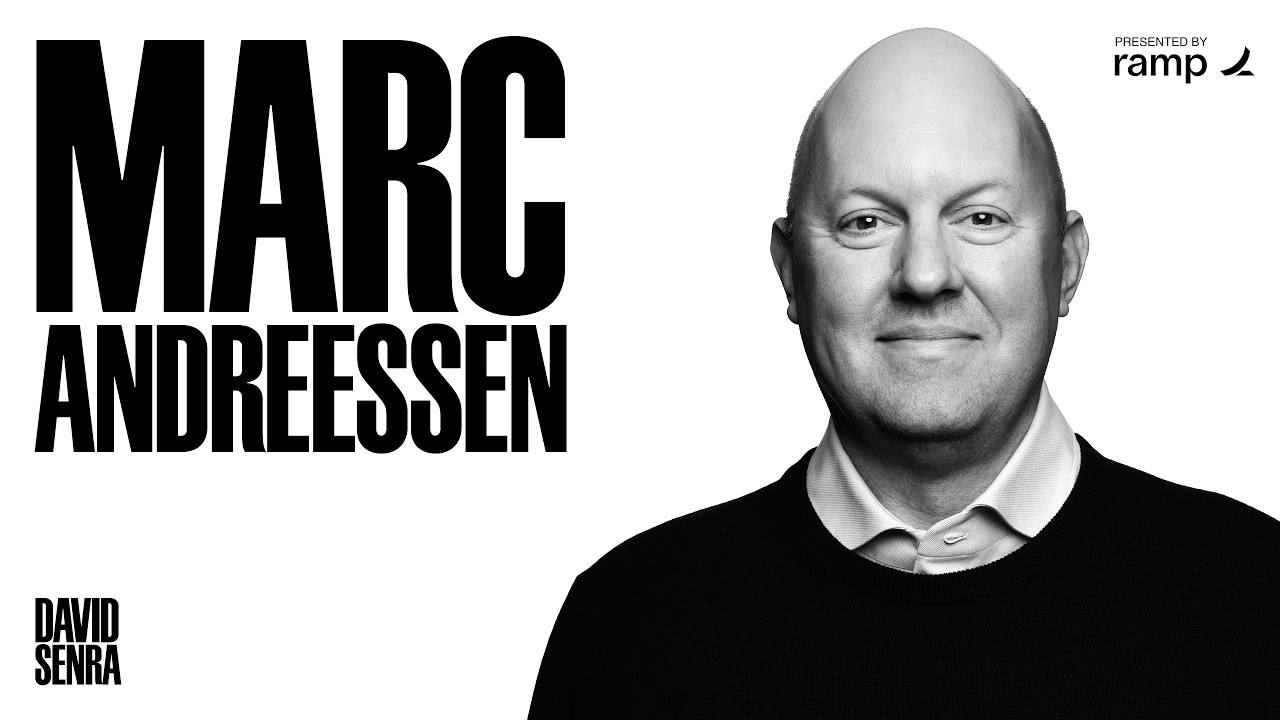
- Marc Andreessen discusses how the world is far more malleable than most people think, arguing that relentless effort and founder‑driven entrepreneurship are the primary engines of progress, while modern managerial structures often hinder rapid change.
- Caffeine heart scare – Marc shares a personal anecdote about over‑consuming coffee, feeling his heart skip beats, and learning that even high‑energy founders need to watch their health.
- Zero‑introspection mindset – He argues that great entrepreneurs historically had little self‑reflection; they focused on building rather than analyzing themselves. This attitude dates back to pre‑1910s when introspection was culturally rare.
- Psychedelics and founders – Marc notes a pattern where founders experiment with psychedelics, often emerging calmer but sometimes quitting their companies, highlighting the tension between personal transformation and impact‑driven goals.
- Motivation beyond happiness – While external impact (money, fame) is a strong driver, Marc believes lasting drive comes from intrinsic, internal goals—becoming a better version of oneself—though he avoids deep introspection.
- Technology as a progress engine – He sees technology as the main lever to overcome world stagnation; the firm’s 17‑year mission is to partner with founders who can reshape primitive aspects of society.
- Founders vs. managers – Citing history (e.g., Henry Ford, Elon Musk) and Burnham’s “bourgeois capitalism” vs. “managerialism,” Marc explains that founders excel at disruption, while professional managers often fail to adapt to rapid change.
- Historical examples – Discusses HP, Intel, Nolan Bushnell, and the evolution from founder‑run firms to managerial conglomerates; highlights the shift from “managerialism” to a need for founder‑type leadership in fast‑moving industries.
- Why start Andreessen Horowitz (a16z) – Early 2000s angel investing exposed a gap: founders needed capital and guidance, but VCs often pushed for early manager replacement, causing conflict. Marc and Ben Horowitz built a firm to support founders directly.
- Venture “barbell” theory – Analogous to Hollywood talent agencies and private‑equity structures: the market splits into lightweight early‑stage angels on one side and massive platform investors on the other, with a “death of the middle” for traditional VC firms.
- Learning from other industries – Draws parallels to investment banking (J.P. Morgan’s boutique model), private equity (KKR’s in‑house banks), and advertising (Mad Men’s agency consolidation) to illustrate the barbell dynamic.
- Shift from tools to industries – Around 2010 the Valley moved from building enabling tools (HP, OS) to directly competing in incumbent sectors (Airbnb in hospitality, Uber in transportation, Tesla in auto, Facebook as a media company).
- Jim Clark story – Recounts meeting the SGI founder, his visionary predictions (graphics chips on PCs, networked computers), and the classic founder‑vs‑professional‑manager clash that eventually led Clark to leave SGI.
- Recruiting and CAA analogy – Uses the Hollywood agency CAA’s coordinated, force‑ful approach to illustrate how a unified, founder‑centric organization can outmaneuver fragmented, manager‑driven competitors.
- First‑principles vs. status‑quo – Emphasizes questioning entrenched assumptions (e.g., “Eat what you kill” in professional services) to uncover hidden value, a habit he advises founders to adopt.
- Moral panic pattern – Shows how every disruptive technology (bicycles, radios, TV, rock‑and‑roll, hip‑hop, the internet) triggers societal panic, yet these panics are recurring and often fuel later adoption.
- Netscape origins – Marc’s early work on Mosaic (first graphical web browser) and the first web server, the NSFNET’s academic‑only policy, and the eventual commercial licensing model that birthed Netscape’s advertising and e‑commerce platforms.
- Elon Musk’s hybrid management – Describes Elon as blending founder creativity with systematic, production‑line thinking: he personally tackles bottlenecks, holds rapid five‑minute design reviews, and maintains direct contact with engineers, contrasting with the “big gray cloud” of layered corporate bureaucracy (e.g., IBM).
- “MilliElon” metric – Proposes a tongue‑in‑cheek scale to gauge founder impact, suggesting that only a few individuals approach Elon’s unique blend of vision, execution, and relentless hands‑on involvement.
- Starlink as side project – Highlights how Elon leveraged reusable rockets to launch a satellite internet constellation, turning a “side project” into a massive, successful venture, exemplifying the founder‑scale hybrid model.
These points trace Marc’s view that a world shaped by bold, founder‑led action—unburdened by excessive introspection or rigid managerial hierarchies—is far more adaptable than most assume.