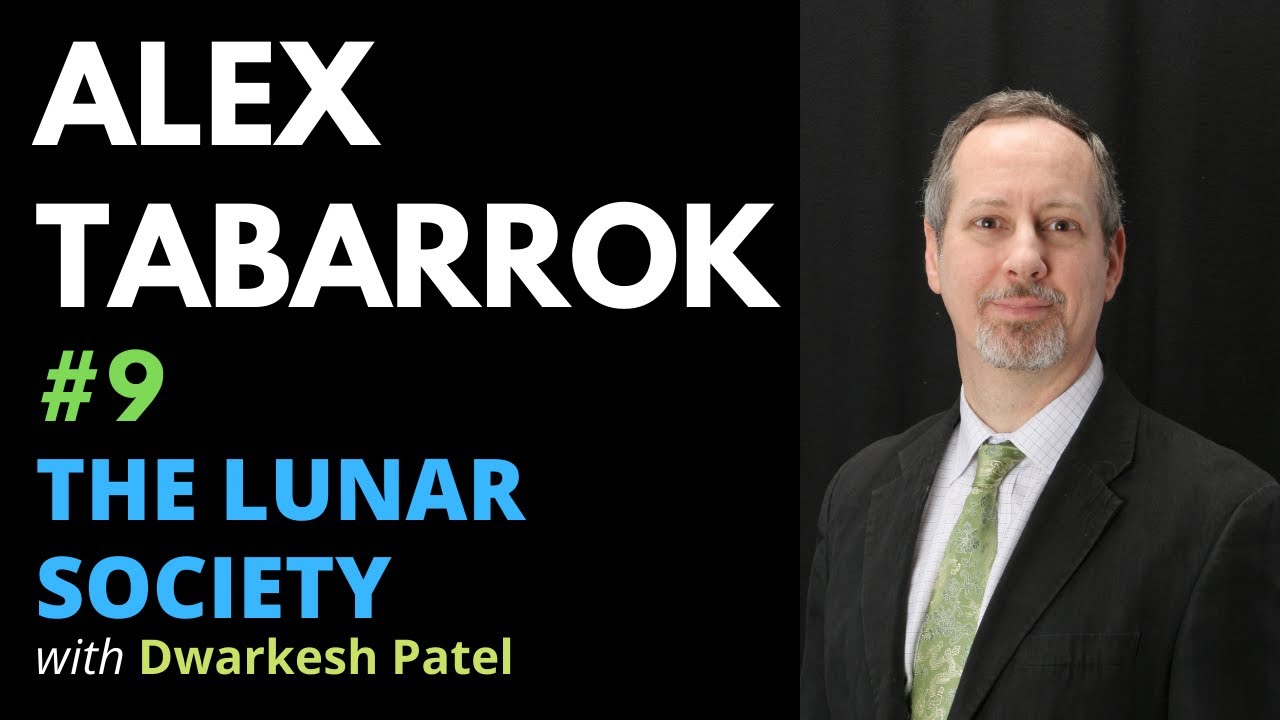
Alex Tabarrok is an economics professor at George Mason University, co-founder of the Marginal Revolution blog with Tyler Cowen, and co-founder of Marginal Revolution University (MRU), an online education platform. The conversation covers his work on innovation prizes, the Baumol effect, the future of education, declining research productivity, dominant assurance contracts, and the failures of U.S. government institutions during the pandemic.
Grand Innovation Prizes for Pandemic Response
The core problem: Vaccine manufacturers typically wait until a vaccine is proven safe and effective before building factories and ramping up production, because most vaccines fail. This means firms don’t have as strong an incentive to move quickly as society would like during a pandemic.
Prizes as a solution: A large prize (e.g., $1 billion) awarded to the first vaccine meeting specific efficacy and safety criteria creates extra incentive to move fast. Alternative or complementary tools include paying upfront for manufacturing capacity (“at-risk” production) and advanced market commitments (guaranteed purchase prices).
Trade-offs with upfront funding: Grants and upfront payments help firms that lack capital, but the government is generally bad at picking winners. Prizes have the advantage of opening the field to unconventional approaches and outsiders who might not pass traditional NIH review committees — similar to how the historic Longitude Prize was won by a clockmaker, not Newton.
Why not just rely on venture capital? VCs have skin in the game and a comparative advantage over government, but they still need time to evaluate which vaccine candidates are real versus scams. In a pandemic, speed is critical, so Tabarrok argues for “throwing money at the problem” on all fronts — accepting that some funded projects will fail (as with the AstraZeneca trial that was paused after an adverse event) because the cost of the pandemic (trillions) dwarfs the waste.
Broader case for prizes: Prizes are especially useful when experts have hit a wall and out-of-the-box thinking is needed. They were more common in the 19th century, declined in the 20th, and have seen some resurgence. Evidence from Howard Hughes “genius grants” (researchers given money with minimal strings attached, asked to report back in five years) shows those grants produce more highly cited research and more patents than traditional grants.
The Baumol Effect
The puzzle: Prices in certain sectors — education, healthcare, repairs — rise inexorably over time, year after year, without any clear single cause like unions or regulation.
Baumol’s explanation: In a barter/real-economy sense, some sectors (manufacturing, computing) see rapid productivity growth, while others (symphony performances, teaching, shoe repair) see little or none. Because goods trade for one another, the opportunity cost of the stagnant-sector output rises as the progressive sector gets more productive. A string quartet still takes four people 40 minutes, but what you give up to hire those four people has grown enormously.
Skilled labor twist: Tabarrok and co-author Eric Helland add that it’s specifically skilled labor whose price has risen. A PhD economist teaching 30 students is expensive because that same person could work at Amazon or Uber — the opportunity cost of skilled labor in Silicon Valley drives up wages everywhere skilled labor is used, including education and healthcare.
Implications:
Rising prices in stagnant sectors are actually a sign of progress in the progressive sector, not a failure of the stagnant sector.
When productivity growth slows (the “Great Stagnation”), price increases in stagnant sectors also slow — which is not necessarily good news.
The service sector naturally grows as a share of the economy because there’s a limit to how many material goods people want, but services are less productivity-growth-prone.
AI and automation fears may be overstated in the sense that we won’t run out of work, but less-skilled labor is already being squeezed by automation and trade, and this will worsen with remote work.
Education specifically: Even though we have more teachers per capita, math scores haven’t risen because a much wider and less-prepared population is now going to college, requiring more hand-holding. The standards have effectively been diluted by expansion.
The Future of Education and Online Learning
Scaling through technology: Tabarrok teaches 30 students in person but hundreds of thousands through MRU. Online education allows the best teachers to reach global audiences, which will drive many less-effective teachers out of the traditional classroom — a good thing, because education has historically been hard to scale.
Tying education to the progressive sector: When education is linked to technology (a progressive sector) rather than being purely labor-intensive, costs can fall and quality can rise. AI tutors are already as effective as human tutors in randomized trials — they can diagnose specific conceptual errors from patterns in student responses and direct learners exactly to the knowledge they need.
Why this time is different: Previous technologies (books, radio, TV, film) were each predicted to revolutionize education but didn’t. Tabarrok argues that a combination of factors — speed of delivery, animation quality, AI, captioning/translation — has reached a threshold where the experience is genuinely superior for many learners. Students can pause, rewind, and control playback speed (e.g., 1.5x for familiar material).
The signaling problem: Online courses (MOOCs) won’t replace universities entirely because the credentialing/signaling function of college hasn’t been cracked. Universities with strong reputations will go online and expand their markets (Georgia Tech’s online CS master’s program has ~7,000 students, costs less than a quarter of the residential program, and graduates ~7% of all CS master’s degrees globally).
De-bundling education: The “sage on the stage” lecture component will go online with fewer teachers reaching more people. The coaching, mentoring, and advising component will expand — more life coaches, tutors, and teaching assistants in a hierarchical model. Top teachers may travel globally for occasional in-person appearances while teaching primarily online.
Baumol effect interaction: Even as education becomes more technology-driven, the coaching/tutoring layer remains labor-intensive and subject to Baumol cost pressures.
Declining Research Productivity
The problem: Even in progressive sectors like semiconductors and pharmaceuticals, it takes many more researchers and much larger R&D budgets today to achieve the same rate of progress as in the past. Nicholas Bloom and colleagues found that the number of researchers needed to maintain Moore’s Law doubles roughly every 13 years.
Possible explanations: Low-hanging fruit has been picked; regulatory burden (especially the FDA for pharmaceuticals); or a temporary lull between technological quantum leaps (electricity and the internal combustion engine took ~50 years to fully exploit; computers may follow a similar pattern, with biology or quantum computing as the next leap).
Globalization helps but hasn’t solved it: More scientists worldwide (especially as China and India grow richer) should boost innovation, but the gains haven’t been as large as hoped. If research productivity continues to decline, growth could plateau; if a new technological leap occurs, growth could be enormous.
Dominant Assurance Contracts
The public goods problem: For non-rival, non-excludable goods (public goods), free-riding prevents people from contributing, even when everyone would benefit. Paul Samuelson argued this was essentially unsolvable.
Kickstarter as a partial solution: You only pay if enough others contribute to reach a threshold, so your money isn’t wasted on a failed project. But some good projects still fail because people hesitate to be early contributors.
Dominant Assurance Contract (DAC): Tabarrok’s innovation adds one twist — if the project doesn’t reach the threshold, everyone who pledged gets a refund plus a bonus. This makes contributing a dominant strategy: if the project succeeds, you get the public good; if it fails, you get the bonus. Either way you’re better off contributing than not.
Lab experiments confirm it works: With co-authors Tim Cason and Robert Zubrickas, Tabarrok showed DACs roughly double the number of successful projects compared to standard assurance contracts.
Limitations: DACs solve the contribution problem for public goods where the right scale is knowable (a bridge, a lighthouse), but not for goods where the optimal quantity is unclear (national defense). They don’t solve cost overruns or government inefficiency in execution.
Broader vision: DACs, along with ideas from Glen Weyl and Vitalik Buterin (quadratic funding, blockchain governance), represent a new class of market mechanisms for producing public goods. Tabarrok sees this as a “progressive” libertarian approach — building alternative institutions rather than trying to fix government.
Governance, Futarchy, and Institutional Failure
Futarchy (Robin Hanson): Governance by prediction markets — bet on which policies will produce the best outcomes, then implement the ones the market favors. Tabarrok considers this a genuinely novel fifth form of government (after monarchy, oligarchy, democracy, and anarchism) and wants to see experiments with it.
Democracy as a governance mechanism: Democracy is not great at aggregating preferences but is effective at limiting government and preventing the worst abuses (democratic governments don’t starve their citizens). It’s one mechanism among many, and online worlds enable thousands of governance experiments (each blockchain project has its own governance system).
U.S. government failure during the pandemic: The CDC botched the initial test; the FDA blocked private labs from developing tests; Congress failed to produce a testing or vaccine plan. Operation Warp Speed was the only effective government response, and it was an administrative initiative, not a congressional one. Tabarrok describes this as a “warfare-welfare state” that has lost the capacity to do what it’s supposed to do.
State capacity libertarianism: Tabarrok wants a small government that can actually perform its core functions — responding to pandemics, fighting wars, building infrastructure — when needed. The U.S. government is failing at this, and the danger is that a change in administration will reduce the pressure for fundamental reform without solving the underlying dysfunction.
Competition as a motivator: International competition with China and India could reignite American innovation, much as competition with the Soviet Union drove the Apollo program. Tabarrok would like to shift from a “warfare-welfare state” to an “innovation state,” increasing federal R&D investment. He also wants the U.S. to compete as a beacon of freedom and liberty — attracting talent from Hong Kong, Uyghurs, and elsewhere.
Advice to a 20-Year-Old
The world is changing fast, so older generations’ advice is less reliable than it used to be.
Returns to skill are rising — education remains critical, but choose fields complementary to technology (electrical engineering, computer science, data science, economics) rather than competing against it (“race with the machine”).
Data is growing faster than anything else; the ability to extract meaning from data (causal inference, machine learning) is extremely valuable.
Marketing and design remain important — Apple’s core strength is design. An artistic impulse combined with technological skill is more valuable than art alone.