-
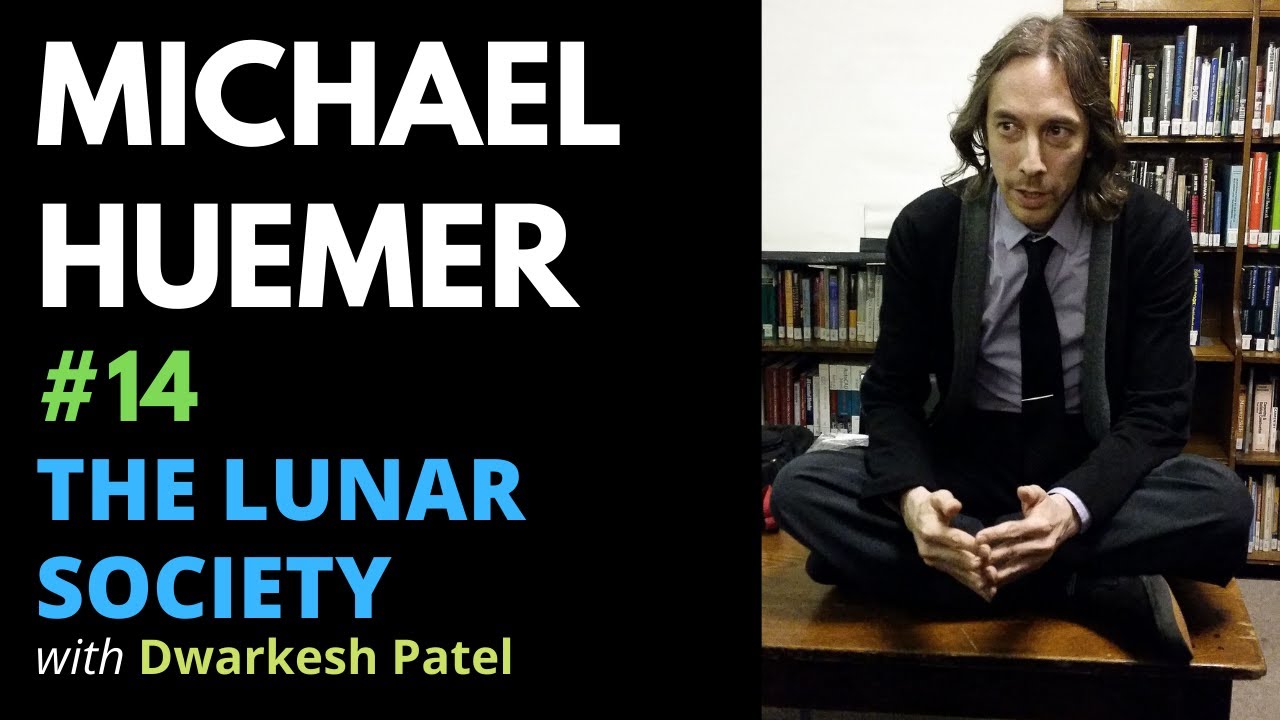
Philosopher Michael Huemer argues that governments lack the special moral authority most people assume they have, and that the same ethical rules forbidding ordinary individuals from coercion and theft should apply equally to the state.
- Huemer defines political authority as the widely held belief that the government may issue commands and enforce obedience in situations where no private individual could legitimately do so, and that citizens have a moral obligation to obey the law merely because it is the law.
- Example: If a private person forced others to fund a charity, it would be extortion; when the government does the same through taxation and welfare programs, most people approve and feel obligated to comply.
- He argues this double standard requires explanation, and that no satisfactory justification exists once the question is seriously examined.
- Most people, when pressed, can see that the state’s authority is not self-evident and demands a rationale.
- The ethical intuitions Huemer relies on—that you shouldn’t steal, threaten violence, or imprison people to get what you want—are uncontroversial across the political spectrum, whereas belief in state authority is not.
- Libertarians, Huemer argues, are unified by skepticism about political authority: they apply the same moral standards to the state that they apply to everyone else.
- When the state kills, libertarians call it murder; mainstream political thinkers tend to excuse or reframe the same acts when performed by governments.
- Huemer cites the ancient Chinese philosopher Mozi, who observed that rulers condemn individual killing as a capital crime but praise mass killing in war, revealing an inability to distinguish right from wrong.
- Huemer defines political authority as the widely held belief that the government may issue commands and enforce obedience in situations where no private individual could legitimately do so, and that citizens have a moral obligation to obey the law merely because it is the law.
-
Huemer identifies psychological biases that explain why people mistakenly attribute legitimacy to the state, even when it acts coercively.
- Status quo bias: People tend to believe their society’s customs are superior simply because they are familiar, which leads them to accept existing political arrangements uncritically.
- Stockholm syndrome as a broader phenomenon: People instinctively form emotional bonds with those who hold power over them, because throughout human history, aligning with the powerful improved survival prospects.
- This helps explain why people defend governments even when those governments act against their interests.
- Charisma of power: People are drawn to confidence and strength rather than moral virtue, which is why authoritarian figures often appear charismatic.
- Huemer argues that dictators project confidence precisely because they do not care about others’ opinions or the consequences of their actions—a trait ordinary people misinterpret as competence or truthfulness.
- This dynamic helps explain polarized reactions to figures like Donald Trump, where some perceived extraordinary confidence as charisma while others found it off-putting.
-
On moral progress, Huemer acknowledges that humanity has made enormous ethical advances over centuries, driven by a small minority of reformers.
- Historical evidence is compelling: practices like gladiatorial combat and chattel slavery, once widely accepted, are now almost universally condemned.
- Progress is driven by a relatively small number of people who recognize flaws in the status quo and push society toward moral truth, while most people simply follow prevailing customs.
- This force is constant but small, accumulating over many generations into substantial change.
- Huemer addresses the apparent counterexample of factory farming, which causes suffering on a scale that may outweigh all human suffering in history.
- Roughly 74 billion animals are tortured and killed each year in factory farms, compared to about 110 billion humans who have ever existed.
- From a consequentialist standpoint, this represents a massive moral regression, but Huemer notes that vegetarianism and veganism are growing, and synthetic meat technology is likely to ultimately resolve the problem.
- He expects the rate of moral progress to continue increasing due to exponential growth in knowledge and communication, though it must eventually slow as humanity approaches moral truth.
- He has separately argued that scientific and technological progress will eventually end due to diminishing marginal returns, but he does not see why moral progress would reverse before reaching its destination.
- Historical evidence is compelling: practices like gladiatorial combat and chattel slavery, once widely accepted, are now almost universally condemned.
-
On whether anarchy would increase violence, Huemer challenges the Hobbesian view that a strong state is needed to prevent chaos.
- Steven Pinker’s empirical evidence shows that violence decreased as societies moved from tribes to states and from feudal fragmentation to centralized monarchies, but Huemer argues this is because states suppress small-scale violence while engaging in large-scale violence like war.
- Huemer rejects Pinker’s Hobbesian explanation for primitive violence (rational preemptive strikes) as logically incoherent and instead offers an evolutionary explanation.
- Men in primitive tribes attacked other tribes to kidnap women, a strategy that increased expected reproductive success even at high personal risk, especially in polygamous societies where most men had zero wives.
- This instinct persists but does not mean stateless societies in the modern era would revert to violence.
- In an advanced society, private security agencies would provide protection, and the wealthy have little incentive to use violence when they can simply purchase what they want.
- Huemer argues that a transition to anarcho-capitalism must be gradual—the government progressively privatizing policing and courts—rather than a sudden collapse, which would produce chaos.
-
Huemer addresses the strongest argument for the state: the need to regulate technologies that could destroy civilization.
- Philosopher Nick Bostrom’s “vulnerable worlds” hypothesis holds that some technologies could allow a single individual to destroy a city or worse, requiring strong government regulation to prevent catastrophe.
- Huemer acknowledges this as the strongest case for the state and has written a blog post titled “The Case for Tyranny” exploring it.
- However, he counters that governments are themselves the most likely developers of world-destroying technologies: nuclear weapons were created by governments and have only ever been used by them.
- Governments have standing incentives to develop ever more destructive weapons because of inter-state warfare, making them a constant pro-destruction lobby.
- Huemer suggests distributed monitoring—everyone watching everyone else—as an alternative to centralized state surveillance for preventing catastrophic misuse of technology.
- Philosopher Nick Bostrom’s “vulnerable worlds” hypothesis holds that some technologies could allow a single individual to destroy a city or worse, requiring strong government regulation to prevent catastrophe.
-
On the ethics of participating in state institutions, Huemer takes a pragmatic view.
- He is asked whether it is unethical to work at a state-subsidized university given that his salary comes from coercive taxation.
- He notes that the University of Colorado receives only about 5% of its budget directly from the state, and that all universities benefit from government financial aid programs that inflate tuition.
- Economist Walter Block’s view is that taking state money to undermine the state is justified, since the government would otherwise waste it on something worse.
- Huemer acknowledges that in a libertarian society there would be fewer universities due to the removal of market distortions, and he might not have a job.
- He is asked whether it is unethical to work at a state-subsidized university given that his salary comes from coercive taxation.
-
On social criticism and democratic norms, Huemer navigates the tension between criticizing society and undermining the norms that sustain it.
- He was asked whether his own philosophical arguments—that state coercion is illegitimate—amount to the same kind of societal attack he criticizes in social justice movements like the 1619 Project.
- He acknowledges the concern but argues that constructive criticism requires offering alternatives, not just tearing down institutions.
- He worries about eroding norms of respectful discourse, noting that foreign observers have been struck by the relative civility of American political debate compared to other countries.
- He wants to preserve what works about American institutions while changing what doesn’t, and to appreciate that the U.S. government is vastly better than most governments in history.
- He was asked whether his own philosophical arguments—that state coercion is illegitimate—amount to the same kind of societal attack he criticizes in social justice movements like the 1619 Project.
-
Huemer discusses his writing process and the role of intellectuals versus entrepreneurs in driving change.
- He writes blog posts in a single afternoon of flow, then re-reads and makes small edits over the following day before publishing; he has published over 100 posts over several years.
- On the question of whether intellectuals or entrepreneurs matter more, he uses Peter Singer as an example: Singer’s philosophical arguments about animal welfare inspired the entrepreneurs who created Beyond Meat and Impossible Burger.
- The philosopher’s influence on ordinary individuals is small—only a small percentage of people change their lifestyle for ethical reasons—but when those people include entrepreneurs, the impact is amplified enormously.
- Huemer’s goal is to promote rationality and true beliefs about important philosophical matters, hoping this will improve society in ways he cannot fully predict.
-
On education and intellectual development, Huemer offers several assessments.
- Coding in schools: Useful for those who would be good at it, but not everyone needs to learn; some people will never find it useful.
- Public intellectuals: Underrated by academics who dismiss them for lacking rigor, but the reason they avoid academic conventions is that no one would listen otherwise.
- Non-academic intellectuals: Most are not worth reading because they lack the training to engage with existing literature, often reinventing the wheel in simplistic form; graduate school provides discipline and exposure to objections that improve the quality of thought.
- Peer review: Overrated as a quality control mechanism; reviewers are unpaid and unmotivated, often producing careless or biased reports, and the system frequently assigns papers to their critics for review.
- Online education: A good way to learn but a poor way to gain prestige, which is what most people actually want from education; it will not replace in-person education because the credentialing function matters more to students than the knowledge itself.
- Pronatalism: Huemer is somewhat worried about population decline in wealthy countries, where fertility rates among the well-off are below replacement, potentially leading to human extinction just as moral progress reaches its culmination.
-
On children’s rights, Huemer holds a conventional view with some nuance.
- Children have comparable rights against malicious coercion but may be subjected to paternalistic coercion because they lack the knowledge and maturity to make decisions for themselves.
- The transition to adulthood is gradual and varies by individual, but society needs a general rule, and 18 is a reasonable if imperfect threshold.
- He rejects the analogy between children’s lack of rights and racial discrimination: children genuinely cannot make decisions for themselves, whereas enslaved people were fully capable but prevented from doing so.
- Some adults with severe cognitive impairments may similarly need guardians, and it may be justified to force them to accept guidance in situations where they would otherwise harm themselves.
- Children have comparable rights against malicious coercion but may be subjected to paternalistic coercion because they lack the knowledge and maturity to make decisions for themselves.
-
Huemer’s advice for a philosophically inclined young person interested in entrepreneurship:
- On happiness: cultivate solid, meaningful relationships with people you get along with, cut out those who are detrimental, and pursue meaningful work that pays enough to live on.
- On practical matters: buy a house or condominium if staying somewhere for several years, and invest in index funds rather than trying to beat the market.
- On improving the world: model rationality in interactions—listen carefully to others, try to understand their point before responding, and engage in reasonable discourse, hoping that enough people doing this will gradually improve culture.