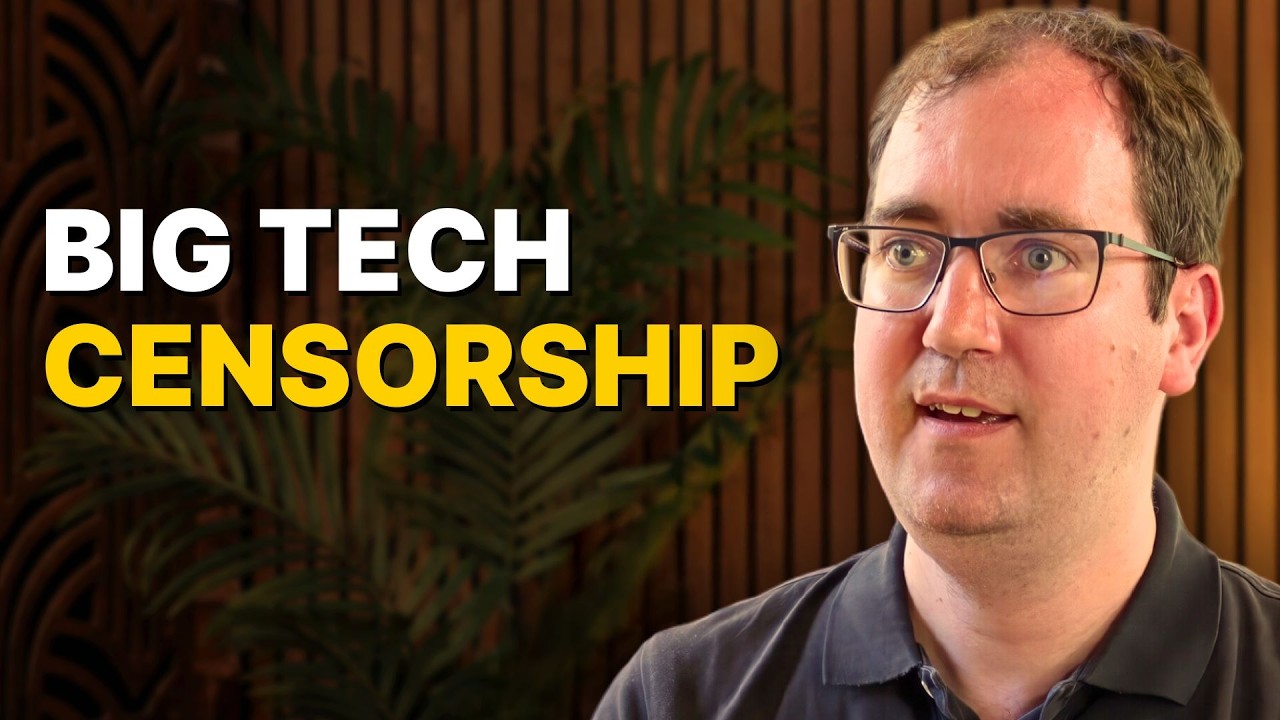
Patrick McKenzie (patio11) is a software engineer, writer of the finance newsletter Bits about Money, and the de facto CEO of VaccinateCA — a volunteer effort that became the de facto national clearinghouse for COVID-19 vaccine availability in the United States, likely saving thousands of lives. The episode covers VaccinateCA’s origin, the institutional failures it exposed, the political economy of big tech and government, money laundering, and what it takes to actually get things done.
VaccinateCA: How a Discord server became America’s vaccine infrastructure
In early 2021, people were making dozens of phone calls to find pharmacies with COVID vaccine doses — a problem that should have been solved by a simple website.
Patrick tweeted that California clearly had someone capable of building such a site; Karl Yang rallied 10 friends on Discord and launched the effort by the next morning.
Patrick joined, contributed expertise on scaled calling operations, and eventually became CEO of what grew into a public-private partnership covering the entire US.
The operation ran on a total budget of $1.2 million, relied on hundreds of volunteers and ~12 full-time staff, and at peak was the primary source of truth for vaccine availability nationwide.
Why the government didn’t build it
No institution — county health departments, governors’ offices, two presidential administrations — felt it was their responsibility to solve the logistics problem of matching vaccine supply with demand.
The federal government had institutionally learned the wrong lesson from Healthcare.gov: that software failures can doom a president’s legacy, so software became “someone else’s problem.”
The US federal government has effectively abdicated software as a core governmental responsibility, despite software being essential to virtually every modern logistical task.
Why big tech didn’t build it either
After January 6, 2021, tech companies (AppAmaGooFaSoft) were under intense political pressure to stay out of the news. Internal policy and PR teams told everyone: do not embarrass the government.
Tech companies had public health teams and the technical capacity, but leadership overruled them — being seen as more competent than the government was judged to be politically dangerous.
This illustrates the “Copenhagen Principle of Culpability”: if you build the thing, you become responsible for everything associated with the entire vaccination effort, including disparities you didn’t cause. Doing nothing carries less liability than doing something imperfectly.
The political tiering system that crippled distribution
California’s vaccine prioritization schedule (Tier 1A, 1B, 1C, etc.) was byzantine — even professional software engineers couldn’t diagram it correctly.
Tiers were driven by political favoritism rather than medical necessity: veterinarians were placed in Tier 1A because the California Veterinarians Association was effective at lobbying; teachers were placed in 1B because teachers’ unions had political power.
The bureaucracy to verify tier eligibility was absurd: New York commissioned a 57-page web application requiring multiple document uploads for 75-year-olds to prove eligibility.
California was only successfully injecting 25% of its allocated vaccine doses in January 2021. The state was bickering over who should get shots rather than getting shots into arms.
”First Doses First” and the end-of-day shots scandal
The “First Doses First” strategy (give everyone one dose now, second dose later) was obviously correct and advocated by economists like Alex Tabarrok, but governments resisted it for weeks of meetings.
End-of-day shots — doses remaining in an opened vial that would expire within hours — presented a stark test of rationality: give them to anyone or throw them in the trash.
Israel adopted a policy of walking into the street and offering expiring shots to passersby. The US had an explicit policy ban on this, with governors threatening to prosecute physicians who administered end-of-day shots to people outside their tier.
When the policy was quietly reversed, no governor publicly admitted the mistake. Pharmacies, rationally fearing they’d be punished later, continued throwing shots away.
Fundraising failures and the personal cost
Despite trillions of dollars being at stake in the global economy, raising $1.2 million for VaccinateCA was extremely difficult.
Some tech CEOs moved quickly (one wired $100K the same day), but many tech bureaucracies took six weeks to process donations — by which time the professional class had secured vaccines for themselves and declared the problem “solved.”
Several donors who verbally committed never followed through; Patrick covered the shortfall personally, including dipping into his daughter’s college fund.
Effective altruist funders later told him they wrote larger checks for less successful projects with less deliberation — he simply hadn’t thought to ask them.
Lessons for the next crisis
The US needs to stop treating software as someone else’s problem. Competence in the modern world requires competence at software.
The government could formally co-opt private-sector talent in emergencies — there is historical precedent for commissioning industry leaders as military officers and giving them authority and resources.
Patrick advocates for “blameless postmortems” (a tech industry practice): dispassionately recording what happened, what worked, what didn’t, and how to improve — before assigning blame.
The after-action reports from COVID have largely praised politically convenient narratives rather than identifying true failures, and recommended “someone should fix this next time” rather than concrete changes.
Crypto: What has $3 trillion bought us?
Patrick is deeply crypto-skeptical. He frames the question using Vitalik Buterin’s 2017 challenge: “Have we truly earned this number? How many of the unbanked have we banked?”
The true cost of crypto is not the market cap but the rivalrous resources consumed: tens to hundreds of billions in GPUs, ASICs, electricity, and the time of talented engineers who could have built other things.
The best realized use case is stablecoin payments rails (e.g., USDC for international contractors), but this doesn’t require $3 trillion of investment and could have been achieved through regulatory reform of KYC/AML.
Patrick draws a parallel to the dot-com bubble: hundreds of billions spent on fiber infrastructure, much of it written off, but the infrastructure enabled the modern internet. He gives crypto until 2030 to show comparable results, predicting the community will simply say “you can still be early.”
KYC/AML as mass surveillance
Banks employ as many intelligence analysts as the US intelligence community. They process millions of automated alerts daily, writing memos that almost no one reads.
The Bank Secrecy Act (1970s) was written when the government had limited capacity to process the data it collected. That constraint is gone. Running LLMs over this passively collected transaction data would enable comprehensive surveillance of every electronic transaction.
Patrick is sympathetic to crypto’s privacy argument on this specific point: the banking system is functionally a policy arm of the government, and the surveillance infrastructure is real and underappreciated.
However, crypto’s commitment to privacy is shallow — when “number go up” conflicts with privacy, the ecosystem consistently chooses number go up.
Big tech as an unelected branch of government
The Missouri v. Biden case revealed that the US government used tech companies as “cat’s paws” to censor constitutionally protected speech, including ordering YouTube to take down recordings of town hall meetings where citizens advocated policy preferences.
One NGO collaborator explicitly wrote in an email that they were outsourcing censorship to college students to “get around legal uncertainty, including very real First Amendment concerns.”
Tech companies sometimes pushed back, but mostly complied quietly. Patrick argues the industry should have been more willing to publicly resist — even at the cost of stock price declines or political retaliation.
The deeper question: should the tech industry be a branch of government? Society answers this through proxy debates (misinformation, content moderation) rather than directly.
Money laundering and financial plumbing
Patrick’s investigative approach: fraud alleges facts about the physical world; those facts leave metadata in banking systems. Finding people at institutions who will confirm or deny those facts is how many frauds are uncovered.
Example: Mt. Gox’s CEO claimed on BitcoinTalk that Mizuho bank couldn’t process outgoing wires due to a DDoS. A single fax to Mizuho (“Are you sending wires today?”) would have revealed the insolvency years earlier. Financial reporters didn’t do this.
On SBF/Alameda: Patrick argues SBF was extremely sophisticated — he obtained money transmission licenses from all 50 state regulators and suborned a Japanese bank to move tens of billions for Tether. He wasn’t caught for money laundering; the fraud was simpler than that.
Money laundering sophistication varies enormously. At the low end, buying New York real estate through a shell corporation and collecting rents is functionally indistinguishable from how all large real estate transactions work.
Why some people negotiate better and charge more
Patrick’s salary negotiation guide (“Make More Money, Be More Valued”) has been read by 500,000 people per year for over 12 years. He stopped tracking the total salary increases attributable to it after the sum passed eight figures per year.
Cultural factors matter: some cultures have a pro-mercantilist ethos with less skepticism about accumulating wealth; others have deep skepticism that affects negotiation behavior.
The tech industry over-selects for people who felt socially marginalized in high school (“nerd vs. jock”) and carry feelings of unworthiness into salary negotiations.
People who attend elite institutions like Stanford often get explicit advice from older peers to negotiate — advice that is unevenly distributed.
Are young people too distracted to found startups?
Patrick acknowledges video games are a real concern: he personally logged 750 hours on Factorio in one year and estimates 4,000–6,000 hours of gaming over his career (2–3 years of professional effort).
He now has an executive assistant who monitors his Steam account to hold him accountable.
For young people, games like World of Warcraft served as “substitute advancement ladders” when their day jobs offered no scope for leadership or impact. Managing a 60-person raid guild taught him real operational skills he later used at VaccinateCA.
His broader concern: tech is no longer “terra nova” — incumbents capture more of the value, making it harder for young, less-resourced people to rise. But he remains bullish on young people’s talent.
Why finance attracts great writing talent
Finance and tech have been reliable paths for turning intelligence into money, concentrating intelligent people in those fields.
Good writing is good thinking (Paul Graham’s dictum). Fields that attract rigorous thinkers tend to produce rigorous writers.
Patrick would write about whatever he worked in — he’s genuinely captivated by topics like water treatment chemistry. The concentration in finance is partly path dependence.
What Patrick would do differently: the meta-mistake
As a teenager, he read in The Wall Street Journal that all future engineering jobs would move to India and China, so he studied Japanese and moved to Japan. He built a spreadsheet to “rigorously” validate this prediction.
The meta-mistake: LARPing rigor instead of actually having rigor. He didn’t know anyone in the software industry to ask whether the prediction made sense. A basic check — software companies need to hire every year as engineers age out — would have revealed the claim was physically impossible.
He’s ultimately happy with the decision (living in Japan shaped his life profoundly), but the reasoning process was flawed.
What’s next for Patrick
He’s on a semi-sabbatical, writing Bits about Money, and has recently moved his family from Japan to the US.
He’s rebalancing toward family after eight years of intense career focus, then plans to figure out the next chapter — possibly starting a software company or raising a small VC fund.