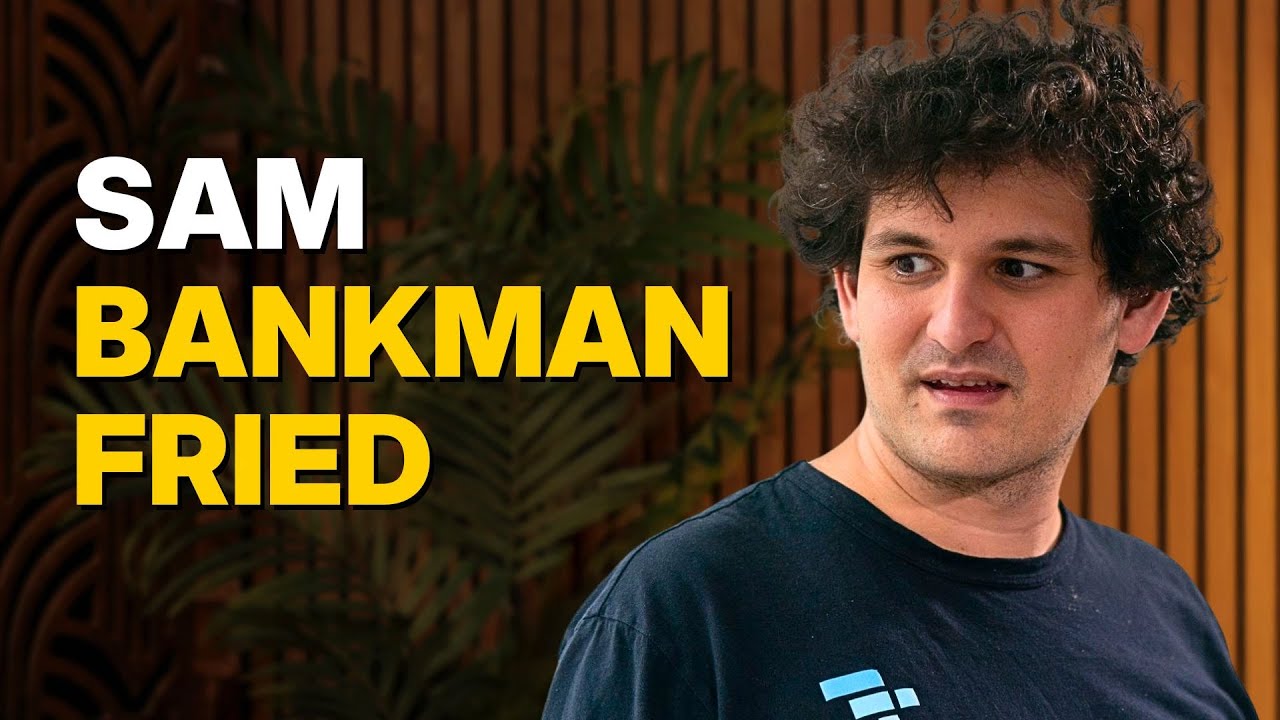
Sam Bankman-Fried (SBF), CEO of FTX and a prominent effective altruist, discusses his career path, the philosophy behind his philanthropy, the internal mechanics of building FTX, and his views on crypto’s future. The conversation covers why he believes the world is full of low-hanging opportunities, how effective altruism shapes his decision-making, the practical challenges of founding companies, and the structural innovations he’s pushing in derivatives markets.
Career choices and earning to give
SBF reflects on whether his success was due to crypto market inefficiencies or broader opportunities in the world.
He believes the world generally has many inefficiencies and low-hanging fruit, not just crypto.
If restarting his career outside crypto, he thinks there’s still a decent chance he could become a billionaire by starting a business, depending on how aggressive he chose to be.
He discusses the advice from Will MacAskill at MIT to earn-to-give via a quant firm like Jane Street.
He doesn’t think it was literally the best possible advice (since crypto didn’t exist as an option in 2012), but it was helpful relative to no advice.
He notes that people are often advised too strongly toward safe career paths, which makes more sense personally (due to declining marginal utility of money) than altruistically.
Personal considerations and advice from close relationships weigh heavily on most people’s career decisions, though SBF says his own path was more driven by the advice he received.
Effective altruism and moral uncertainty
On whether EA drives away potential leaders:
SBF thinks the bottleneck of “someone who can start something” is a general property of the world, not unique to EA—even profit-minded projects often lack the right leader.
Getting more people to become EA founders requires normalizing failure and building a community that accepts the personal fallout of failed startups.
On moral uncertainty and whether utilitarianism might be wrong:
SBF says it doesn’t hugely impact his giving because he hasn’t seen compelling alternative frameworks that would lead to different actions.
He acknowledges deep uncertainties (infinite ethics, simulation hypothesis, size of the universe) but notes that few people rigorously chain through the implications.
These considerations have shifted him slightly toward funding things with more robust impact—pathways that hold up under multiple worldviews—rather than ones that collapse if a single assumption changes.
He still favors well-vetted, specific reasoning over vague “make the world better in diffuse ways,” but thinks EA can sometimes be too narrow in plotting out courses of impact.
Political giving and pandemic preparedness
SBF gave $12 million to Carrick Flynn in the 2022 Oregon Congressional Election, who lost.
Flynn was the most outspoken candidate on pandemic preparedness, which motivated the donation.
SBF never thought the odds were extremely high; it was always going to be a close race, so the loss didn’t dramatically update his beliefs about political giving efficacy.
He acknowledges there may be diminishing or negative marginal returns from one donor giving at very large scales due to negative PR.
On whether to fund pandemic prevention via political campaigns or directly:
Pandemic prevention requires tens of billions of dollars and international cooperation on surveillance and vaccine distribution, making government involvement necessary.
The two approaches (political giving vs. direct funding) aren’t mutually exclusive.
FTX Future Fund and philanthropy
On why create a new EA funding organization:
The re-granting program is a key innovation: donating pots of money to domain experts who re-grant semi-autonomously, giving more stakeholders a voice and enabling many small grants.
Small grants ($25,000) can be the most impactful per dollar—funding a new organization’s first six months of salaries or office space—but are hard for a central team to evaluate at scale.
Re-grantors find opportunities locally, reducing bias toward people the fund already knows.
The application process has been made smooth to lower activation energy for applicants.
On adverse selection in philanthropic deal flow:
SBF acknowledges the risk that easy applications could attract low-quality proposals.
The fund vets all grants and does deep dives on random samples of small grants to statistically check for adverse selection. So far, no obvious signs of it.
On whether EA causes are multiplicative:
SBF originally argued EA causes are multiplicative rather than additive, but now sees it as more complicated.
Around AI, many factors affect both safety and capabilities simultaneously, making the net impact on safety ambiguous.
When causes are multiplicative, you want to fund each piece; when they’re not, you should identify and move the most impactful pieces.
On correlation between interventions from a portfolio perspective:
SBF argues correlation doesn’t matter much—expected value is expected value. Each beneficiary wants to be saved regardless of whether others are.
On the most likely way Future Fund fails:
Becoming “lame”—giving to decent but uninnovative things, failing to start new causes or think creatively, and converging with what everyone else funds.
On whether his giving should be thought of as annual contributions or a hedge fund against existential risk:
They’ve given about $100 million so far in 2022 and are actively discussing whether to concentrate giving for one large opportunity or diffuse it across many.
What makes a good founder
When evaluating whether someone is right to lead a project, the most commonly missing traits:
Willingness to do messy, unglamorous grunt work: SBF describes spending thousands of hours opening bank accounts and having senior staff manually instruct wire transfers at physical bank branches. Founders who refuse to do this kind of work cause critical tasks to fall through the cracks.
Genuine excitement and commitment to the idea: Whether the person will put their heart and soul into it or half-ass it.
On hiring and mentorship:
SBF weighs experience relatively little when hiring. More important is how people think, how quickly they understand new situations, and how hard they try to learn how FTX works.
Experience has not correlated much with how much mentorship someone needs.
He assesses candidates by giving them novel scenarios and seeing how they bend versus break, and by asking them to architect systems based on customer goals rather than treating problems as abstract engineering exercises.
Company culture and scaling
On why existing crypto exchanges didn’t fix the problems SBF identified (e.g., clawbacks):
Many lacked market structure experts and had cultural barriers to taking his proposals seriously.
More fundamentally, companies that grow very fast in headcount become internally chaotic—diffusion of responsibility, unclear ownership, and eventually negative marginal utility of employees.
SBF describes proposals likely dying in a game of internal telephone between people with no clear mandate.
On focus and talent allocation (drawing from baseball pitcher fatigue):
Just as pitchers perform better with shorter, more frequent outings, people get mentally exhausted—but context is a huge piece of effectiveness.
One full-time employee with full context is far more effective than two half-time employees.
Concentrated, deep work produces better results than constantly broken-up work.
On the biggest cultural differences between Jane Street and FTX:
Jane Street has a culture of being very good at one thing over a decade-long timescale.
FTX has a culture of rapidly morphing and taking on new challenges—things they knew nothing about a year ago are now core competencies.
FTX is also much more public-facing and customer-facing, making PR and branding more central.
The future of crypto
On whether crypto will subsume traditional finance or just stress-test ideas for it:
SBF thinks it’s path-dependent and avoids extreme confidence, but believes many crypto properties will make their way into TradFi.
Stablecoins becoming an important settlement mechanism is “pretty likely.”
Blockchains as settlement, collateral clearing, and tokenization of more assets seem likely.
Composable applications on blockchains are going to get more important.
How decentralized ecosystems intersect with regulation remains TBD.
Derivatives market structure
On SBF’s CFTC proposal to replace Futures Commission Merchants with algorithmic real-time risk management:
The worry: algorithms could cause unnecessary liquidation cascades without human discretion.
SBF’s model inverts the current structure: an automated clearinghouse at the center, with FCMs using discretionary systems for their clients.
The key is that initial margin must end up at the clearinghouse programmatically, preventing contagion between intermediaries—one FCM’s credit decisions don’t pose risk to others.
Human discretion can add economic value but is also risky when done poorly; in the current system, each FCM is exposed to all other FCMs’ bespoke decisions.
On whether this creates a single point of failure:
SBF notes this is already the case with prime brokers—if you post all collateral with one, their decisions govern everything.
Users can spread collateral across venues if they prefer, trading off capital efficiency (from cross-margining) against concentration risk.
On whether a single exchange will win in the long run:
SBF doesn’t think so. Different exchanges will make different decisions suited to different products (e.g., physical commodities like corn need bespoke risk models that understand warehouses).
Multiple exchanges can connect to the same clearinghouse, and people will have different preferences over system details.
Conflict of interest between broker and exchange
On combining exchange and broker in one entity:
SBF argues their incentives are more aligned than they appear—both want a great customer experience.
Synchronizing them avoids the “least common denominator” problem where two separate entities each support features poorly.
Harmonizing allows better customer experience than forcing customers through two disconnected systems.
Bahamas and charter cities
Living in the Bahamas has updated SBF’s view of charter cities positively.
They’ve built out specific infrastructure with strong government support and found it more doable than he previously thought.
But he notes this is far easier than building a full city from scratch on empty land.
SBF’s RAM-skewed mind
SBF describes his mind as “RAM-skewed”—focused on what’s in front of him day-to-day rather than long-term memory.
Upside: FTX has been good at rapidly adapting and focusing on whatever is important at any given moment—product, regulation, licensing, branding, etc.
Downside: He needs people around him to remember long-term priorities that might get lost in daily firefighting, and he has to deliberately step back periodically to recall the big picture.