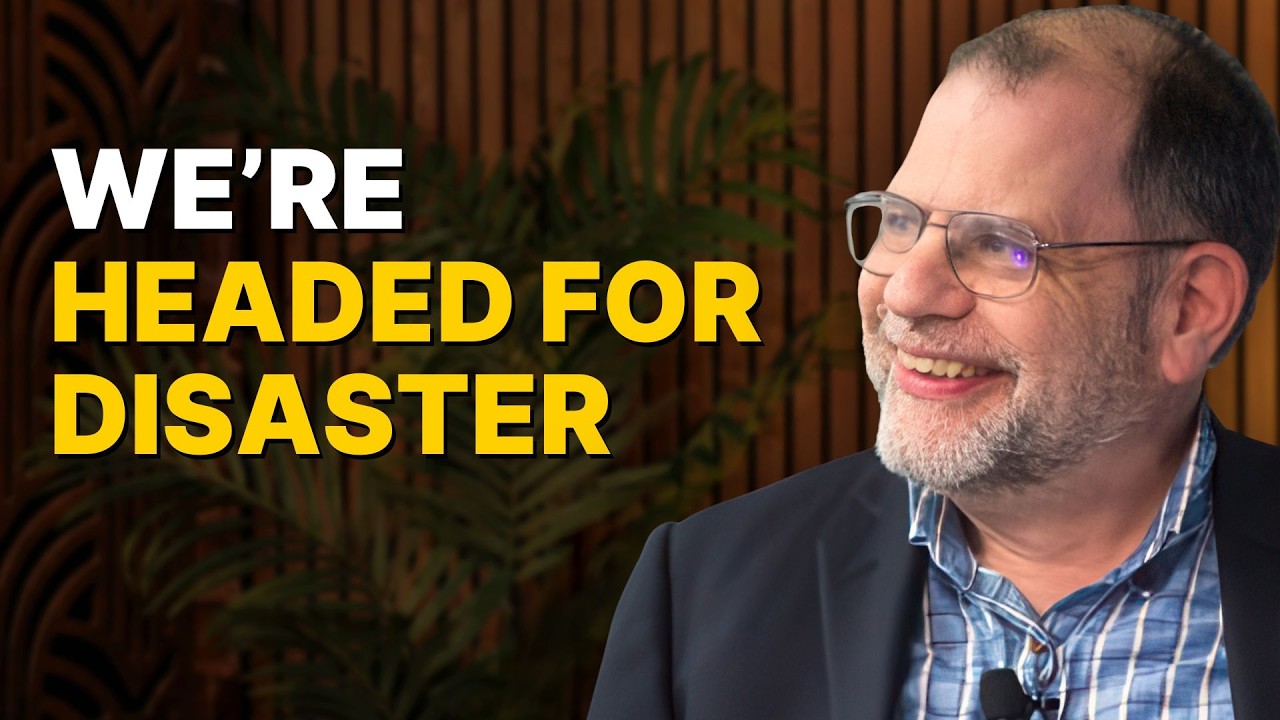
Tyler Cowen discusses talent spotting, institutional decay, travel, existential risk, and the nature of intellectual influence, drawing on his book Talent and his experience running Emergent Ventures.
He argues that understanding people requires direct exposure—travel teaches you how little you can learn about a place from books alone, and the same applies to evaluating talent: context is scarce, and most people need significant experience (including higher education) to acquire it, even if they don’t remember specific facts from school.
Institutions don’t universally drift leftward over time (contra Conquest’s Law); the apparent leftward shift in American intelligentsia reflects specific political realignments, not an inherent tendency in intellectual life.
Talent is highly geographically clustered in “sink” cities like New York and London due to path dependence, money, and linguistic ties—not cyclical forces—and this clustering shows long-term persistence.
Spotting talent remains more art than science: humility in applicants raises suspicion (it may signal lack of confidence or avoidance of confrontation), while arrogance—especially in youth—can be a positive signal of drive and self-belief.
Writing skill matters because it reflects thinking ability and is a strong proxy for competence in public intellectual and startup contexts; physical stamina also correlates with mental stamina and can be trained.
Intelligence has convex returns: it matters enormously for rare, high-impact roles (e.g., inventors, founders) but less so for most jobs; top athletes and other elite performers often exhibit high cognitive ability, suggesting many fields are more g-loaded than assumed.
Emergent Ventures succeeds by keeping evaluation small, low-cost, and non-bureaucratic—avoiding the credentialization trap (Goodhart’s Law) that plagues larger programs like Y Combinator.
Long-termism overstates our ability to influence existential risk; reducing such risks largely involves familiar goals like growing GDP, supporting science, and fostering talent—not novel interventions.
Human civilization is unlikely to survive for hundreds of thousands of years due to accumulating risks (nuclear war, pandemics, etc.), and recovery from collapse is not guaranteed—the existence of sex itself reflects a pessimistic biological reality: nothing persists unchanged.
Public intellectuals gain focality through performance art as much as ideas; those who bet heavily on single issues (e.g., Jordan Peterson) risk fading when those ideas lose relevance, whereas sustained, moderate engagement (like Cowen’s) maintains influence longer.
State capacity isn’t clearly declining—some functions (e.g., Operation Warp Speed, DMV improvements) have gotten better—driven by individuals within systems who want to improve them, not grand institutional reforms.
Podcasts serve as high-class entertainment and a low-cost way for people to feel intellectually engaged without doing original research; they complement but don’t replace real inquiry.
Talent Spotting and Education
Talent is contextual: You can’t assess someone without understanding their environment; most people need higher education not for factual knowledge but for acquiring social context, networking skills, and exposure to diverse personalities.
Brian Caplan’s Case Against Education underestimates how much people learn in school—just not the kind that shows up on tests.
Cowen met Caplan as a teenager and immediately recognized his exceptional enthusiasm and detail-oriented thinking—traits that have remained consistent for decades.
Emergent Ventures evaluates potential through short applications and Zoom calls, but only works for outliers—most people still need traditional pathways to develop context.
Rejects are rarely borderline; the distribution is bimodal, so rejection usually means low assessed potential, not poor fit.
Applicants who’ve read Talent may gain a slight edge, but true manipulation is rare—and if they can fool Cowen, that itself signals talent.
Geography and Clustering of Talent
“Sink” cities (New York, London) attract talent persistently due to economic opportunity, size, and historical path dependence—not temporary advantages.
San Francisco may be a more fragile cluster due to high costs and recent emergence.
Source regions (e.g., rural Italy, parts of Africa) lose talent to sinks, though some diasporas (e.g., Indian Americans) give back consistently.
Why certain places become talent hubs is poorly understood: Florence and Venice during the Renaissance weren’t obvious choices; theory fails to predict these clusters.
Traits and Signals in Talent Evaluation
Arrogance in youth is often a positive signal: It suggests ambition and willingness to challenge norms (e.g., Mark Zuckerberg wearing pajamas to a VC meeting).
Professional dress in young applicants can indicate overconformity, which Cowen views skeptically—unless the context demands it.
Mental illness (e.g., depression, anxiety) correlates with artistic creativity but doesn’t predict reliability in routine roles.
Caffeine and nootropics: Cowen avoids caffeine due to addiction concerns, though he acknowledges many successful people use stimulants without obvious harm.
Women may be better at detecting deceit due to evolutionary pressures—higher costs of deception in mating led to stronger female defense mechanisms.
Writing, Stamina, and Intellectual Development
Writing is a form of thinking: Strong writers are better at structuring ideas, which is why Cowen values it highly in grant applicants.
Stamina is trainable: Most people can increase mental and physical endurance by 30–50% through practice; physical fitness supports cognitive stamina.
Reading biographies teaches complexity: Figures like Napoleon show how multifaceted success is—useful for young people seeking to understand effectiveness, even if not as direct career advice.
Existential Risk and Long-Term Thinking
Existential risk is vastly overvalued by some EA advocates: While important, mitigating it requires conventional investments (science, growth, talent), not exotic new policies.
AGI alignment efforts are unlikely to prevent catastrophic outcomes if the risk is real—the weakest actors, not the most careful ones, will cause failures.
Humanity probably won’t survive 100,000+ years: Annual risks (nuclear war, pandemics) compound over time; even small probabilities become near-certainties over millennia.
Recovery from civilizational collapse isn’t guaranteed—the historical record shows long periods of stagnation (e.g., pre-1500 global development).
Sex as a pessimistic mechanism: Evolution favors sexual reproduction because static organisms get destroyed by parasites—implying nothing endures unchanged.
Institutions, Risk, and Influence
Tenure doesn’t reduce risk aversion because academia selects for conformity and trains people to avoid deviation; taking real risks (e.g., challenging core theories) isn’t straightforward.
Public intellectuals peak early when they bet on single ideas (e.g., Andrew Sullivan on gay marriage); those with broader, evolving perspectives (like Cowen) sustain influence longer.
Blogs and Substacks endure as formats: Regular writing builds audience and legacy; Substacks tend toward longer, more self-reflective posts, while blogs allow stronger editorial curation.
Podcasts as intellectual anesthesia: They let people feel informed without doing hard work—but that’s better than passive TV consumption.
Optimism, Pessimism, and the Future
Short-term optimism, long-term pessimism: Progress continues (mRNA vaccines, AI advances), but cumulative risks make civilizational collapse likely within centuries.
State capacity isn’t clearly declining: Some government functions have improved due to motivated individuals, not systemic reform.
Libertarianism won’t dominate, but classical liberal values (capitalism, democracy) have a good chance of advancing—Cowen is “long the market.”
Fukuyama’s “last man” problem (liberal democracy breeds dissatisfaction) is real but not unique to liberalism—no system satisfies human restlessness.