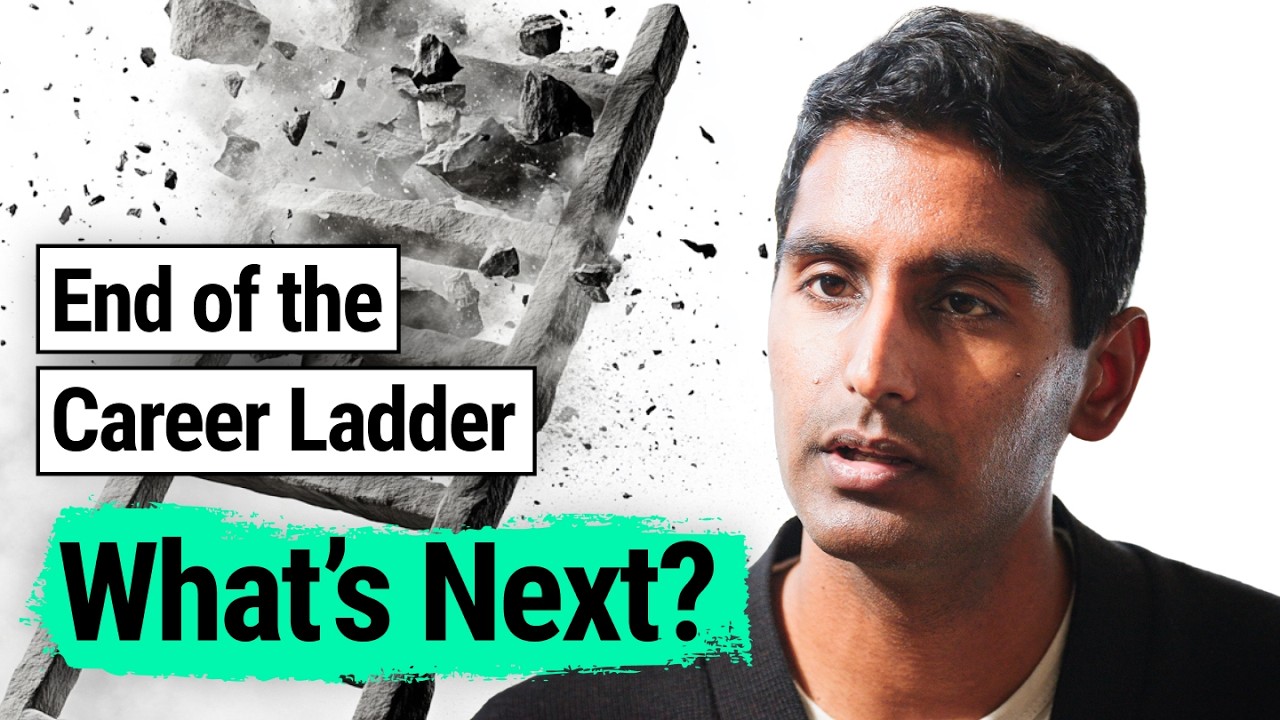
Stanford economist Bharat Chandar’s research reveals that AI is disproportionately hurting young workers’ employment prospects, with 16% slower job growth in AI-exposed roles like software development and customer service, while experienced workers remain largely unaffected — suggesting AI is eroding the traditional entry point into professional careers and may require a fundamental rethinking of how people build skills and move between jobs over time.
The Canary in the Coal Mine: Young Workers and AI Exposure
Chandar, along with collaborators Erik Brynjolfsson and Lynn Wu Chan, analyzed millions of U.S. workers using payroll data from ADP and found that overall employment changes between AI-exposed and less-exposed jobs were not dramatically different.
However, when isolating young workers, a clear divergence emerged: employment declined in AI-exposed roles while continuing to grow in less-exposed ones.
For experienced workers, employment growth remained on trend regardless of AI exposure.
The 16% slower employment growth for young workers in AI-exposed jobs is substantial and concerning.
The researchers tested alternative explanations — interest rate changes, tech over-hiring, and removing the tech sector or computer jobs entirely — and the results held, strengthening the case that AI itself is driving the effect.
Jobs most exposed to interest rate changes (like construction and transportation) are actually among the least exposed to AI, making it unlikely that macroeconomic factors explain the findings.
The “Canary in the Coal Mine” framing reflects the concern that these early signals could foreshadow much larger, long-term structural changes in the labor market.
The researchers acknowledge they cannot run a clean experiment comparing a world with AI to one without, so more work is needed to isolate AI’s causal impact.
Why Young Workers Are Losing Their Edge
Young workers typically enter the workforce doing implementation work — tasks that rely on book knowledge learned in school — which overlaps directly with what AI can now do.
What they lack is tacit knowledge: hyper-local context, strategic thinking, and social interaction that can only be built through on-the-job experience.
Experienced workers hold a relative advantage in these areas, both compared to AI and compared to young workers.
Firms have some incentive to hire and train young workers to build future middle management, but the incentive is misaligned with what society needs.
Young workers can leave for another company after being trained, so individual firms may under-invest in hiring and training them relative to the social optimum.
Chandr identifies three areas where AI is likely to remain weak in the short to medium term:
Strategic thinking and guiding what needs to be done.
Social interaction.
Strategic thinking is likely to become even more important because future work may involve guiding AI agents on what to implement rather than doing the implementation oneself — essentially the role of a manager.
The ability to express what needs to be produced or what outcome is desired is a key skill that AI cannot easily replicate.
Chandr encourages young people to build and use AI tools as much as possible to develop this kind of strategic, guiding expertise and to learn where AI falls short and where humans add the most value.
From Career Ladder to Career Lattice
Chandr draws historical comparisons to contextualize AI’s impact:
The Industrial Revolution threatened the most skilled workers (like the Luddites, skilled textile workers), which is similar to how AI today disproportionately exposes educated knowledge workers.
By contrast, electricity and the IT revolution tended to displace middle- and low-skilled work while benefiting the most educated — the opposite pattern.
It remains unclear which historical pattern AI will ultimately follow.
One way AI may differ from past technologies is the sheer rate of capability improvement — AI today is far more capable than it was just three years ago.
The critical question is whether new work created by AI will be done by humans or whether AI capabilities will advance fast enough to absorb that work too.
Chandr argues for using AI as a tool for augmentation rather than accepting pure automation.
A startup founder with a lean team who can now handle many functions because of AI is a clear example of augmentation — the scope of tasks a person can do expands.
Automation, by contrast, shrinks the set of tasks a worker does.
He sees AI’s greatest potential for augmentation in education and personalized learning, which could be the biggest shift in learning capabilities in a century or more.
If AI can dramatically speed up how people learn, it could make it easier to switch between professions as demand evolves — moving from a rigid career ladder to a flexible career lattice.
Chandr personally uses AI for tasks like checking mathematical models and proofs (where verification is easier than creation from scratch) but not for writing, because writing helps him think and understand problems deeply.
He argues that deciding what to delegate to AI and what to preserve as human depends on human values and preferences — figuring out what we want to build, what would make us better off, and what goals to pursue.
This reflective, preference-expressing work is characteristically human and not easily automated in the short to medium term.
There is a potential trade-off between inequality and learning incentives:
If AI lowers the barriers to producing high-quality output in any field, inequality in the labor market could decrease because the gap between highly educated and less-educated workers narrows.
But if AI increases the returns to strategic thinking and social skills, the benefits of investing heavily in education could actually rise.
New educational interventions are emerging, such as Khan Academy’s AI tutoring mode that guides students through critical thinking rather than simply giving answers, aiming to prevent cognitive offloading.
Chandr is optimistic that if AI’s learning potential is fully unlocked, workers could transition between professions more fluidly, creating a career lattice that adapts to economic change rather than a rigid ladder that leaves workers vulnerable to technological disruption.