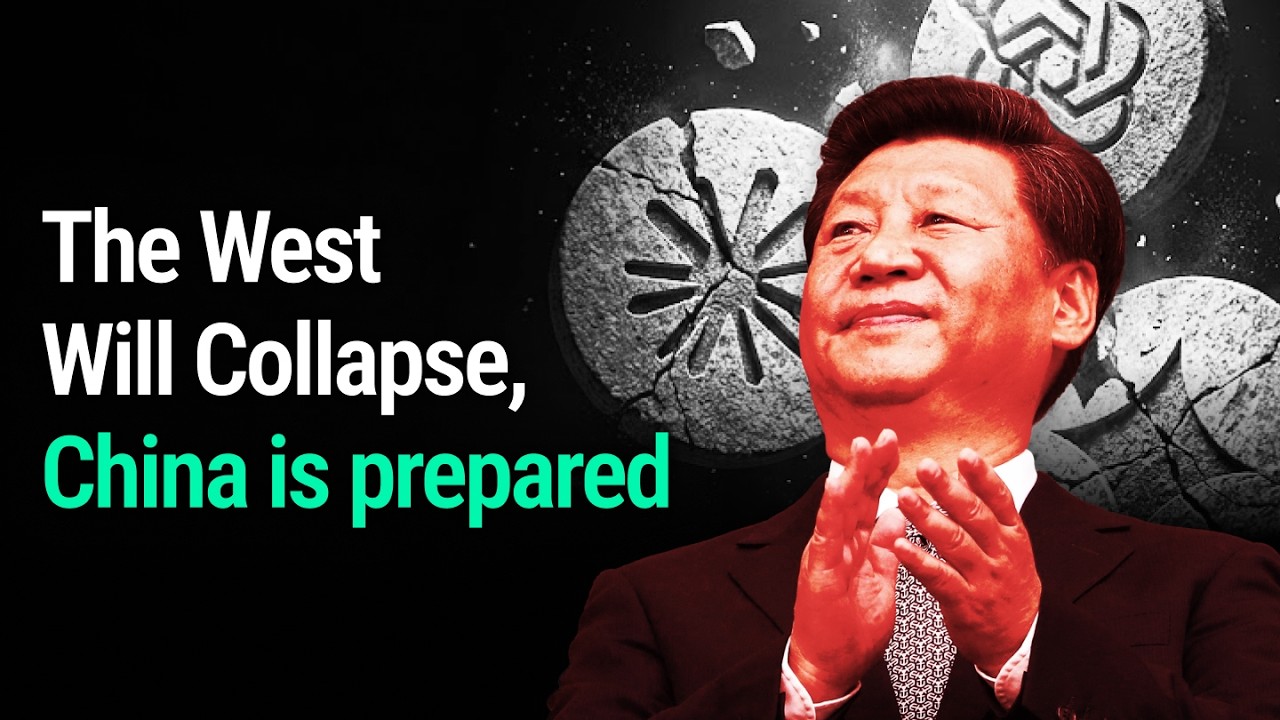
Dan Wang, author of Breakneck: China’s Quest to Future and a research fellow at Stanford’s Hoover Institution, argues that the US-China competition is less about who has the better AI model and more about who can build, manufacture, and deploy technology at scale — and on that front, China holds a commanding lead. He contends that the US is at best moderately ahead in AI, and that this narrow lead is far less decisive than Washington’s “magical thinking” suggests, especially given China’s overwhelming advantages in industrial capacity, energy infrastructure, and manufacturing ecosystems. His central thesis is that both countries are currently engaged in self-defeating behavior, and the winner will be whichever nation stops making the gravest mistakes first.
China’s Industrial and Infrastructure Dominance
Manufacturing output vastly outpaces the US: China built roughly 1,500 ships last year compared to about five in the US. Chinese automakers iterate on new models in about 18 months versus five to six years for American automakers. China has approximately 70 million manufacturing workers spanning mass labor to world-class engineers, organized into dense production ecosystems where suppliers for batteries, sensors, and components are located right next to each other, enabling extraordinary speed and flexibility.
Energy infrastructure is massively scaled: China installed about 300 gigawatts of solar power last year; the US installed about 30 gigawatts. China currently has 40 nuclear power plants under construction; the US has zero. This energy advantage is critical because deploying AI at scale requires enormous electrical power, and China is building that foundation far faster.
“Dark factories” and advanced automation: China operates highly automated factories — called “dark factories” because so few human workers are needed that most lights are off — producing iPhones, consumer electronics, electric vehicles, and batteries. These facilities represent the cutting edge, but Wang emphasizes that even China’s broader base of conventional factories is more capable and competitive than most American alternatives.
Physical infrastructure built at breathtaking speed: China built its first high-speed rail system about 15 years ago and now has roughly twice as many high-speed rail lines as the rest of the world combined. Cities that had no subway lines 20 years ago now have a dozen or more. This reflects what Wang calls the “engineering state” — a leadership class of engineers who excel at building physical things.
The US Lead in AI Is Real but Narrower Than Assumed
US leads in model sophistication, but not by a decisive margin: Wang acknowledges the US is ahead in producing the most advanced AI models, but he views the lead as moderate rather than substantial. Chinese companies have produced excellent models despite nearly a decade of US export controls, and many Chinese models are not far behind their American counterparts.
China is competitive or ahead in some areas: Chinese open-source models are often more cheaply run, and some Chinese video generation models may even be ahead of US alternatives. Wang argues that model sophistication alone is an incomplete measure of AI competitiveness — deployment, integration into manufacturing, and access to cheap energy matter enormously.
Washington’s “magical thinking” about AI: Wang is skeptical of the belief in Washington that achieving superintelligence would give the US a decisive strategic advantage, calling this a form of magical thinking that ignores China’s ability to catch up quickly and its advantages in actually deploying technology at scale.
The Dark Side of China’s Engineering State
Engineers who build bridges also engineer people: Wang credits China’s engineer-led leadership for extraordinary physical dynamism — subways, rail, power, manufacturing — but argues the fundamental problem is that engineers cannot resist treating the population as another building material to be reshaped. This impulse leads to social engineering and population engineering.
The one-child policy as a case study in technocratic overreach: China’s leadership in the 1970s embraced Western doomsday predictions about overpopulation and tasked missile scientist Song Jian with providing mathematical justification for the one-child policy. Over 35 years, this resulted in approximately 300 million abortions and 100 million sterilizations of women, which Wang describes as a “campaign of rural terror.”
Information control and the “Anaconda in the chandelier”: China’s censorship apparatus operates through pervasive self-censorship. Perry Link’s metaphor describes a giant anaconda coiled in a chandelier above a dinner table — no one knows when it might strike, so everyone restrains themselves. Messages on WeChat may be blocked by state sensors inside Tencent before they reach recipients. Independent journalism has been largely shuttered. Wang’s own website, danwang.co, was blocked in spring 2022, a small but illustrative casualty.
Corrosive effect on creative thinking: Wang argues this environment of fear and self-censorship undermines the kind of independent, critical thinking that fuels genuine innovation. He has made it a personal mission as a writer to tell the truth about both China’s achievements and its grave mistakes — including the zero-COVID program — without allowing censorship to shape his own consciousness.
Both Countries Are Hurting Themselves
China’s self-inflicted wounds: In 2021, Xi Jinping — feeling confident after China’s early COVID success — ordered a controlled demolition of the property sector and cracked down on tech entrepreneurs, most notably Jack Ma. Wang argues these decisions are a primary cause of China’s current economic problems. The lesson: the country ahead makes mistakes out of overconfidence and hubris.
America’s self-inflicted wounds: The US, feeling ahead, has engaged in its own self-sabotage. Under Trump’s first term, the US lost about 80,000 manufacturing jobs. Tariffs have eroded alliances. The deportation of around 300 South Korean engineers from a Hyundai plant in Georgia — workers building electric vehicle batteries — sent a damaging signal to global talent about whether they want to work in the US. Wang argues this kind of behavior makes America less attractive to the skilled workers it needs.
The competition favors whoever stops making mistakes first: Wang’s model is dynamic — the leader grows complacent and hubristic, while the laggard feels the crack of the whip and pushes harder. He is suspicious of deterministic arguments that China must win because of manufacturing or must lose because of demographics. Both countries have major strengths and are in a race where both are trying to run faster.
What Each Country Needs to Do
China needs restraint: Wang’s message to Beijing is to “do less” — for the Communist Party to stop trying to be intense social engineers and engineers of the soul. If the party could learn restraint, China’s underlying strengths in manufacturing, energy, and infrastructure would be even more formidable.
The US needs to rebuild its domestic foundations: Wang argues that Silicon Valley founders have been rewarded with enormous wealth but have not delivered broad-based value to ordinary Americans. The fault lies not with entrepreneurs but with governments — San Francisco, California, and the federal — that have failed to provide clean, orderly streets, affordable housing, and a sense that the country is growing and thriving. Net out-migration from California to states like Texas and Arizona has been considerable.
The “Made in China” brand is ascending: Wang predicts that within a decade, “Made in China” will be viewed as a mark of excellent quality, similar to how “Made in Germany” and “Made in Japan” are perceived today. The future of manufacturing is moving toward China.
AI’s Impact on Employment
Early evidence of AI displacing young workers: Data comparing jobs more exposed to AI versus less exposed shows that young workers in AI-exposed roles are experiencing 16% slower employment growth. These tend to be high-income knowledge-work jobs, since AI is currently most capable of performing that type of work.
The choice between automation and augmentation: Wang frames the future as a choice — workers and companies can use AI to augment their capabilities, increasing the scope of tasks they can perform, or they can allow AI to shrink their roles through automation. The technology is not going away, so the question is how it is deployed.