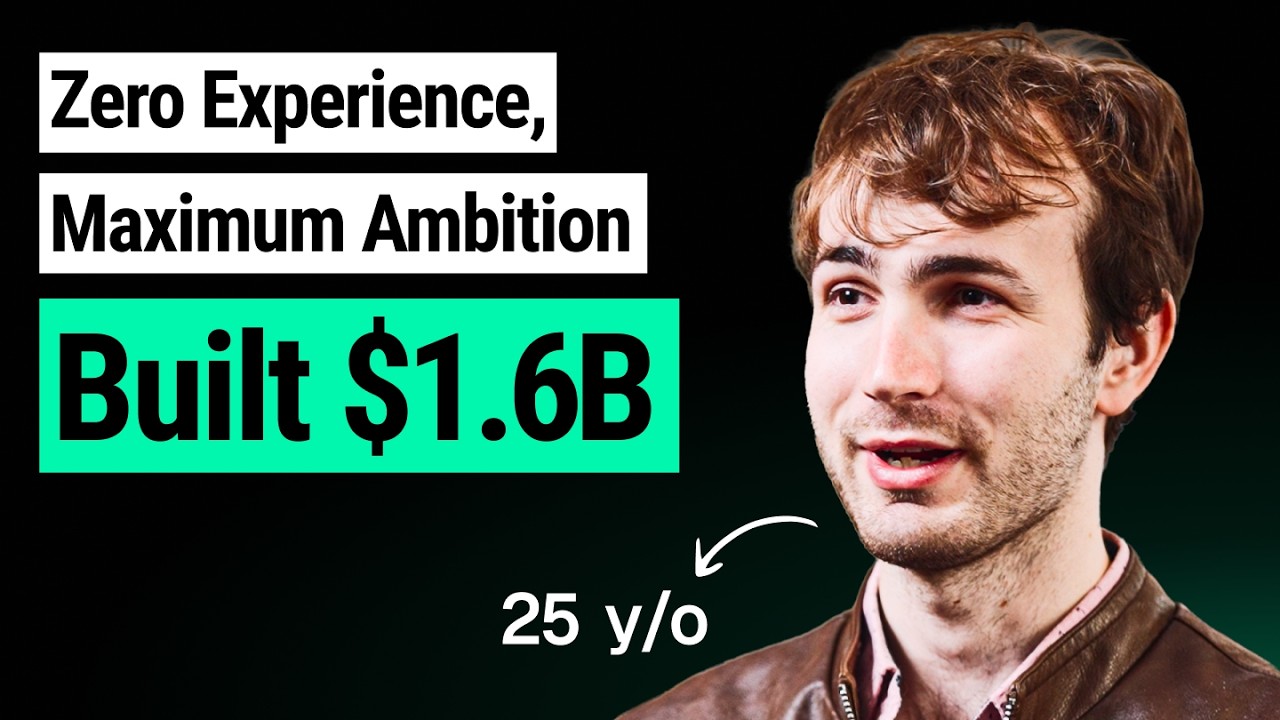
Corgi is an AI-native insurance carrier built from scratch for tech startups, founded by Nico Laqua (CEO) and Emily Yuan (COO). What started as a simple brokerage became a full-stack insurance company after the founders realized the entire industry runs on outdated infrastructure — faxes, phone calls, and century-old carriers — and that the only way to build a genuinely better product was to become the carrier themselves. They shut down a working brokerage business, raised nearly $80 million pre-revenue, spent two years obtaining regulatory licenses, and built proprietary infrastructure that now powers several hundred million dollars in ARR, making them one of the fastest-growing B2B companies in the world.
The Founders and How They Got Here
Nico Laqua grew up in San Diego, started a nonprofit called Paper Bridges in high school sending letters and medical supplies to orphans and foster kids, then built and ran a gaming company called Basket for over four years before deciding it wasn’t impactful enough for the next decade of his life.
Emily Yuan was running a Stanford entrepreneurship club when Nico approached her to test a college club app he’d built. She came back with a Figma page of 100 detailed comments, and their partnership evolved from there — first into the app company Picnic, then Basket, and finally Corgi.
Nico’s strength is identifying high-leverage opportunities; Emily’s is operational execution — taking complex, ambiguous problems and figuring out how to get them done.
Both founders share a philosophy: pursue the most ambitious version of your goal, not a scaled-down one. They believe big, hard ideas attract better talent, more investor interest, and ultimately create more world-changing outcomes than small, safe ones.
Why Insurance — and Why It Had to Be Rebuilt
Nico’s frustration with insurance came from firsthand experience: at his previous company, a $60,000 policy took weeks to obtain, brokers ignored emails, and the policy never paid out. The process was opaque, slow, and terrible — despite insurance being a $100+ billion market (12% of GDP, roughly twice the size of software).
The industry’s problems are structural, not cosmetic:
Most major carriers were founded 40+ years ago and are deeply complacent.
Heavy regulation creates enormous barriers to entry, which incumbents use as a moat rather than an incentive to improve.
The actual product — the insurance policy itself — is broken, not just the website or sales process.
Carriers worth hundreds of billions of dollars still operate via fax machines and phone calls for every single policy.
The founders initially applied to Y Combinator as a brokerage, embedding with contract management companies. It was working — they sold tens of thousands in premiums — but they discovered that brokering on top of legacy carriers meant inheriting all their limitations.
The key insight: the problem wasn’t marketing or tech on top — it was the underlying product. And the only way to control the product is to be the carrier.
Shutting Down a Working Business to Build Something Harder
They made the controversial decision to shut down their functioning brokerage and become a licensed insurance carrier — a move that was not obvious and nearly killed the company multiple times.
They skipped Demo Day. They went from being a promising YC company to one that was “not doing well at all.”
It took nearly $80 million raised pre-revenue, two years of regulatory licensing, and a multi-year process during which the company was “very default dead” on many occasions.
Why this was the right call: reselling someone else’s product would have made them a “boring company” that couldn’t change the world. Becoming the infrastructure — building a new type of financial institution from the ground up using AI — is what gives them a defensible, category-defining position.
They never made a pitch deck or did competitive fundraising. Their investors bet on them because they could see the team’s intensity: the office was full every day, Nico literally lives in the office, and the team’s commitment to the mission was unmistakable.
The Moat: Two Years and Tens of Millions of Dollars
The core moat is the infrastructure itself. Getting licensed as an insurance carrier and building the underlying systems took almost two years and over $100 million. Most companies simply cannot or will not do this.
“It’s hard for someone else to make a Corgi 2.0 because we had to spend so much time and so much money getting the infrastructure set up.”
Once the infrastructure was in place, revenue grew rapidly and the company inflected. The product sells itself because there’s no comparable alternative — unless someone else builds an entirely new carrier for startups, Corgi is the only option.
Regulation, while difficult, is not mysterious: the rules specify what you can and can’t do, and if you follow them, it’s doable. The challenge is the time and capital required, not some unknowable complexity.
The Advantage of Youth and Intensity
The founders believe young people’s superpower is time and energy, even if they lack capital. Nico lives in the office; many team members live nearby. That level of commitment and hours spent on the problem is extremely hard to compete with.
They also believe that being outsiders to the insurance industry was an advantage: they had no entrenched assumptions about how things “should” work, so they could question every part of the stack and rebuild it from an AI-native, tech-first perspective.
Their philosophy on good ideas: good ideas tend to be really difficult. Doing the hard thing creates deeper moats, attracts better people, and ultimately works out better than doing something easy and capital-light. Being the 500th restaurant or the 50th campus app is not a good business — being the category-defining company in a hard, ambitious space is.