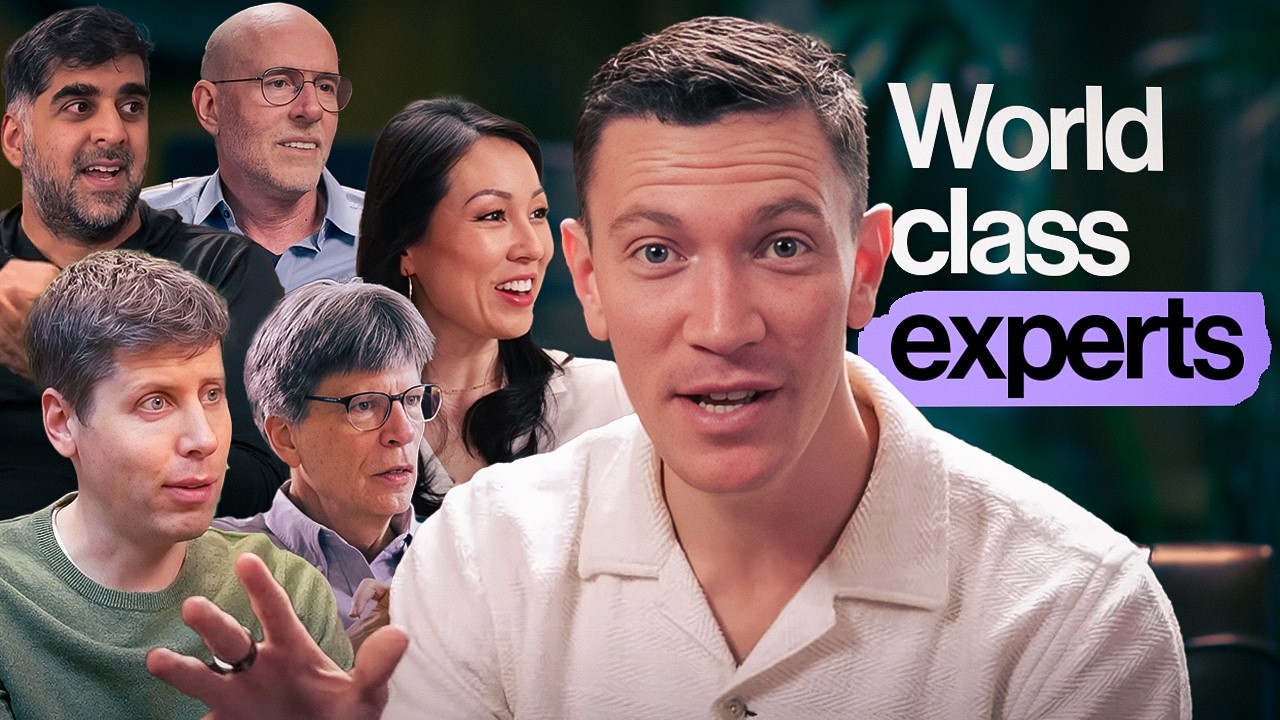
This episode is a curated “best of” compilation from the How I Write podcast, gathering the most impactful lessons on writing, storytelling, and communication from 2024. The central idea is that while there is no single correct way to write—every style, voice, and personality can find an audience—the standard of excellence is high, and mastery comes from understanding deep principles of craft, rhythm, structure, and human psychology. The episode moves through diverse voices and insights, unified by the theme that great writing is not about formula, but about intentionality, authenticity, and emotional truth.
How to Bring Scenes to Life (Amor Towles)
Towles illustrates how to write vivid, emotionally resonant scenes by shifting from clichéd cultural markers (e.g., “the Beatles played on the radio”) to the specific, sensory details a character would actually notice—like a child seeing frozen peas slide out of a brick from the freezer.
He emphasizes writing from the character’s perspective, not the author’s knowledge: a seven-year-old wouldn’t know about Frigidaires or Beatles albums, but would be fascinated by the texture of a frozen pea.
The emotional undercurrent of a scene—such as a mother discovering her husband’s infidelity—must be embedded in the language, tone, and rhythm, even if the child character doesn’t understand it. The reader should sense something is “off” before knowing why.
Towles writes his first draft freely, indulging his own whims and digressions, then revises rigorously from the reader’s perspective, cutting anything that doesn’t serve the story’s economy or emotional truth.
The Rhetoric of Memorable Lines (Mark Forsyth)
Certain rhetorical structures make phrases stick in memory because they align with how the brain processes language.
Diacope (a repeated word with interruption): “Bond, James Bond”; “To be or not to be”; “Free at last, free at last, thank God almighty, we’re free at last.” These create rhythm and emphasis.
Chiasmus (reversal of structure): JFK’s “Ask not what your country can do for you—ask what you can do for your country.” Humans love symmetry, and chiasmus delivers it linguistically.
These patterns are so powerful they can even alter memory: many people misremember the Wizard of Oz line as “Fly, my pretties, fly!” because diacope feels more natural than the actual repeated “fly.”
Great speakers and writers use these devices not to manipulate, but to clarify and elevate ideas—making complex truths feel inevitable.
Dopamine Culture vs. Substantive Writing (Ted Gioia)
Modern culture has shifted from art vs. entertainment to a third category: distraction—endless scrolling, pet videos, food photos—designed to deliver dopamine hits every 15 seconds.
Social media platforms are engineered for addiction, just like snack food companies optimize flavor duration to keep you reaching for more.
Chasing this trend—dumbing down content, speeding it up—is a losing strategy: editors who demanded this are now unemployed; their publications have vanished.
Gioia argues for organic writing: prioritize depth, quality, and authenticity. Build long-term reader relationships through substance, not short-term viral hits.
Just as food trends shifted from processed to organic, writing will reward those who offer real nourishment over empty calories.
The Power of Story Frames (Lulu Cheng Meservey)
Storytelling is often used as a buzzword, but its core function is to create stakes—giving people something to root for or fear.
Stories match the “holes” in our minds: we remember narratives, not statistics. Accusations are usually stories; defenses are usually data—and stories win.
In negotiations or public discourse, whoever sets the frame controls the conversation. If you’re reacting to someone else’s story, you’ve already lost.
The lesson: don’t just present facts—embed them in a narrative with tension, character, and consequence.
Note-Taking as Thinking (Sam Altman)
Altman is a prolific note-taker, using a simple spiral notebook (not fancy journals) that lies flat and allows pages to be ripped out.
He prefers the Uni-Ball Micro .5 pen or Muji 0.36/0.37 in dark blue ink—tools that feel good and support fast, fluid writing.
Notes are temporary: he crumples and discards them after use. The goal isn’t archival—it’s thinking through writing.
He goes through a notebook every 2–3 weeks, showing how central writing is to his cognitive process.
This system emerged from years of trial and error—no rigid method, just what works for clear thinking.
Why Funny People Win (Scott Galloway)
Humor and personality build connection. Galloway uses quick, one-sentence anecdotes (“a story can be five seconds”) to interrupt cadence and create life in writing or speaking.
Authenticity matters: showing emotion, pausing after a provocative image, or sharing personal photos (“me and my kids”) disarms audiences and builds trust.
Being yourself—even if it’s profane or polarizing—is a brand strength. You attract the right people by repelling the wrong ones.
The key: interrupting rhythm creates engagement. A sudden joke, image, or silence resets attention and makes your message stick.
The Anatomy of a Great Story (Shaan Puri)
Every compelling story has stakes—not necessarily life-or-death, but emotional risk (e.g., embarrassment, ego, failure).
A story is a five-second moment of change: the instant a character transforms (e.g., Batman jumping without a rope, Scrooge embracing Christmas).
The ending is always the opposite of the beginning: the player settles down, the workaholic finds love, the miser becomes generous.
If you can’t identify the five-second turning point, you don’t have a story—just a sequence of events.
Crafting Viral Founders’ Letters (Jason Fried)
Fried’s viral letters (e.g., for Basecamp’s “Once” and “Hey”) follow a clear structure: establish the past → expose the broken present → offer a new future.
Open with mystery: “Something happened to business software”—a statement that poses an implicit question, pulling readers in.
Use personification: SaaS becomes a “landlord,” users become “tenants.” This makes abstract ideas relatable through lived experience (e.g., broken refrigerators, unresponsive landlords).
Play with language: alliteration (“prayers and payers”), rhythm (“a redo, a rethink”), and punchy endings (“Boom—you’re evicted”).
Design and copy are inseparable: Fried writes directly in Figma, treating layout, typography, and words as one unified message.
The goal is resonance: get readers nodding (“Yeah, that’s how it is”) before offering your solution.
The Art of the Ad (Harry Dry)
Great ads are arguments, not tricks. Dry’s ad for his copywriting course contrasts two paths: “throw money and pray” vs. “learn copywriting.”
Start with a seed idea (e.g., “1% to 2% conversion = 100% growth”) and build iteratively—20+ rewrites over two days.
Use visual structure inspired by classic ads (e.g., Volkswagen’s winter prep checklist) to create clarity and contrast.
Solve design problems as copy problems: shortening “increase landing page conversions” to “increase conversions” forced better parallelism in headers.
Final polish comes from bolding key phrases, adding illustrations, and ensuring rhythm (“twice the cash, twice the staff, twice the ads”).
The ad works because it’s sincere, simple, and story-driven—not hype, but a believable better way.
Theme as the Soul of Story (Robert Greene)
A great story has a central theme—a moral or psychological truth (e.g., “power corrupts,” “hubris leads to downfall”)—that every detail reflects like a hologram.
Use sensory details (sights, sounds, smells) to ground readers in the physical world, but ensure those details echo the theme.
Surprise and relatability are key: readers should feel the emotion (fear, envy, awe) even if the setting is exotic or historical.
Greene’s secret ambition: make reading and philosophy “hip” again, so young people rediscover the enchantment of books over screens.
Writing is not about constant inspiration—it’s lonely, frustrating work. The real craft happens in editing, not the initial “high” of creation.
Voice and Syntax as Emotional Tools (Richard Powers)
English offers built-in bilingualism: Latinate words (“mansion,” “liberty”) sound formal or elite; Anglo-Saxon words (“house,” “freedom”) feel direct and grounded.
Writers can manipulate sentence structure to mirror emotion:
Front-loaded predication (“He pointed the gun”) = shock, immediacy.
Delayed predication (“Way back across the yard… she hid”) = suspense, mystery.
Split predication (“She, after years of silence, finally spoke”) = drama, intrigue.
Varying sentence types within a paragraph creates musical rhythm—like key changes in music—keeping readers engaged.
Lessons from Master Communicators (Sam Altman on Peter Thiel & Paul Graham)
Peter Thiel excels at evocative brevity: short, original statements that reframe thinking (“The biggest mistake was not investing in Facebook”).
His power comes from unconstrained thinking—seeing what others miss—and expressing it with clarity.
Paul Graham embodies clarity, precision, and density: no fluff, no posture, just clear ideas said well. His essays shaped a generation of founders.
Both show that writing is thinking: if you can’t write it clearly, you don’t understand it. Use writing to distill ideas before pitching or publishing.