-
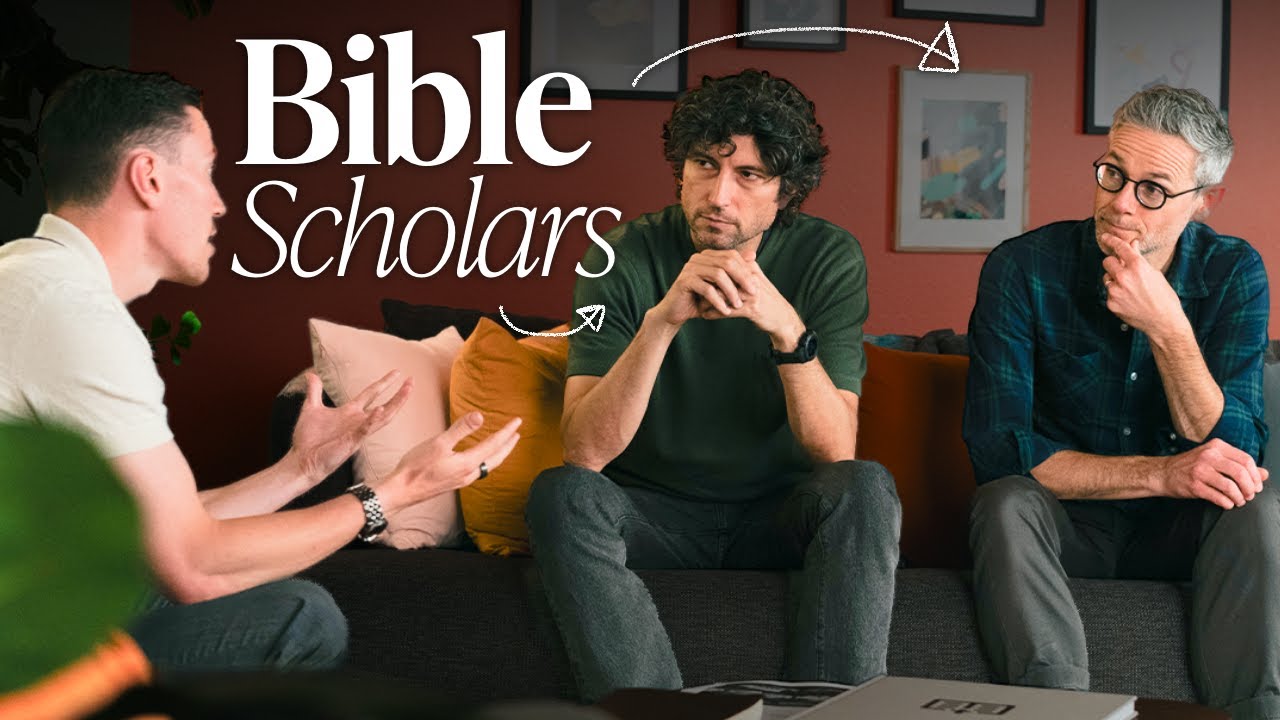
Tim Mackie and Jon Collins, co-founders of the BibleProject, explain how they create animated explainer videos about the Bible and what it means to truly read scripture
- The BibleProject is a YouTube channel with over half a billion views dedicated entirely to teaching people how to read the Bible
- Tim is the biblical scholar with years of graduate-level training in Hebrew, Greek, and biblical languages; Jon is the communicator who drills Tim through dialogue until complex ideas become clear and simple
- Their creative process moves from Tim’s research and notes, through hours of back-and-forth discussion, into script drafts, then to their animation team who storyboard and develop visuals
- The artists often spot logical gaps or unclear sections that Tim and Jon missed, sending the script back for revision
- Visual ideas from the artists sometimes unlock entirely new ways of understanding a concept, such as the “two doors” image that became central to one video
- The final scripts are written as dialogues between Tim and Jon, modeled on their actual conversations, which gives viewers permission to be beginners and feel their own questions voiced aloud
-
The Bible is designed to be wrestled with, not mastered as a rule book or theology textbook
- Tim and Jon argue that the Bible is literary art filled with intentional riddles, puzzles, and mysteries that are features, not bugs
- The biblical authors assume an ideal reader who meditates on scripture day and night for a lifetime, slowly discovering connections across the whole story
- The Hebrew word haga (meditate) means to mutter or speak quietly, the idea being that you keep the words on your lips and in your mind, letting them shape your imagination and desires over time
- Reading the Bible well means not just extracting doctrines but asking what the text is designed to do to you, entering it on its own terms and letting it do its work
-
The “illusion of knowing” is a major obstacle to genuine learning
- Jon describes the illusion of knowing as a psychological trick your brain plays: if you realized how little you actually understood about the world, you would go crazy, so your brain tells you that you already get it
- Both Tim and Jon actively mute this illusion by returning to the same ideas over and over, asking questions even when they think they know the answer, and being willing to say “I don’t know”
- Tim distinguishes between certainty and trust: the Bible is not trying to give us certainty (which stems from a desire for control) but rather to cultivate trust in God, which is a different and more important virtue
-
The Bible’s literary sophistication works through parallelism, hyperlinking, and layered meaning
- Biblical authors use visual and literary parallelism: two lines of poetry placed side by side, or two stories that mirror each other, asking the reader to compare and contrast to find deeper meaning
- Example: Adam and Eve seeing and desiring the fruit of the tree of knowing good and bad parallels King David seeing and desiring Bathsheba on the roof; the reader is expected to hold both stories together
- Example: Solomon in 1 Kings 3 asks God for “the knowledge of good and bad” (the same phrase as the tree in Genesis), and God is delighted and grants it, revealing that God was never withholding that knowledge but training humanity to ask for it rather than seize it
- The Bible is designed to be read at multiple altitudes: up close on a single parable, or zoomed out to see how patterns repeat across the entire narrative
- Details that seem irrelevant in one story are often placed there deliberately to echo and connect with other stories across scripture
- Biblical authors use visual and literary parallelism: two lines of poetry placed side by side, or two stories that mirror each other, asking the reader to compare and contrast to find deeper meaning
-
Visual media is uniquely suited to honor both the clarity and the mystery of scripture
- Jon’s background is in animated explainer videos, but he and Tim have moved away from the idea that a video should “smooth out” mystery; instead they want viewers to sit inside the mystery
- The animation team uses visual parallelism (parallel compositions across different stories), camera movement (pulling back to show a wider perspective during revelations), sound design, and layered imagery to communicate on multiple levels at once
- Every millisecond of animation is packed with intentional detail, so viewers can watch a video dozens of times and keep finding new meaning, mirroring how the Bible itself rewards repeated reading
- The goal is not to get people to watch more videos but to become wiser readers of scripture themselves; the videos are micro visual interpretations that model how to meditate on the Bible
-
The Bible’s writing styles are diverse, indirect, and demand active participation from the reader
- Poetry and metaphor are the Bible’s primary tools because metaphor is how humans actually understand anything; adopting new metaphors changes how you think at a deeper level than logical argument alone
- Jesus taught in riddles and parables partly because he lived under Roman military occupation and his claims were dangerous if misunderstood; his communication was clear enough to those who genuinely sought him but dismissible by critics
- Paul’s letters are dense, run-on, and sometimes break off mid-sentence because he was often dictating on the go; he assumed his audiences had already received oral teaching and was building on that foundation, not writing a systematic handbook
- The four Gospel writers each have distinct styles:
- Luke writes an orderly, journalistic account and acts as a cultural translator, editing down Mark’s cryptic stories and using more accessible language for Greek and Roman readers
- John is like a Rembrandt painting: dark with small beams of light, where every detail the light falls on is important; his Gospel is the product of decades of prayerful meditation on Jesus’s life, guided by the Holy Spirit
- The Psalms were chanted and sung in both Jewish and Christian monastic traditions, embedding them not just in the mind but in the body through daily repetition
-
The Bible has profoundly shaped Western language, ethics, and categories of thought
- English translations over 700 years, especially the Geneva Bible (Shakespeare’s Bible, brought by pilgrims to America) and the King James Version, embedded hundreds of Hebrew idioms and figures of speech into English (e.g., “the skin of my teeth,” “the dust of death”)
- Biblical ideas about the sacred value of every human life, the moral high ground of the powerless, and inherent equality before God became foundational to Western ethical and political thought, even among people who don’t identify as Christian
- These categories of thought are so deeply embedded that people often cannot imagine viewing the world any other way, even when they are unaware of the biblical origins
-
Reading the Bible is ultimately a communal, lifelong, co-creative act
- Tim and Jon model communal learning through their dialogue format, reflecting the biblical conviction that humans develop insight through relationships, not in isolation
- The Bible is both a window to see God and a mirror to see yourself; as you stock your imagination with its stories and images, it begins to “read” you, helping you interpret your own life
- Humans are co-creators in a relative sense: everything we produce is built on gifts we didn’t ask for, and we create order out of the chaos God has already made, participating in the divine without equaling it
- The deepest goal of reading the Bible is not information but transformation: becoming the kind of person who delights in God’s wisdom and follows Jesus with greater devotion