- Bill Browder is a former hedge fund manager turned justice campaigner and bestselling author of Red Notice and Freezing Order. His books recount his dramatic experiences investing in post-Soviet Russia, his conflict with the Kremlin, and the murder of his Russian lawyer, Sergei Magnitsky. After Magnitsky was tortured and killed for exposing Russian corruption, Browder devoted his life to pursuing justice—most notably by campaigning for the Magnitsky Act, a U.S. law that sanctions human rights violators. His books are not just memoirs but tools in a larger mission: to create public awareness and political pressure. This conversation focuses on how he writes gripping, page-turning nonfiction—how he structures stories, builds characters, creates tension, and sustains reader engagement across hundreds of pages.
Writing for the reader, not the writer
- Browder’s core principle is that every sentence must earn the reader’s attention. He constantly asks: Why should anyone care about what I’m saying next? He doesn’t write to express himself—he writes to keep the reader from putting the book down.
- He’s a self-described poor reader who abandons books quickly if they don’t grip him. So he refuses to write a book he himself would abandon.
- This mindset applies not just to the first 10 pages, but to every single page. Every paragraph must justify its existence by creating curiosity, tension, or emotional engagement.
Story is everything—even boring events can be dramatic
- The quality of writing matters, but the real engine is storytelling. Even inherently dull events—like a legal deposition—can become thrilling if framed correctly.
- In Freezing Order, Browder turned a dry deposition into a gripping chapter by revealing that his former lawyer had switched sides and was using the legal process to extract information that could get Browder killed by the Russian mafia.
- The key is finding the core thread: betrayal, danger, personal stakes. Once you identify the emotional or dramatic spine of an event, everything else orbits around it.
- He spends weeks reading transcripts and reconstructing events to find the moments that will make readers feel something.
Structure: mini-books, chapter arcs, and relentless pacing
-
Browder writes in a highly structured, linear process:
- First, he develops an outline of the overall narrative arc (e.g., rags to riches, downfall, tragedy, justice).
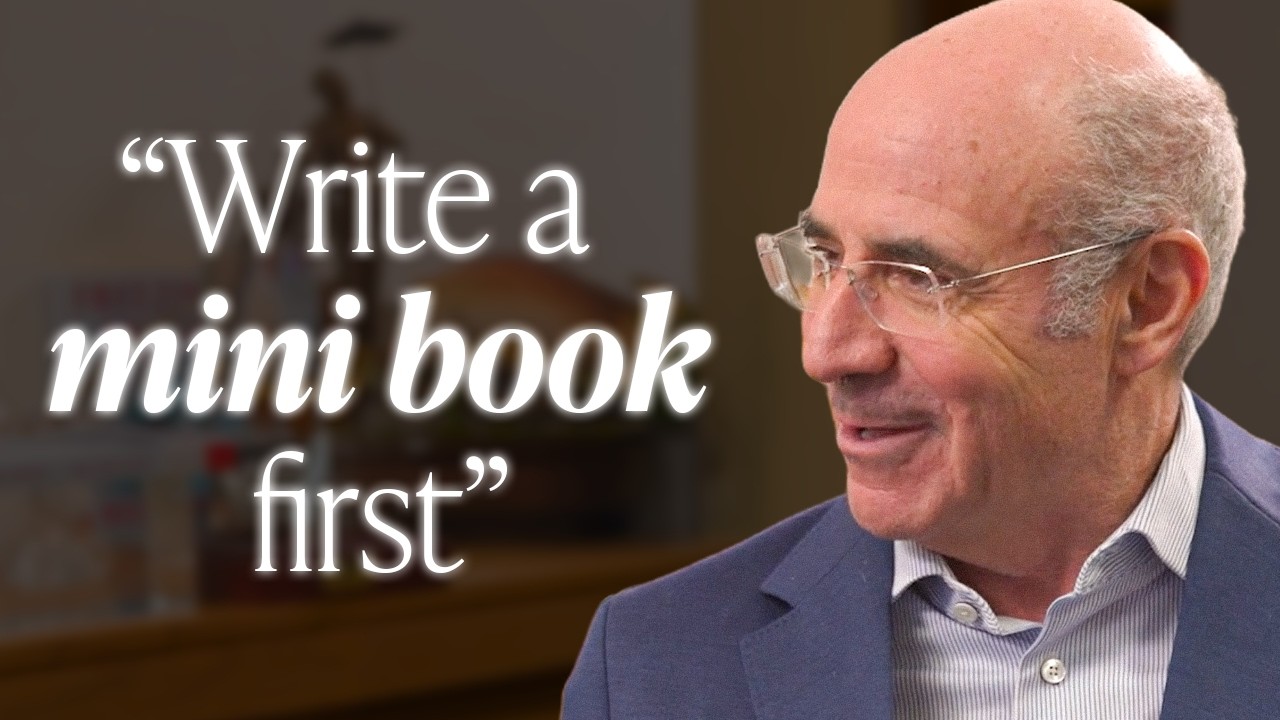
- Then he writes a “mini-book”—a 50,000-word draft that’s about a third the length of the final book. Each chapter is a condensed version of the full story, with drama, challenges, and resolutions already mapped out.
- He pitches this mini-book to publishers. Because they can see the full story and its potential, they’re more willing to offer a strong advance.
- He refuses to write without a publisher lined up—he sees too many authors spend years writing books nobody reads.
- Only after securing a book deal does he expand each mini-chapter into a full chapter, adding color, dialogue, and sensory detail.
-
Chapter endings are critical. Each one must leave uncertainty or unresolved tension—like a cliffhanger in a miniseries—so the reader feels compelled to continue.
- Within chapters, he creates mini-arcs: a challenge is introduced, partially overcome, or complicated, keeping momentum alive.
Building character and empathy in nonfiction
-
Readers need to care about the people in the story. Browder achieves this by:
- Focusing on relatable human experiences: betrayal, fear, love, ambition.
- Using just two or three vivid, specific details to bring a person or place to life—enough to trigger recognition or imagination, not so much that it slows the pace.
- For example, he describes Moscow’s Sheremetyevo Airport by its smell and the strange brass fixtures on the ceiling that look like coffee cans. Anyone who’s been there instantly recognizes it; others get a visceral sense of the place.
- Showing both “good guys” and “bad guys” as real people—not caricatures. Even enemies are portrayed with specificity and sometimes complexity (e.g., a lawyer who betrays him is still shown through documented quotes and actions).
-
Places become characters when they reflect the emotional state of the scene. A relaxing family vacation in Italy becomes haunting when interrupted by a threatening phone call from Russia—the contrast heightens the drama.
Research, recollection, and the torture of writing
-
Despite writing from personal experience, Browder does extensive research:
- He reviews court transcripts, depositions, and official records to reconstruct events accurately.
- He interviews others who were present—friends, colleagues, officials—to fill gaps in his memory or uncover details he’d forgotten.
- He can’t interview adversaries (they’d sue or refuse), so he relies entirely on legal documents for their side of the story.
- AI has sped up some research, but much of it remains original—no one else has written about these events from his perspective.
-
Recollection is painful and slow. He describes writing as “pure torture”—especially at the beginning, when facing a blank page.
- Ideas often come unbidden—in the shower, on walks, during daily life. He keeps his phone handy to capture them.
- The process only becomes satisfying once a draft starts to take shape and he can see it working.
Why books—not articles or films—are his weapon
-
Browder initially wanted to make a movie to spread his story quickly. Hollywood told him: “Get a book first.”
- He wrote Red Notice expecting it to be mere IP for a film. Instead, it became a global bestseller—and the movie still hasn’t been made (Hollywood fears Putin’s retaliation).
- But the book achieved his real goal: it educated millions, inspired lawmakers, and helped pass the Magnitsky Act in the U.S. and later in Australia—without him ever setting foot in the country.
-
Books offer something articles can’t:
- A typical article reaches maybe a million people; few read it fully or remember it.
- A good book gives you 12 hours with a reader. You can build emotional investment, develop complex characters, and make people feel the stakes.
- People remember stories from books for years and approach him in public to recount specific scenes.
-
Still, he acknowledges the risk: most books fail. Spending three years writing one that only a few hundred people read is a real danger for activists who could be doing other work.
Balancing truth, safety, and mission
-
Many advised him to “keep his head down” after Magnitsky’s murder—to avoid further danger.
- He rejected that. Going public made him safer: if anything happened to him, the world would know who was responsible and why.
- Visibility raised the cost of assassination. The Kremlin couldn’t act without consequences.
-
His writing is part of a broader campaign. Every book, article, and speech serves the goal of justice—not just for Magnitsky, but for all victims of authoritarian abuse.
Practical writing habits
- He writes 2–3 hours a day, 3 days a week—though he admits this isn’t enough for his third book and he needs to increase output.
- He writes anywhere: planes, trains, beaches, studies. He’s not precious about environment.
- Before submitting to his publisher, he gives the manuscript to 10 smart, diverse friends—not for praise, but for honest, critical feedback.
- By the time it reaches his editor at Simon & Schuster, there’s little left to fix.
The emotional core of a great ending
- Browder ends Red Notice by contrasting the thrill of financial success (a stock that went up 10x) with the deeper satisfaction of justice (watching the European Parliament condemn Magnitsky’s killers in the presence of his widow and son).
- This ending works because it encapsulates his life’s transformation—from narrow financier to global justice advocate.
- A good ending doesn’t just conclude the plot; it reveals the meaning of the entire journey.