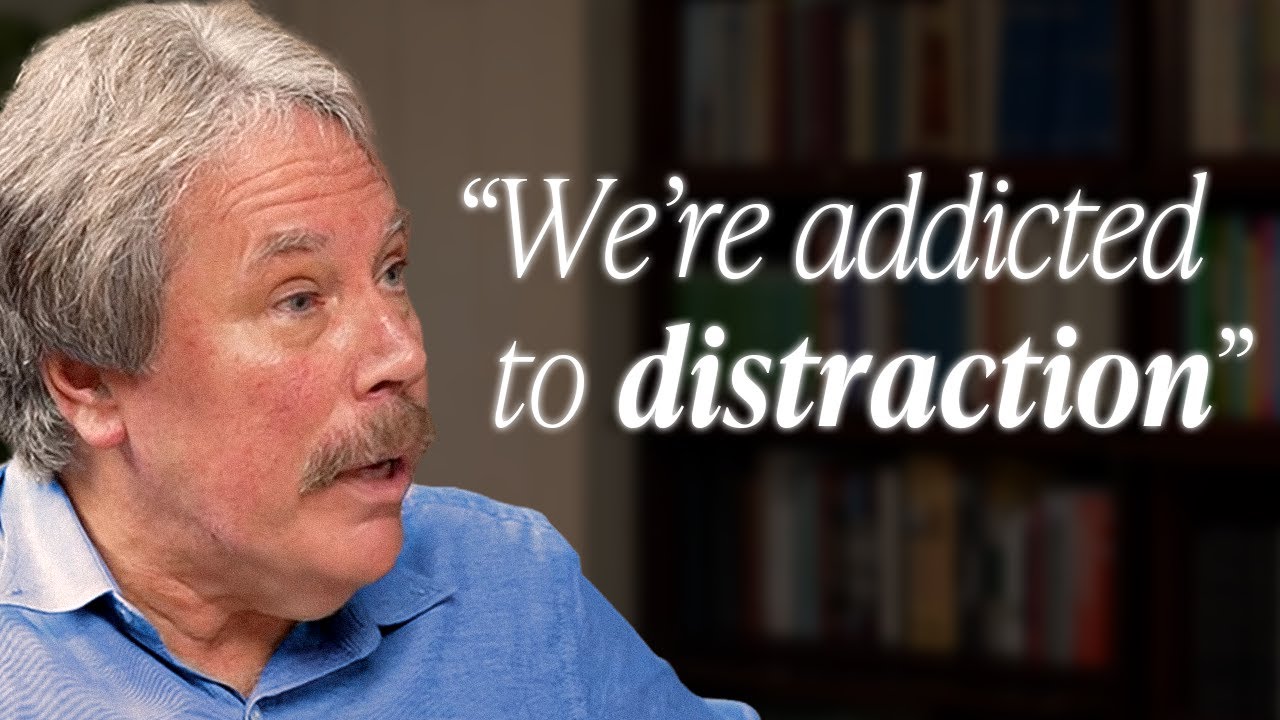
Ted Gioia is a jazz pianist, music critic, and author of 12 books who has spent 50 years building a writing career on honesty, deep reading, and direct reader relationships — and who now writes a Substack newsletter called The Honest Broker that has grown 30% in just 10 weeks by rejecting formulas, algorithmic gaming, and dopamine-driven content culture.
The Honest Broker
Gioia gave himself the nickname “The Honest Broker” based on a concept he encountered while doing business consulting in China, where a drunk Australian explained that in every Chinese community there is one person everyone trusts who makes honest introductions without charging upfront — they simply become part of a network of mutual trust.
He realized that writing faces the same crisis: nobody trusts the media, experts, or institutions anymore, and the solution is for the writer to be the honest broker — someone who shoots straight, pursues no hidden agenda, and serves the reader above all else.
Before committing to writing full-time, Gioia had a high-powered business career: degrees in economics from Oxford and an MBA from Stanford, consulting for the Boston Consulting Group advising Fortune 500 CEOs, and doing on-the-ground projects in 30 countries across five continents — experiences that gave him analytical skills and financial independence most writers lack.
Three Questions Before Publishing
Before publishing anything, Gioia asks himself three questions: Is this fair? Is this accurate? Will this be persuasive to all fair-minded observers?
He believes roughly 50% of writing circulating today has an agenda, and that as soon as a writer approaches a reader with an agenda, the reader justifiably distrusts them.
He distinguishes himself from two common failure modes in criticism: critics who are cranky and negative but lack enthusiasm, and enthusiasts who suck up to artists and lose their honesty.
Editing and the Quest for Coolness
The biggest curse for a music writer — and any writer — is the desire to appear cool, which leads to posturing instead of honesty; Gioia cites Hunter Thompson and Lester Bangs as examples of writers trapped by the cool image they created.
His antidote is deliberate self-exposure: he publishes stories that make himself look bad or foolish, such as the time police came to arrest him at a party because he was too stupid to figure out what was happening when the alarm went off.
He points to Carlo Cipolla’s The Basic Laws of Human Stupidity as a model — a writer who makes himself look as bad as possible at every step, which paradoxically makes the reader trust him more.
Conversational Writing and Hidden Layers
Early in his career, Gioia deliberately changed his prose style for each book to match the subject — flashy and flamboyant for a book on West Coast jazz, lazy and river-like for a book on the Delta blues, drawing on Southern writers like Faulkner.
When he launched his Substack, his prose shifted naturally to a conversational tone without him planning it — because the platform creates a direct, frequent relationship with readers who feel they know him personally.
On the surface his writing looks straightforward, but he hides arcane literary and philosophical references in asides — a nod to Kant here, a song lyric there — as a gift for the small fraction of readers who will catch them.
Rejecting Formulas
Gioia hates formulas with a passion: he can predict most movies within the first five minutes and finds them boring; he sees Hollywood’s box office decline as a direct consequence of over-reliance on formula, and the same stagnation in country music, pop, and publishing.
He contrasts this with the Beatles, who got better with every album and forced the entire music culture to evolve rapidly in the 1960s — whereas today record labels and publishers say they want fresh talent but actually want exactly what was on last week’s bestseller list.
He believes the liberation will come from the grassroots and microculture — self-published albums on Bandcamp, YouTube channels, Substack newsletters — because the mainstream publishing and entertainment industry has become too risk-averse and formulaic.
The Journaling Practice
Gioia advises aspiring writers to keep a private journal where they write brutally honest observations every day with the rule that nobody will ever see it; after 30 days of this, the writer discovers a fresh, risk-taking voice they didn’t know they had.
The reason this works is that evolution has programmed humans to fit in — the survival of the fittest means the person who conforms — so honesty requires actively unteaching yourself the impulse to conform.
He quotes Romans 12:2 — “Do not conform to the pattern of this world, but be transformed by the renewing of your mind” — because the pattern of the world is always shifting and collapsing, and writers must anchor themselves in timeless truths.
Reading Old Books Young
Gioia’s reading strategy is the opposite of what most people do: when he was young, he read 80% old books and 20% new, and now in his later years he reads 80% new and 20% old.
He once had a professor who refused to read anything written after 1900 because it hadn’t proven itself yet, and Gioia adopted a similar discipline — he didn’t feel qualified to review contemporary novels until he had read 300–500 classics.
He didn’t start reading contemporary fiction seriously until his mid-40s, which gave him a foundation to see connections others miss — for example, recognizing Breaking Bad as a modern Greek tragedy because Walter White has a tragic flaw that leads to his downfall, just like the heroes of ancient Greek drama.
Daily Writing Schedule and Input vs. Output
Gioia’s daily routine: he wakes and tries to remember his dreams first thing, then spends the entire morning reading demanding books and listening to music — he doesn’t start writing until the afternoon.
He has maintained this pattern for 50 years, starting in high school when he woke at 5:30 a.m. to read before school; even during his most demanding job at BCG, he would drive to the Stanford campus before work to read difficult books like Sartre’s Being and Nothingness as an antidote to the analytical business mindset.
He argues that bosses measure output but never measure input, and that this is a mistake — there is no field in which input doesn’t empower output; he spends more time per day on input than output and credits this as the foundation of his writing ability.
Cross-Pollinating Domain Expertise
Gioia’s business background gave him analytical tools — how to read financial statements, predict product launches, anticipate consumer trends — that he now applies to culture writing; for example, using the principle that innovation happens in densely populated areas (borrowed from epidemiology) to explain why jazz emerged in New Orleans while the blues was a retention of old tradition in isolated rural areas.
He advises writers to become experts in at least one or two areas beyond writing itself — law, business, science, anything — because this gives them perspectives and authority that other writers lack.
He reads widely outside music: George Soros on financial markets, Ray Dalio on investment prediction, René Girard on mimetic desire — and applies their analytical frameworks to understanding culture, music, and writing.
Reading for Style
Gioia reads some writers purely for style even when he disagrees with their ideas — he cites Gibbon’s Decline and Fall of the Roman Empire, which he finds philosophically wrong but prose-wise magnificent, calling Gibbon perhaps the greatest prose stylist in English.
He notes that some writers read certain books not for content but to let the style infuse their own writing — Shelby Foote reread Proust constantly for this reason.
He believes in understanding the full range of possibilities of written expression and then finding your own home within that range.
The Romanticism Research Project
Gioia is currently researching a book on the rise of Romanticism (1750–1850) as a historical parallel to our current moment: just as the Industrial Revolution and Age of Reason made society overly rationalistic and algorithmic around 1800, and Romanticism reawakened humanistic and creative values, he believes we need a similar reawakening now.
He points out that child labor laws and the abolition of slavery didn’t come from Enlightenment rationalists but from Romantic-era humanistic thinkers — and that poets like Lord Byron and Shelley were the celebrities of their day, considered the legislators of the universe.
His research method: he reads 40–50 books on a subject — primary sources, biographies, literary commentaries — enough to gain authority without becoming obsessively granular; he’s been working on the Romanticism project for 18–24 months and is publishing it chapter by chapter on Substack.
Dreams, Inspiration, and the Muse
Gioia has become less rationalistic and more metaphysical over the course of his life, believing that the most important things in life — love, friendship, trust — cannot be empirically proven but are the foundation of everything.
He takes dreams seriously as a source of creative inspiration: Paul McCartney’s “Yesterday” and “Let It Be” came to him in dreams, Keith Richards’s riff for “(I Can’t Get No) Satisfaction” came in a dream (he recorded it in the middle of the night with no memory of doing it), and Billy Joel’s “Just the Way You Are” and Sting’s “Every Breath You Take” came in dreams.
He argues that the dream is the last safe place modern humans have to tap into something wild, magical, and unpredictable — and that we should nurture this rather than mock or dismiss it; he tries to remember his dreams every morning and reads visionary writers to expose himself to unpredictability.
Dopamine Culture and Distraction
Gioia identifies a third category beyond art and entertainment: distraction — the scrolling of TikTok videos, pet photos, and meal pictures that give a jolt of dopamine every 15 seconds and are deliberately designed to be addictive, just like potato chips engineered to make you reach for another.
He argues that chasing dopamine culture is death for writers — the editors who told him to dumb things down and go faster are now out of their jobs, and the periodicals they worked for have disappeared.
His advice: don’t chase the culture; be true to your own values; there is a hunger for something more substantive, just as the food industry has seen a shift toward organic and natural ingredients — and the same reversal will happen in writing.
Culture, Kindness, and the Coming Reversal
Gioia holds kindness, love, forgiveness, and compassion as core values, and refuses to play the anger-and-outrage game that social media rewards — he believes the angrier you get, the more likely you are to go viral, but he won’t do it.
He predicts a culture reversal within 5–10 years from a culture of anger to a culture of kindness and compassion, and he is staking his career on being ahead of that curve.
He believes we need a “slowness revolution” in our whole culture — and that the approach he has followed for 50 years, which is long-term and cumulative rather than quick and viral, is the one that actually builds a lasting writing career.
Fire Round: Writing Styles
The Beatles: Loved for pushing themselves harder than their fans wanted — fans always wanted repetition, but the Beatles kept evolving and got bad reviews for it.
Bob Dylan: Poetic, rebellious, but deeply rooted in tradition — he saw himself as an extension of old folk singers and had the beautiful ability to turn something old into something new.
Gospel music: The older the better — he prefers chanting the Psalms or listening to Bach over modern Christian music, and ranks hymns by age (1911 over 1950).
Taylor Swift: He has made peace with her because she creates transformative, almost ecstatic live experiences for her audience — he watched the Eras Tour documentary three times, primarily to watch the audience.
Eminem: Extraordinarily creative but too much of a dramatic pose for Gioia’s taste — he sees the “cool pose” problem in much of hip-hop.
Protecting Local Culture
Gioia’s favorite of his “12 Favorite Problems” is how to protect local styles and perspectives in an increasingly homogenized global culture — he sees regional styles as the endangered species of culture.
He wrote his first book on West Coast jazz specifically because it was a regional style, and the Delta blues book was about how isolation preserved ancient traditions.
He laments that traveling the world, you can no longer find local music in record stores — even in Indonesia, clerks look at you like you’re crazy when you ask for traditional music — and that American regional accents are compressing and disappearing.
The Summary in His Own Words
When asked to summarize his approach, Gioia endorsed this synthesis: decades of vicious reading of the classics, a commitment to honesty and building trust with readers, a direct relationship enabled by Substack, a daily routine of morning reading and music followed by afternoon writing, and a long-term cumulative approach — and he added that we need a slowness revolution in our culture, and that this approach is what builds a writing career over 10, 20, 30 years.