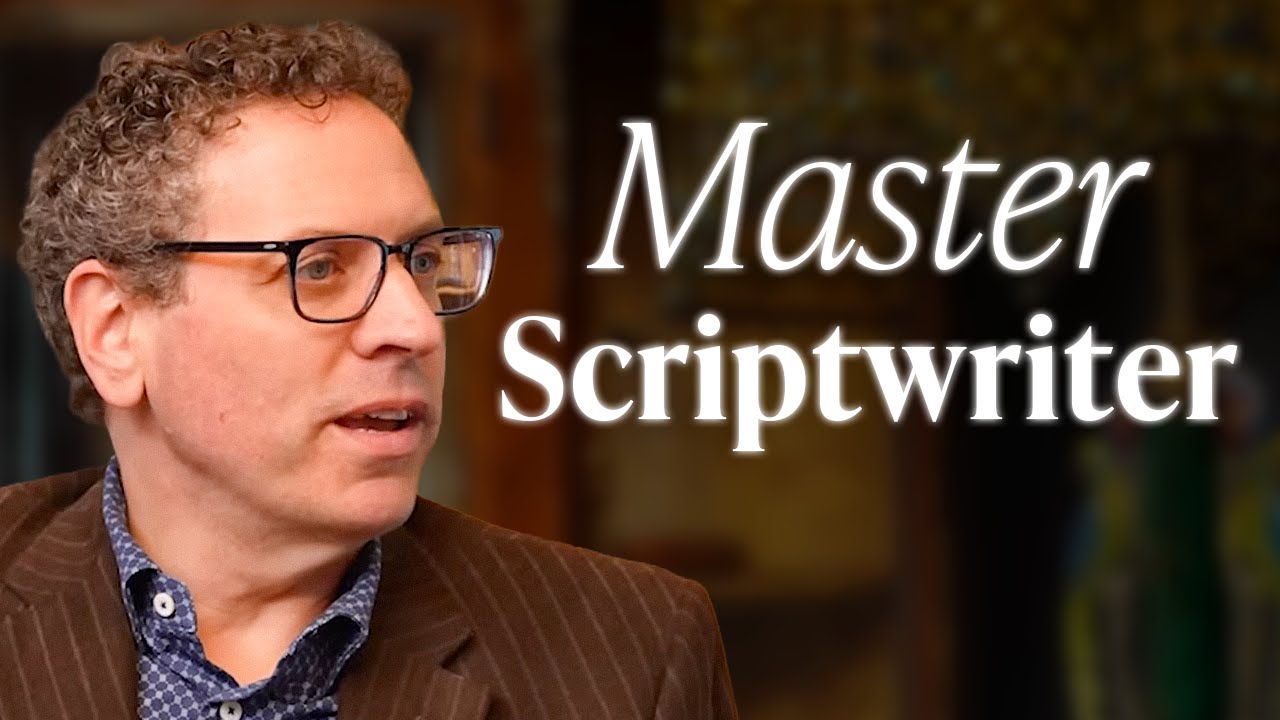
Michael Jamin is a Hollywood sitcom writer with 28 years of experience on shows like King of the Hill, Just Shoot Me, and Beavis and Butt-Head. He argues that great comedy comes not from punchlines but from rich characters, strong attitudes, and emotional story foundations layered with humor.
How to write comedy
Strong attitudes are the engine of funny: Characters with extreme, unapologetic opinions—whether judgmental, stubborn, ignorant, or naive—are inherently comedic. The key is that they are not trying to be funny; they are being truthful from their own perspective.
Archie Bunker, Larry David, and Peter Griffin exemplify this: their humor comes from who they are, not from performing jokes.
Comedy vs. story: Early in his career, writers were either “joke people” or “story people.” Jamin started as a joke person but evolved into a 50/50 split, recognizing that story is far more important—without it, even the best jokes feel disposable.
Stand-up comedy is “empty calories”; drama hits the heart and makes stories memorable.
Characters should never try to be funny: If a character’s goal is to make the audience laugh, it becomes cringey. Funny characters say things that reveal their ignorance, stupidity, or naivety without intending to amuse.
The sitcom formula that still works today
Multi-camera sitcoms are a dying art: Shows like Cheers, Friends, and The Office required a unique skill set. As streaming favors single-camera formats, this craft risks disappearing.
Characters change slightly within episodes but reset by the next: Sitcoms allow small character growth per episode, but characters must return to their baseline to sustain long-running series.
Peter Griffin can become a pompous intellectual for one episode but always reverts to his idiotic self.
Writer rooms mine real-life stories: Writers spend hours bullshitting, waiting for someone to share a funny anecdote (e.g., a sex dream about a best friend) that can be turned into an episode.
How to create complex characters
Detailed character documents reveal contradictions: Writers explore traits like marijuana stance, smoking habits, and political views—even if they never appear in the script. Contradictions must feel consistent with the character, not unravel them.
Example: A troll who claims to hate Hollywood uses a Goodfellas meme—a blind spot that reveals his hidden fandom.
No one likes an adorable main character: Characters who try to be cute or interesting are off-putting. Audiences respond to vulnerability, weaknesses, and mistakes—not strengths.
Jamin writes personal essays as “a collection of apologies and confessions,” focusing on his flaws (judgmental, anxious) to connect with readers.
Mining your own life for material: Jamin keeps two lists on his phone—weaknesses and memories—and pairs them to find stories. Specificity creates universality.
How writing for TV differs from other forms
TV writing is visual: Every scene must show something happening, not just dialogue. Jamin describes scenes cinematically, focusing on essential details that reveal character.
Example: Undead Fred’s nicotine-stained walls and ash-covered countertops tell you everything about him without describing his hair color.
Finding your own voice: Jamin initially imitated David Sedaris but realized he needed to lean into his TV writing strengths—visual storytelling, pacing, and cadence.
The “character of me” vs. the person: In memoir, Jamin dials up his real self by 10% to make flaws visible and funny, avoiding the “TV version” of events in favor of emotional truth.
How to sculpt a story that actually resonates
Plot is not story: “Shit happening” is not a story. Plot is what happens; story is the emotional underpinning—what it’s really about.
Example: Ferris Bueller’s Day Off is not about skipping school; it’s about a friend trying to save another friend’s life.
Stakes drive engagement: High stakes don’t require life-or-death scenarios. Family conflicts, personal failures, and emotional reckonings are often more compelling than cosmic threats.
Interstellar works because of the father-daughter relationship, not the space physics.
Breaking stories in writer rooms: Writers map out acts on a whiteboard, identifying key moments while simultaneously asking, “What is this really about?” Theme emerges naturally from focused exploration.
How to craft a killer villain
Great villains are enticing, not just evil: Darth Vader is boring because the dark side offers nothing fun. Lestat from Interview with a Vampire is compelling because being a vampire is sexy and exciting—the cost (selling your soul) feels worth it.
Villains as main characters: Tony Soprano and Walter White are likable because we see their vulnerabilities first. Tony feeds ducks and sees a psychiatrist; Walter White is a dying teacher providing for his family. Their awfulness is introduced gradually.
Redeeming qualities humanize antagonists: A funeral story illustrates how a woman’s obsession with money was actually an expression of love—she wanted to take care of everyone.
Introducing characters effectively
Every character needs a memorable entrance: Don’t just have someone walk in. Show them doing something that reveals who they are.
Example: A farmer treating a sick cow—compassionately or cruelly—tells you everything in seconds.
Sitcom rule: Enter on a joke, exit on a joke: Characters should never leave a scene without saying something funny. Actors want interesting entrances; audiences need clarity about who this person is.
Stop polishing turd
Finish scripts and move on: New writers often spend years tweaking their first script. Jamin advises finishing it, starting the next one, and repeating. Script five will be light-years better than script one.
Mentorship is rare and valuable: Most established writers won’t read your script for free—it requires hours of unpaid labor. If you want feedback, expect to pay for it.
How Jamin’s style has evolved
From comedy writer to storyteller who uses comedy: Jamin no longer aims to make people laugh; he aims to make them feel something. Comedy lowers the guard; drama delivers the emotional punch.
He criticizes performers who “button” emotional moments with jokes, robbing the audience of sitting in discomfort.
The fool’s privilege: Historically, court jesters could speak truth to power through humor. In writer rooms, if you get a laugh, you can say anything—even offensive things. The moment you stop being funny, the swords come out.
Commandments of humor writing
If you’re not funny, don’t force it: It’s okay to write drama. Bad comedy is cringy; good drama is valuable.
Statements are funnier than questions: Questions make audiences wait for answers; statements signal the joke is over and it’s time to laugh. (Rhetorical questions are the exception.)
Put the funny word at the end: “Cleveland” is funnier than “Cincinnati”; “swig” is funnier than “drink.” Hard K sounds are inherently comedic.
Use the rule of three sparingly: It signals “a joke is coming,” which can feel jokey and lazy. Sometimes it works; sometimes it undermines the writing.
Slapstick vs. dry humor: Slapstick depends on talented actors; dry humor lands better when tailored to an actor’s strengths. Always write toward what the actor can do well.
Michael reacts to iconic American comedy
Family Guy & South Park: Both are broad and ungrounded. South Park’s crude animation allows rapid production and topical humor, but episodes date quickly. King of the Hill avoided topicality because animation took nine months.
Seinfeld: Marketed as “a show about nothing,” but every episode has clear plots (the soup Nazi, the masturbation contest). It’s a show about plenty.
Friends: Traditional multi-camera sitcom comfort food. Reruns allowed people to watch episodes seven times because the characters feel like friends.
Will Ferrell & Adam Sandler movies: Step Brothers works because of the premise (grown men acting like 12-year-olds) and perfect casting. Sandler’s 50 First Dates is soft, comfortable, and high-concept.
Debating AI for writing
AI violates the purpose of writing: Jamin sees writing as transforming pain into art—a process that requires struggle. Using AI is like claiming credit for a self-driving car’s driving.
AI can mimic voice if trained on enough material, but it lacks the human experience that gives writing meaning.
Studios want AI to replace writers; individual writers should want to express themselves.
AI as collaborator vs. replacement: Some see AI as a tool for brainstorming (e.g., finding metaphors). Jamin argues this creates copyright issues and dilutes ownership. The satisfaction of writing comes from having written—something AI cannot provide.
Why good premises write themselves
Severance is a brilliant premise: Employees’ memories are split between work and personal life. The conflict is baked in—why would someone choose this? Pain, tragedy, or ambition. The premise generates its own stories.
Good premises contain inherent conflict: Sci-fi often fails by servicing the rules of the world instead of character relationships. Lost started strong but collapsed under the weight of its own mythology.
Every story is a human story: At its core, every narrative is about someone trying to grow up—a boy becoming a man, a girl becoming a woman, or a toy becoming human (Toy Story, Pinocchio).
Board games and relationships: The world’s top game designer says most games fail by focusing on entertainment value. Great games are about the interactions between players—the same principle applies to storytelling.