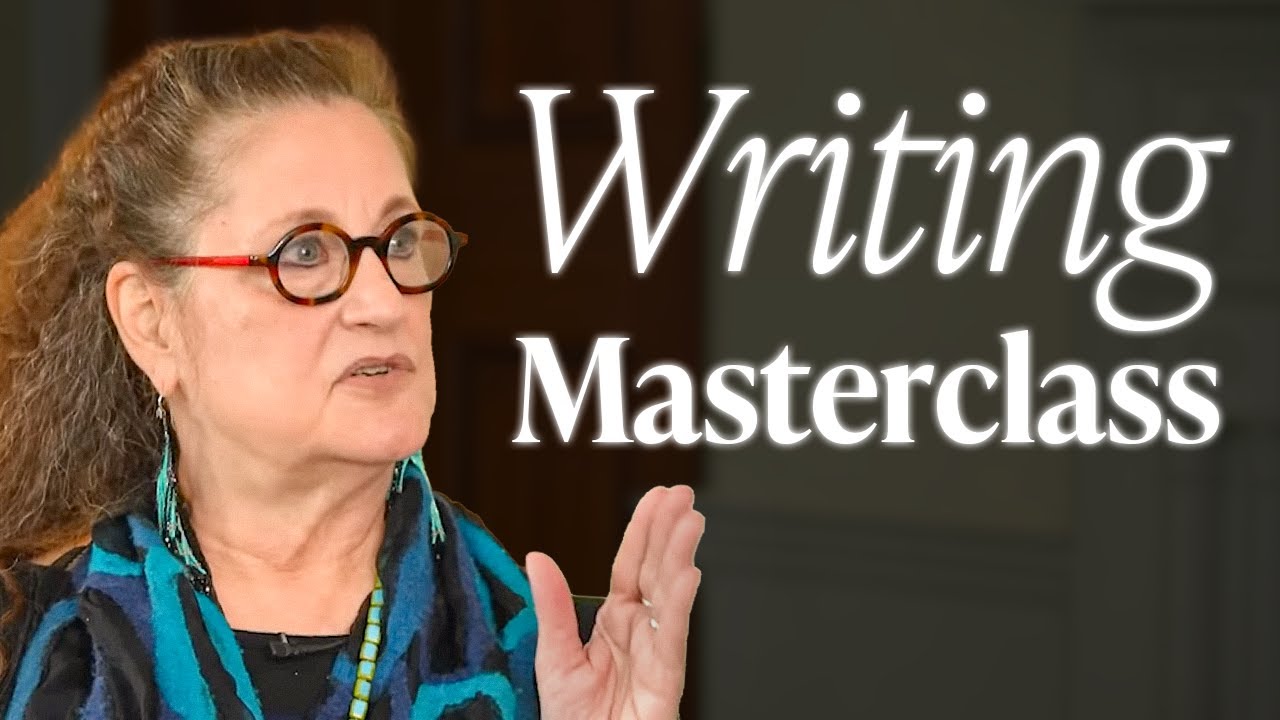
- Pulitzer Prize-winning novelist Jayne Anne Phillips on voice, perception, and the full-bodied experience of writing
- Phillips, who won the Pulitzer Prize for Fiction for Night Watch, discusses her approach to writing as a deeply immersive, almost archaeological process — feeling her way into the hidden world of a novel rather than planning it intellectually. She describes writing as a practice of perception, where the goal is to make the reader feel inside the material rather than reading about it. Her background as a poet shapes her fiction: she writes line by line, thinking about internal rhyme, syllable weight, and the music of language. She reads obsessively and encourages students to read the same books over and over — first for pleasure, then to understand how they work, almost memorizing them. Her conversation covers how she researches historical settings (including visiting asylums and studying Civil War–era letters and photographs), why she writes from children’s perspectives, how she deals with being stuck, and why she sees writing as “practicing for death” — a transformation that gives life meaning.
How Phillips thinks about writing
-
Writing as a full-bodied, surrendered experience
- When Phillips writes, she is not thinking about the material intellectually — she is inside it, following one line into the next the way a mechanic or painter loses track of time. She describes this as surrendering to the work itself.
- She wants readers to feel they are inside the fiction, not observing it. When a reader encounters “I cross the street,” they become that persona. The writer’s job is to pull the reader in deeply enough that the experience happens to them almost unconsciously.
- She compares writing to walking a tightrope without a net, or an astronaut whose tether breaks and drifts into space — and also to putting on an asbestos suit and walking straight into flames, where the suit is the act of writing itself.
-
Teaching writing through literature, not craft alone
- Phillips believes writing is taught by teaching literature. She tells students that being a writer today is like being a member of a medieval guild — most people read signage and phones, but very few read literature for meaning. Writers must read as writers, deeply and repeatedly.
- She encourages students to find their “allies” — living or dead writers whose work is elemental — and to read those books many times: first for pleasure, then to see how they work, then to plot them out chapter by chapter, almost memorizing them.
-
Editing with the ears
- Phillips tells students to “edit with your ears” because language is music. Reading work aloud reveals where it goes off — like a flat note on a piano. The work should function inside its own internal music, and the editor listens for the spot where it breaks.
The poet’s composition process in fiction
-
Line-by-line writing shaped by poetic craft
- Though she doesn’t write poetry, Phillips uses a poet’s composition process in her fiction: writing line to line, attending to internal rhyme, the sounds and weight of syllables, and the way a line sits on the page.
- She began by writing one-page fictions — compressed stories with densely metaphoric or ironic language and a spiral construction that moves outward from the center. The last line must be perfect, creating white space around it, and the title transforms in meaning after reading the piece.
-
Example: “Wedding Picture”
- Phillips reads a one-page fiction describing her parents’ wedding photograph. The piece uses limitless metaphoric language — “my mother’s ankles curve from the hymn of a white suit as if the bones were water” — and moves between the mother and father, grounded in the physical details of the image but reaching beyond them.
- She used to assign students the same exercise: bring in a wedding photo (or a photo of their parents together) and write a one-page piece describing it, drawing on the history beyond the frame.
Reading as a writer
-
Intensive, obsessive reading as foundational
- Phillips has read certain books dozens of times. She cites Leonard Gardner’s Fat City — an 800-page manuscript cut down to a diamond — and Faulkner’s The Sound and the Fury, which she carried everywhere while writing Lark and Termite.
- She believes each book teaches the reader how to read it. You get inside it and begin to see and feel where you are in space, like sitting in a revolving chair but keeping your seat because you are so intensely in place.
-
On reading Faulkner
- Phillips describes Faulkner as “everything” — his language, the interconnected world of his books, his writing about lost causes that are sorrowful and true because they were lost. She emphasizes that writing is always about perception: in the final image of The Sound and the Fury, Benji roars because his perceptions have been shifted. The writer’s task is to show the reader how to perceive the world of the book.
Research and historical fiction
-
Embodied research for Night Watch
- Night Watch takes place during the Civil War and involves a mother and daughter being taken to an asylum. Phillips did not consider herself a historical novelist — she set books in different times because that was the time the story demanded.
- She spent years researching: reading diaries, letters, scholarly books, four-volume Civil War histories, and books of photographs. She visited the asylum site and took photographs. She studied 19th-century Appalachian speech patterns by reading books written at the time, letting the language wash over her rather than taking notes.
- She includes actual photographs and documents from archives in the book, and shows them on a PowerPoint during readings because “they speak in a way that is beyond speech” — they were real, and if past, present, and future coexist, then what is real is real forever.
-
Fiction as time travel
- Phillips describes fiction as a form of time travel. The research must be embodied, not just intellectual — she has to feel her way into the period, the place, the people.
Being stuck and persistence
-
What happens when she doesn’t know where the book is going
- Phillips does not outline her novels. She wrote the opening of Night Watch — a 12-year-old girl being hustled into a buckboard by the man she calls Papa, headed for an asylum — and then had no idea what came next. The whole book was a mystery to her, even though she had been thinking about it for ten years.
- When stuck, she feels fear — “walking a tightrope without a net.” She waits, falls back into research, or rereads her own work: first the last page, then ten pages back, then from the very beginning up to where she stopped. Being inside the material is how she finds out what to write next.
- She is “doggedly persistent” and has never abandoned a book. Once she starts, she feels a need to see it through because the work is there — she just hasn’t found it yet.
-
Writing with a day job
- For most of her career, Phillips taught and could not write full-time. She wrote in spurts — weeks or months at a time when she had space. She retired in January 2020, just before the pandemic, and the strange reversal of that time — the world in chaos, her finding refuge in the book — mirrored the irony at the heart of Night Watch, where the asylum becomes a surprising refuge.
Writing by hand
- Phillips writes in a notebook in a rapid, quasi-cursive printing. The physical, handwritten process is standard for her practice.
Why children make the best characters
- Children as ultimate outlaws
- Phillips writes frequently from children’s perspectives because children are “ultimate outlaws” — they don’t see anything in context, everything is new, it’s a kind of Zen beginner’s mind. No other voice can do what a well-written child’s point of view can do.
- Children formulate their own rules and look for a truth truer than what they’ve been given by parents or society, which is often “a screen to push down secrets.” Growing up in a small town, Phillips was aware of a world underneath the world — a web of secrets that children sense but adults don’t discuss.
- She was influenced by James Agee’s A Death in the Family and Faulkner, both of whom wrote from children’s points of view. Agee’s work across genres — poetry, journalism, film criticism, the photo-text Let Us Now Praise Famous Men — showed her what was possible.
The transformative power of reading
- A childhood moment that changed everything
- Around age 9 or 10, Phillips found a mass market copy of John Updike’s Rabbit Run hidden in her father’s cupboard. She opened to a scene where a drunk mother loses her grip on her baby in the bathtub. The experience “blew her brains apart” — she looked out the window and the lilac bushes didn’t even look like lilac bushes.
- She wasn’t thinking about becoming a writer; she was simply overwhelmed by the power of reading. She thought, “My mother would never do that.” She had to put the book back and didn’t finish it until later.
Writing as practicing for death
- Writing as transformation and preparation
- Phillips tells students that writing is “practicing for death” because it involves transformation — from thinking and wanting to actually writing. It is the big transition, and we don’t remember birth, but death is the transition we can prepare for by being aware.
- She sees writing as a statement of faith — not religious faith, but faith that life is meaningful. If it weren’t, why would anyone find meaning in it?
Writers as the conscience of culture
- Art saves what would otherwise be lost
- Phillips believes writers are the conscience of culture because they think about what happens afterward. Art is always about saving what might be lost or will be lost. The first novel is often the most autobiographical — saving a world that’s gone. But any writing captures a particular vision that would otherwise disappear.
- She thinks of life as a huge field of moving tall grass — anonymous, nameless, forgotten people. Each person is a “historical genius” in that each is completely separate in their experience, traumas, and healing. Because humans are creatures of narrative, thinking in words and images, all of it is intensely meaningful no matter how terrible life can be.
The passage from Night Watch
- A 12-year-old girl speaks to her mute mother
- Phillips reads a passage from Night Watch in which the character Connie, a 12-year-old who has been the only functional adult in her family, is in a buckboard with her traumatized, mute mother. The man she calls Papa tells her to say her mother will like where they’re going — “a fine great place like a castle with a tower clock.” Connie repeats this, though she has never seen the place and doesn’t know where they’re going.
- The scene brings together the themes of children’s voice, the web of secrets, and the reversal at the heart of the book: the asylum as refuge from a violent, chaotic world.
- Phillips had been thinking about this book for at least ten to fifteen years before writing it. The small town she grew up in was about 20 minutes from the real asylum, which existed in her mind as a ruin. Part of the research was going back to that place as it existed during and after the Civil War.