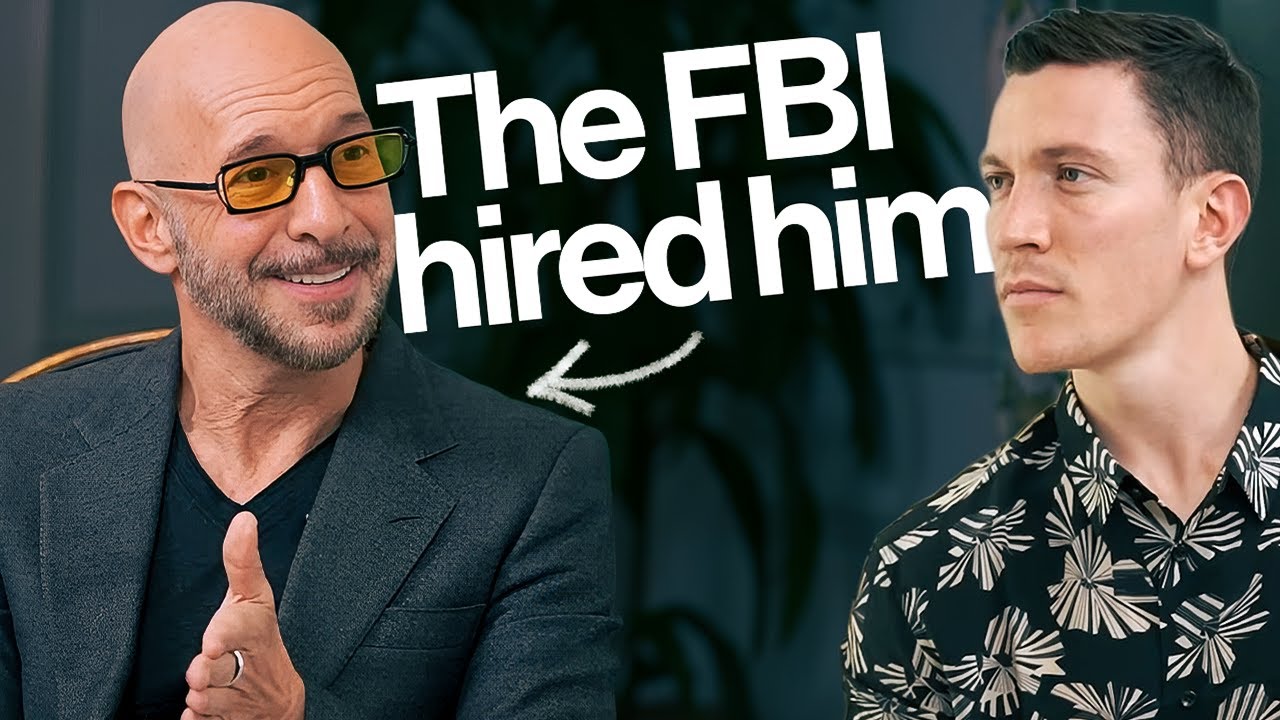
Neil Strauss is a journalist and author known for immersive, deeply honest nonfiction — from infiltrating pickup artist communities (The Game) to exploring relationship structures (The Truth) to hosting a new podcast about Russian seduction spies (To Die For). In this episode, he breaks down his entire writing philosophy: how to hook readers in one sentence, how to structure stories for maximum energy, how to edit with “uncommon brutality,” and why vulnerability without craft is just diary vomiting. He walks through real examples — including the FBI calling him to train agents in seduction, and how he built the trailer for his new podcast — to show exactly how great writing works from the first line to the final cut.
The core philosophy: nobody cares
Start from the premise that nobody cares about you, your ideas, or your life. Your entire job as a writer is to make them care.
The cardinal sin of writing is being boring. If you’re not interested while writing it, no one will be interested reading it.
The sign you’re onto something: when you want to read it to a friend. That’s the test.
Don’t try to be a writer. Try to express yourself clearly and engagingly. People who think too much about “writing” write horribly.
Vulnerability is necessary but not enough
Step one: be vulnerable. Step two: be vulnerable in a way that’s interesting to other people.
A “vomit draft” — getting everything raw onto the page — is essential, but it’s only for you. No one sees it.
The real craft is in shaping that vulnerability into something a stranger would want to read. Many things that feel deeply important to the writer are boring to everyone else, and must be cut.
Vulnerability without synthesis is just diary entries. You need insight, rhythm, and story — not just confession.
Neil’s rule: “You’re as sick as your secrets.” Sharing relieves the burden. Once things are out, the worst-case scenarios people fear almost never happen.
Context protects you. A book gives you space to explain intention, origin, and consequence. Social media strips context and sensationalizes.
The three-draft system
First draft (the vomit draft): For you. Get everything out. Name names, say the unsayable. No one will ever see it. Don’t stop to edit — John Lennon said don’t stand up until the song is finished.
Second draft (the reader draft): For the reader. But the ideal reader is you-as-reader. Make it interesting, readable, and fun. This is where you sculpt the marble.
Third draft (the hater/critic draft): For the critic. Fact-check, anticipate attacks, “take the bullets out of the gun” (Kevin Hart’s line). Legal review happens here. Save all self-doubt and defensiveness for this stage — not the first draft.
Keep a cuts file. Nothing is permanent. You can always put it back in.
Editing: where the writing actually happens
Neil argues the revising and editing is the writing. His first drafts are “horrible and unpublishable.”
Edit like ironing a shirt — smooth out the wrinkles until they’re gone.
Cut aggressively. Take out everything possible, then only put back what absolutely needs to there. You get closer to what you’re saying by removing more.
When he had to cut a third of a finished book for the German edition (German words are longer), he found the shorter version was better.
Being edited by people with real stakes — editors whose reputations are on the line — is one of the most important things that makes a writer better.
When receiving feedback, ignore the solution and focus on the problem. Even if you hate their suggestion, recognize what isn’t working.
Don’t tell your readers what to look for. Let the work speak for itself, the way a real reader would experience it.
How to hook a reader
The first sentence must ask a question the reader wants answered. “I received a call from the FBI” — why? What happened?
Great first lines from literature:
Orwell’s 1984: “It was a bright cold day in April, and the clocks were striking thirteen.” — Something is wrong with this world.
Camus’s The Stranger: “Mother died today. Or maybe yesterday; I can’t be sure.” — Who thinks like this?
Zora Neale Hurston’s Their Eyes Were Watching God: “Ships at a distance have every man’s wish on board.” — A new way of seeing something familiar.
All three do the same thing: make the reader lean forward because something feels new.
Neil’s own hook for a Howard Stern piece: “‘Do you have a big thick penis?’ Howard Stern asked a guest at his New York radio station one recent Thursday morning. The guest, unfortunately, is me.” — The contrast between sterile journalistic framing and the crude question creates surprise and momentum.
Don’t rush to explain everything. Let the idea arrive to the reader the way it arrived to you — over time. Don’t give them a sandwich so big they can’t fit it in their mouth.
The door metaphor: your only job with the first line is to get someone through the door. Once they’re inside, they’ll explore the rooms.
Structure and energy: building the story
Neil’s podcast trailer for To Die For is a masterclass in structure:
Hook: “I received a call from the FBI.” Immediate question.
Twist: They wanted training in seduction. Unexpected and weird.
Social proof/validation: An FBI agent confirms it happened — because it’s too preposterous to take on faith alone.
Bridge: The agent says if you think the FBI is extreme, wait until you hear what the Russians do. This connects the first idea to the second.
Build: A model agent describes Russian models sent to D.C. to meet political targets — showing how rare and unusual this world is.
The drop: A Russian military-trained seduction spy tells her story. “If you want to kill your target, it’s easy. You just seduce him.”
Tag: A final provocative question to make you need to listen.
The structure is: hook → twist → proof → bridge → build → deep slide of ominousness → “what the fuck” moment.
Energy must ebb and flow like an accordion — not stay at peak intensity the whole time. Think of bass drops at a music festival: the drop only works because of what comes before.
In audio, you control pacing through pauses. Neil edits the spaces between words as much as the words themselves. He’ll tell the producer: this next part is background, not story — remove the pauses, let it move faster. The listener won’t consciously notice, but they’ll feel it.
The hardest part is often the bridge — connecting one idea to the next. Without it, the story feels jarring.
World-building in the opening
The first chapter (or first few paragraphs) sets implicit rules for everything that follows — tone, style, sentence length, what’s possible, what’s not. You’re building a universe.
Neil spends enormous time on the first chapter, getting it perfect — but it rarely ends up as the first chapter. Once the book is finished, you know what it really is, and the opening reflects that.
The opening is like the first room of a house. It has to be intriguing enough to make someone want to explore the next room. If one room is a dud, that’s okay — as long as the next one might be cool.
Don’t overwrite the opening. Keep it crisp. Adding adjectifiers and inflated language doesn’t make writing — it buries the essence. Play things down, not up.
Trust the reader to pick up on implicit motifs and patterns (like the red coat in Schindler’s List). Don’t explain everything.
Observing, noticing, and taking notes
Writers are observers and notice-makers. Narcissists tend to be bad writers because they don’t truly observe the world around them.
Take notes in the moment. Memory is plastic and distorts easily — studies show every time you access a memory, it changes.
Neil brain-dumps within 24 hours of any experience. None of his books would exist without this practice.
He keeps a diary of his 8-year-old son’s life — when he reread the birth story years later, he and his wife had forgotten nine-tenths of it, including the emotional resonance.
Tactical noticing exercise: go for a walk and observe specific details (sidewalks that widen and narrow, cracks, bends). Then make connections — that sidewalk is like my life, starting clear and purposeful, now twisted and cracked.
During interviews, Neil avoids taking notes to maintain eye contact and connection. If it’s not being recorded, he’ll excuse himself to the bathroom and write everything down. He sometimes uses the peg system (a mnemonic device) to memorize details.
Kendrick Lamar’s method: write down just 3-4 words to capture the emotion of a moment, then use those words later to get back to that feeling when writing lyrics.
Writing profiles
The goal of a profile is to find out what makes someone tick — to capture their essence, their humanity.
Two parts: (1) getting the material through trust, rapport, and genuine curiosity; (2) crafting it into something revealing.
The opening sentence of a profile should contain the DNA of the person. Hugh Hefner at 72, popping Viagra, dating identical twins plus a third busty blonde — that sentence is Hefner.
You don’t always need the subject to talk. Gay Talese’s famous Frank Sinatra profile was written without Sinatra ever showing up to the interview. Observe everything.
Every form of writing has an intention. Know the rules of the form so well that you can innovate within it.
Specificity and the universal
The biggest mistake: trying to go broad so everyone likes it. This guarantees no one will.
Tell your story with uncommon honesty (Kevin Kelly’s line), then edit with uncommon brutality.
The specific is the universal. The things you think are too weird or too personal — a million people are holding versions of those same secrets. Carl Rogers: “What is most personal is most general.”
Neil’s influences: A Clockwork Orange, John Fante’s Ask the Dust (about a self-hating writer who talks to a picture of his editor), Knut Hamsun’s Hunger. Bukowski found Fante in a library and said, “This is how I want to write.”
If you write for people who share your sensibility, they’ll find you. Don’t dilute to appeal to everyone.
Cultivating a writing life
Create systems to protect you from your lower/compulsive self. Willpower doesn’t work.
Neil deleted all messaging apps except SMS from his phone. An assistant compiles everything into a Notion doc every other day. He answers all messages in 20 minutes. Everyone gets responded to, and he’s freed from constant reactive checking.
Distinguish between a proactive life (doing the things you’re here for) and a reactive life (responding to inputs all day).
Deadlines are essential. Neil published a newsletter every Monday for four years. Some of his best work came from having nothing that morning and being forced to think outside the box.
Writer’s block doesn’t exist — it’s performance pressure, the fear of being seen and judged. If you said “write for three minutes right now,” everyone could do it.
Most writer’s block comes from bringing the third-draft critic into the first draft. Save the self-doubt for later. Put those questions in the work instead of using them as excuses not to work.
Your best idea is right in front of your face. You don’t need to look elsewhere — you need a changed perspective to see what’s already there.
On being edited and editability
Very few great writers existed without being edited. Find editors with real stakes.
Being editable means trying to understand someone else’s point rather than defending what you wrote. Many first-time writers resist feedback — they’re too attached to what the words mean to them.
When you disagree with an editor, remember: you both want the same thing — for the work to be great and successful. They’re your teammate, not your opponent. Ask: what are they seeing that I’m not?
Ask your editor: “Is there something you notice that recurs throughout?” One editor told Neil he kept saying “the reason is because” — redundant. That single note changed his writing forever.