-
Tom Segura on how comedy works, from observation to stage to screen
- Segura is a stand-up comedian known for Netflix specials like Completely Normal and Sledgehammer, co-host of the Your Mom’s House podcast, and creator of the Netflix sketch show Bad Thoughts. He sits down to explain how he finds, writes, and performs jokes — and what makes comedy land.
-
The comedy muscle is always on, but you have to choose to engage it
- Segura says the observational part of his brain is always running, but the skill is in recognizing when something has “legs” — when a passing thought or overheard exchange is actually a joke worth developing.
- The best training for a comic is simply talking a lot, especially with friends, and developing the instinct to notice when you’ve said something funny in casual conversation.
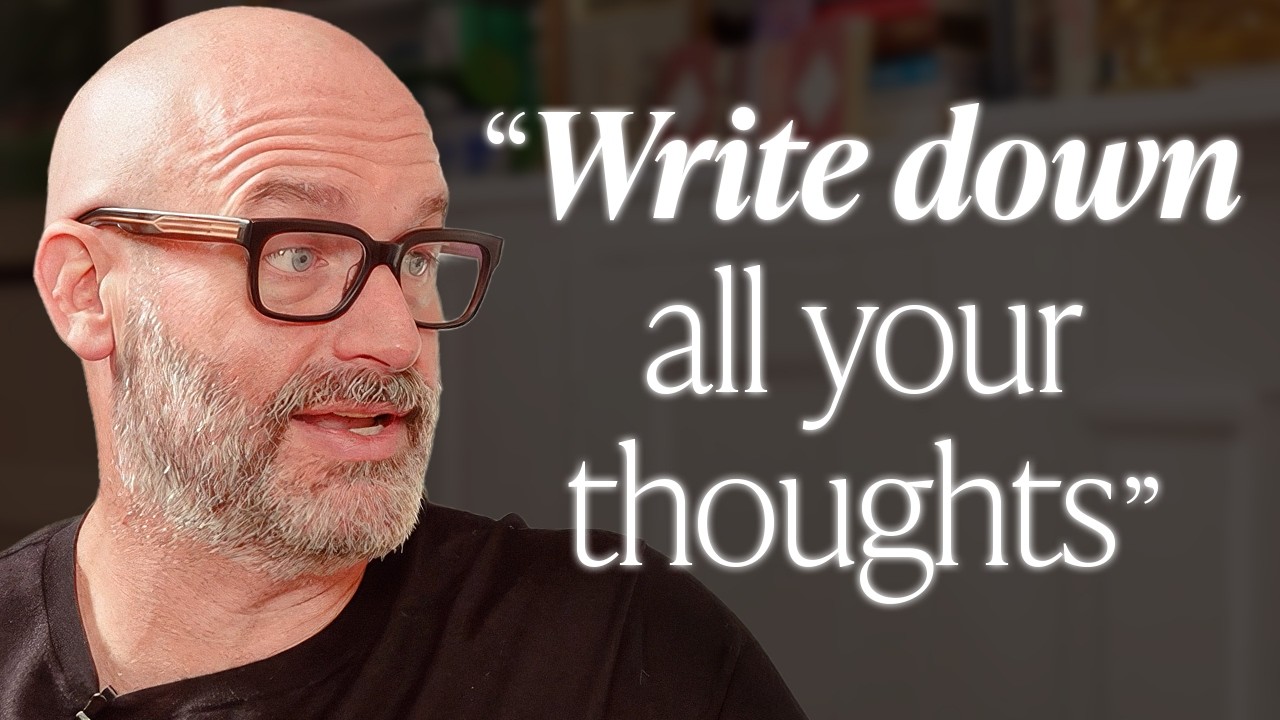
- He emphasizes volume: write everything down, even the dumb ones, and take them on stage. The editor brain can’t come too early, because something unpredictable happens between the idea and the live performance — adrenaline and audience energy produce material you couldn’t have anticipated at your desk.
-
Complaining is funny; indifference is not
- Having a strong opinion — positive or negative — is essential to comedy. Saying something is “fine” or “whatever” isn’t funny. Saying it tastes like someone boiled their socks in a cup is funny.
- Being annoyed or irritated is a reliable engine for humor. His 7-year-old son is naturally funny precisely because he’s constantly bothered by things adults have learned to ignore.
- Overheard conversations and small awkward interactions are some of his richest material. He tells the story of a hotel clerk in Charlotte who assumed “Segura” was Japanese, then doubled down — “We don’t get a lot of Japanese people here” — and the bit has followed Segura for over a decade, including a fan who got a tattoo of his face as a samurai.
-
The joy of articulating what everyone has noticed but nobody has said
- Segura describes the uniquely frustrating experience of hearing another comedian nail an observation you’ve had yourself but never voiced — like everyone standing up on a plane the second it lands, then waiting fifteen minutes to deplane.
- The comedian’s job is to be the first person to say the thing everyone is already thinking. That’s why certain bits feel urgent to get on stage before someone else does.
-
Surprise and subtext are the core mechanics of a great joke
- The best jokes involve an element of surprise — the audience anticipates where you’re going, then you turn somewhere else.
- He loves making audiences laugh “against their own judgment” — tackling a topic they don’t want to find funny, then winning them over. That reluctant laugh is a bigger rush than an easy one.
- He builds goodwill with an audience over the first 10–15 minutes, which lets him go to more provocative or uncomfortable places later in the set. The same principle works within a single bit.
-
Stage presence: comfort, silence, and the right energy
- Great stage presence is about making the audience feel at ease. Dave Chappelle is the extreme example — he’s so comfortable that 18,000 people in an arena go silent enough to hear a shoe move.
- New comics are terrified of silence; seasoned comics use it. When a comic isn’t frantic and the audience senses they’re going somewhere, people lean in.
- The best mindset for Segura to take on stage is “silly” — genuinely goofing around with friends backstage, then carrying that energy out. He surrounds himself with a crew he’s comfortable with so that the backstage atmosphere feeds the performance.
- Joey Diaz is a “tornado” — pure overwhelming presence. Leslie Jones comes out with commanding energy. Jerrod Carmichael at age 21 had the comfort level of someone who’d been performing for 15 years.
-
Chris Rock’s influence and the craft of deconstruction
- Segura considers Chris Rock the best at breaking down an idea from every angle until nothing is left. Rock’s material is clean, direct, and exhaustive — no vagueness.
- Bring the Pain was a formative special for Segura. He was so influenced by it that early recordings of his own stand-up show him doing an unconscious Chris Rock impression — the cadence, the hand gestures, the crouch.
- He’s met Rock several times in social settings and describes himself as a “super fan” who can’t quite talk to his heroes as peers.
-
Categories of comedians
- The field has exploded internationally, but Segura sees a few broad types: storytellers, social commentators (Rock, Jon Stewart), pure joke writers (Dave Attell, Sam Morril, Anthony Jeselnik), and the “alt” category that doesn’t fit any mold.
- Brian Voltzman is a comic Segura finds uniquely divisive — most women can’t stand him, and even men are split — but he’s mastered the technique of saying something he knows the audience won’t like, then following it with jokes that force them to either give in or leave the room.
- Segura is clear that he’s not a “I need to say what needs to be said” comic. He does this because it’s fun. The thrill of getting laughs is the drug.
-
Stand-up vs. TV vs. writing a book
- Stand-up is solitary: you paint a picture with words and get instant feedback. The thrill of a live audience reaction is unmatched.
- Bad Thoughts is collaborative in a way stand-up never is. In the writers’ room, other comedians’ ideas spark directions you wouldn’t have found alone. The show lets him turn absurd hypotheticals into fully realized mini-movies with cinematic production values and actors.
- A key principle for the show: cast dramatic actors, not comedy actors, for the most absurd sketches. Playing something completely straight makes it funnier. Holding on a real, uncomfortable moment — like a 25-second door hold — creates tension that fast editing would kill.
- Writing a book was the most exposed and vulnerable he’s ever felt. In stand-up, he controls cadence, facial expressions, and timing. On the page, he has none of that — just words, and no way to know if the reader hears them the way he intended. The lack of instant feedback made it genuinely terrifying, even though the book wasn’t particularly long.
-
Storytelling craft: finding your way in
- The reason for telling a story is as important as the story itself. You can’t just say “this thing happened.” You need a “way in” — a reason the audience should care right now.
- Example: instead of “I was almost the spokesman for Subway,” he opens by saying he never thought he’d be performing in arenas, and the highlight of his career was supposed to be the Subway campaign. That framing creates stakes and engagement before the story even starts.
- The same principle applies to everyday storytelling: “my apartment smells like weed” is fine, but “my parents are visiting for the first time since I moved to New York and they’ll be here in two hours” turns it into a story with real tension.
-
Word choice and accents
- Specific words matter enormously. “Yanked” is funnier than “pulled.” “Clipped” is funnier than “hit.” Certain sounds and word choices are inherently funnier, and comics develop an ear for this over time.
- Accents and voices add color to a story. Doing a voice lets the audience picture a different person. Segura, who is Peruvian-American, does his mother’s accent constantly and has always loved languages — he uses multiple language-learning apps.
- He roasted Hilaria Baldwin for a viral moment where she forgot the English word for “cucumber,” then experienced the same thing himself after a South American tour where he’d been speaking only Spanish for weeks and blanked on basic English words while signing an autograph.
-
Callbacks, overdoing it, and the thin line between funny and annoying
- Callbacks work because they show the audience you’re thoughtful and paying attention — the same way referencing something from earlier in a conversation feels witty and charming.
- But overdoing callbacks is real. The line between extremely funny and extremely annoying is thin. Kids discover a joke that makes you laugh and then say it 3,500 times. Adults and comics do the same thing.
- The key element underneath all of it: surprise. You laugh hardest when you didn’t expect it. Once a joke becomes predictable, it stops being funny.
-
Opening a set and building a hour
- Segura has tried every kind of opening — slow burn, hardest joke first, and everything in between. He thinks opening on a strong joke is generally best, but he’s changed his mind on different nights.
- A setlist for him is just one-word reminders: “Augusta,” “mans out,” “blackout,” “drunk,” “Hitler,” “duck.” Each word is a trigger for a bit.
- He builds an hour by establishing rapport early, then using that goodwill to go to more provocative places later — the same arc that works within a single bit works across the full set.