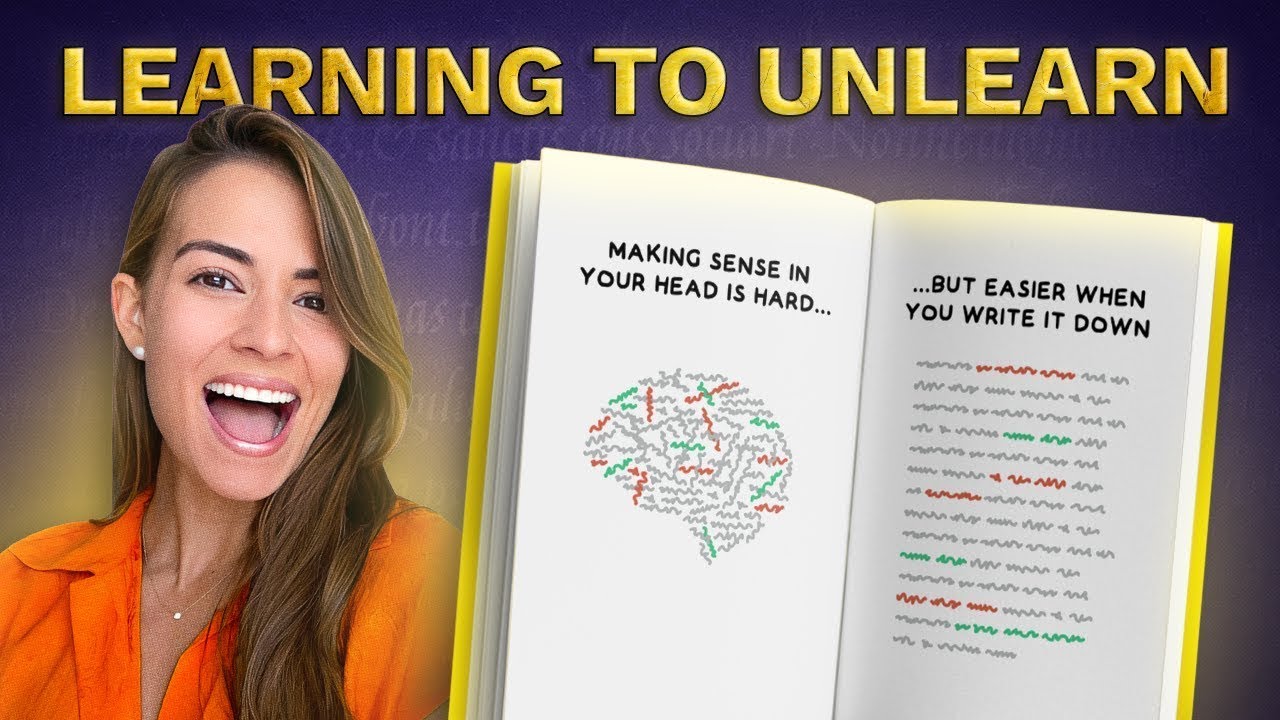
Ana Lorena Fábrega went from being a frustrated middle school teacher who hated writing to a published author and education reformer — and the journey required unlearning nearly everything she’d been taught about writing in school. She argues that traditional writing education damages students by prioritizing grammar, spelling, and rigid structure over ideas, curiosity, and self-expression, and that fixing this would produce more writers, better thinkers, and more engaged learners.
How Ana Got Here
Ana attended 10 different schools across seven countries as a child, then became a teacher in the U.S. and Panama — but grew deeply unhappy with the education system despite loving kids.
She left teaching with burning questions about how education should work but no outlet for them, until she found David’s online writing course.
She initially signed up, asked for a refund out of fear (“I’m not a writer, I hate writing”), then was convinced by her husband and David to stay — and the biggest lesson was learning to unlearn how she’d been taught to write.
Over about five weeks of full-time immersion, she internalized core principles that eventually became her book The Learning Game.
The Problem with How Writing Is Taught
Originality is overemphasized: Students are told they need to be experts on a topic before writing about it, which paralyzes them — especially kids who don’t see themselves as experts in anything.
Writing should be how you learn, not proof you already know: Reframing writing as a process of exploration rather than demonstration of expertise makes it far less intimidating.
Content doesn’t need to be 100% original: Modern writing is often about curating existing ideas, remixing them, and building on them with your own perspective — but schools treat this as plagiarism-adjacent rather than a legitimate creative process.
Structure and grammar are prioritized over ideas: The five-paragraph essay, SAT words, spelling tests, and sentence mechanics are taught before students ever get to what they’re actually trying to say.
Ana describes a thought experiment: what if software graded you at 23% grammar and you had to write anyway — it would force you to have a strong idea since you have nothing else to lean on.
She recalls students Emma and Maya in third grade who were paralyzed by spelling but produced phenomenal, creative stories when told to ignore spelling — yet their parents, themselves “damaged writers,” couldn’t see past the errors.
Time and conditions are wrong: Writing assignments are rushed (finish by Friday), interrupted, and don’t allow ideas to marinate. Ana’s own breakthrough came from five full weeks of immersion — something no school schedule permits.
Everyone reads the same required material, thinks about the same things, and is then expected to produce something original — which is nearly impossible under those constraints.
What Ana Had to Unlearn
You don’t need to be an expert to write — writing is how you become one.
You don’t need to be original from the start — pull from existing ideas, remix, and add your own experience.
Simplicity beats sophistication — stop using big jargon and fancy words; write like you speak. (English isn’t even Ana’s first language, which made this lesson especially liberating.)
Stories matter more than facts and figures — people remember narratives, not data. Ana had to learn to trust her own classroom stories instead of hiding behind research and quotes.
In her early writing, 20–30% was quotes — she compares quotes to training wheels: useful at first, but eventually you learn to balance on your own.
Visuals and aesthetics are part of communication — Ana always paired words with images and doodles, and made this a core feature of her book.
How Ana Actually Writes
Ideation: She starts in her Evernote, looking through “cold notebooks” and “hot notebooks” of accumulated ideas, picks whatever excites her that day, then calls someone who can give her a fresh perspective before filling remaining gaps with research — time-boxed to avoid rabbit holes.
Pulling from diverse sources: She stopped reading only education books and started reading about finance, poker, sports, mental models — then looked for connections back to education. This cross-pollination gave her writing a unique angle that blended gaming, economics, psychology, and sports with learning.
Finding her “specific knowledge”: She built on ideas like Naval Ravikant’s concept of specific knowledge, using examples like Dr. House (diagnostic medicine as puzzle-solving + risk-taking + understanding human behavior) to illustrate points about how kids learn.
Writing from experience: Her unique background — 10 schools, 7 countries, teaching in two countries, loving kids but hating the system — became her “personal monopoly” and the foundation of her voice.
Controversy as a tool: She deliberately writes things that challenge people’s assumptions about education, aiming to provoke reflection whether readers agree or disagree.
The Book: The Learning Game
Design and visuals: Ana worked with illustrator Yanis Zorbar, who read the book, got inspired (he has four kids and deeply connected with the material), and created visuals so powerful that readers sometimes understand the concept from the image before reading the text.
The cover is a Tic Tac Toe board that isn’t won the conventional way — designed to make a stranger pause and think “there’s a different way to do this.”
Editing philosophy: “Not one extra word.” Ana started from abundance — years of newsletter content — and curated, combined, and expanded pieces that resonated most with readers, organizing them into a coherent storyline.
Practical application: Every chapter ends with something simple parents can do immediately — “planting a seed” rather than overwhelming them.
Feedback process: Opening the manuscript to feedback was the hardest part of the entire process (she was also pregnant at the time). She learned to assign specific feedback roles:
Her husband Fernando: line-level, grammar, word choice (“go needy greedy”).
Her childhood friend Sylvia in London: devil’s advocate, to challenge Ana’s biases and find holes in her arguments.
Others: high-level feedback on structure, stories, and what was interesting.
Writing as Thinking and Therapy
Writing is thinking: Following John Warner’s argument in Why They Can’t Write, Ana emphasizes that writing is not about mastering sentences first — it’s about figuring out what you think. “I have yet to meet a writer who thinks in sentences.”
Writing is therapeutic:
In her classroom, Ana kept a “problem notebook” where kids could write out their frustrations anonymously. Many kids’ urgent emotional issues dissipated after writing them down — they didn’t even need to talk to her afterward.
Her husband, who struggles to get a word in during fast-paced conversations with Ana, started writing her letters. This became a powerful communication tool for their relationship — forcing both of them to clarify what they actually meant.
Writing as the foundation of all creative work: Ana has expanded into video, podcasts, and Instagram, but everything traces back to ideas she first worked through in writing. She argues that even people who don’t want to be “writers” benefit enormously — becoming better thinkers, speakers, and emotional processors.
The Bigger Picture
“Damaged writers” are everywhere: Adults who say they hate writing often have writing trauma from years of being judged on the wrong things (spelling, grammar, structure) rather than ideas.
AI-resistant skill: Ideas, creativity, and the ability to synthesize across domains are what writing cultivates — and these are the things that won’t be replaced by technology.
Communication is a top skill in the modern world, and writing is the best way to become a good communicator — which is why fixing writing education matters far beyond producing authors.