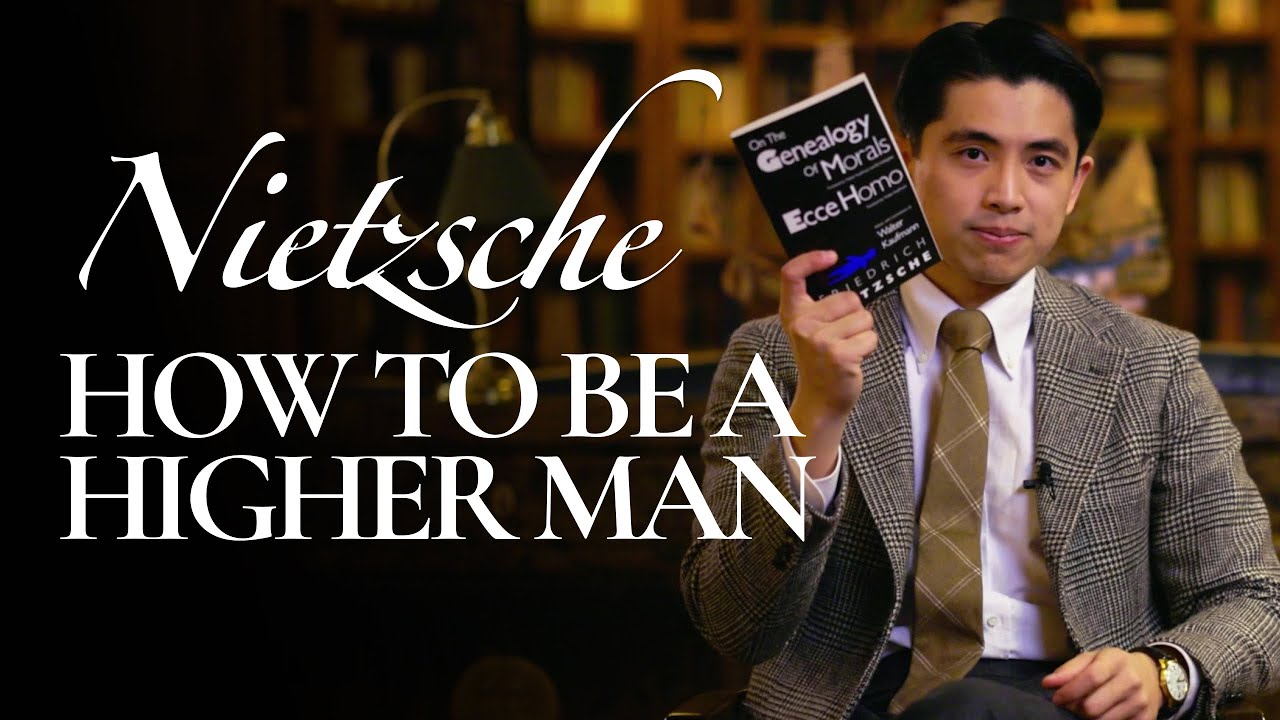
Nietzsche’s On the Genealogy of Morality is a radical critique of modern moral values—altruism, equality, compassion, humility—which he sees as products of a “slave morality” rooted in resentment, designed to restrain exceptional individuals and prevent the emergence of greatness. His project is not abstract philosophy but a rhetorical and psychological intervention aimed at liberating a rare few “higher men”—creative geniuses like Beethoven, Goethe, or Napoleon—from the suffocating influence of herd morality.
Nietzsche’s Core Project: Revaluation of Values
Nietzsche’s central goal is the production of “higher men”: rare individuals of extraordinary creative or cultural power.
He believes modern morality—egalitarian, otherworldly, focused on victims—actively suppresses such greatness by promoting mediocrity.
He contrasts this with “master morality,” associated with the Greco-Roman world, which affirms strength, pride, sensuality, and hierarchy.
His method is not logical argument but rhetorical exposure: he aims to disgust readers into rejecting slave morality by revealing its psychological origins in weakness and envy.
The Psychology of Resentment: Rome vs. Judea
Nietzsche frames Western history as a moral war between two value systems:
Master morality (Rome): evaluates based on self-affirmation—“I am noble, strong, beautiful, therefore good”; others are “bad” only in the sense of being common or lacking.
Slave morality (Judea/Christianity): begins by labeling the powerful as “evil,” then defines “good” as the opposite—meekness, chastity, poverty, humility.
Slave morality arises from resentment: the powerless cannot act against the powerful, so they reinterpret their weakness as virtue.
This inversion is not principled but reactive: slaves don’t affirm values—they only negate the master’s traits.
Three Critiques of Slave Morality
Psychological negativity: Slaves are defined by what they oppose, not what they create. Their inner life seethes with envy, loathing, and passive aggression.
Promotion of bad values: Chastity, mercy, and poverty are not virtues but disguises for impotence—e.g., the chaste are not virtuous but unattractive; the patient are not noble but cowardly.
Hypocrisy: Christian love masks a desire for vengeance. Nietzsche cites Dante, Aquinas, and especially Tertullian, who describes heavenly bliss as deriving from watching sinners suffer eternally—revealing punishment as disguised cruelty, not love.
The Invention of Free Will
Slave morality introduces free will to make moral blame possible.
Nietzsche uses the metaphor of lambs calling eagles “evil”: it’s absurd to blame an eagle for hunting, just as it’s absurd to blame a strong person for dominating.
Free will is a fiction invented by the weak to punish the strong and praise themselves.
This has profound implications: even metaphysics (like free will) is shaped by psychological needs, not reason—making ad hominem analysis not just valid but necessary.
The Ascetic Ideal and the Priests
A new class emerges in the moral war: the priests, who lead the slave revolt.
They are intelligent and possess strong will to power, but are spiritually “sickly”—gloomy, depressive, life-denying.
Their ideal is asceticism: denial of natural desires (sex, food, wealth, reputation) not as virtue but as a strategy for power.
Socially, asceticism grants legitimacy (e.g., the High Sparrow in Game of Thrones).
Personally, it creates optimal conditions for pursuing a “great project”—like philosophy or mysticism—by eliminating distractions.
Asceticism as Will to Power
Even self-denial is a form of will to power:
Philosophers embrace poverty, chastity, and humility not out of virtue but because these conditions maximize focus on truth-seeking.
Mystics and monks deny life not to escape it but to assert control over it—even willing nothingness rather than not willing at all.
Nietzsche’s shocking example: early Christians who castrated themselves show that humans would rather actively destroy their instincts than passively abstain.
Why Asceticism Spread: Cruelty and Suffering
The ascetic ideal spread because it answered two deep human needs:
Cruelty: Civilization suppresses outward violence, so humans turn cruelty inward—creating guilt, self-punishment, and inner conflict.
The concept of original sin is not a bug but a feature: it justifies self-torment.
Suffering: Life is full of pain, and people demand meaning for it.
Slave morality offers a answer: “You suffer because you are guilty.”
This gives suffering purpose and a path to end it: deny yourself.
Limitations of Nietzsche’s Account
Overemphasis on will to power: Nietzsche reduces all motivation to power, ignoring genuine altruism or compassion. His cynicism may reflect his own psychology more than universal truth.
Heroic individualism: He idealizes the lone genius, ignoring how all valuation is socially embedded. Even masters depend on recognition from others.
Nietzsche’s own life as confession: His obsession with power and rejection of sociality may stem from his personal failures—chronic illness, romantic rejection, lack of recognition. His philosophy reads like a triumph of resentment disguised as mastery.
Final Assessment
Despite its flaws, the Genealogy offers enduring insights:
Resentment as a driver of moral systems.
The tension between egalitarianism and cultural excellence.
The psychological roots of metaphysical beliefs.
The hidden power dynamics in ascetic and religious ideals.
Nietzsche’s work is less a doctrine than a mirror: it forces readers to confront the psychological underpinnings of their own values—and to ask whether those values serve life or merely mask weakness.