-
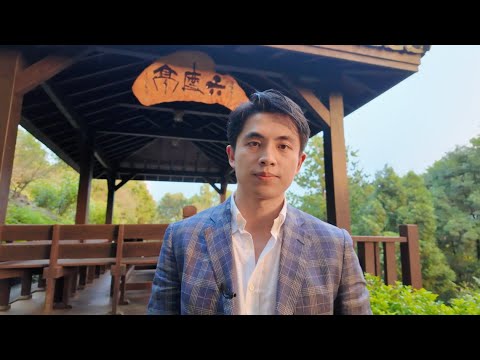
The speaker describes a new mode of studying that combines travel to the places where ideas were formed with reading the texts in those locations, arguing that physical place deepens understanding of intellectual works in ways that reading alone cannot.
- This approach was inspired by the speaker’s experience with Rston, a fully funded MA program that travels across Greece and Turkey studying the classics where they were written, including an ancient Greek intensive.
- The program is fully funded by philanthropists, takes no revenue, and the speaker is promoting it out of genuine enthusiasm; the first application deadline is December 18th.
- The speaker shares two personal examples of how location transformed their reading.
- This approach was inspired by the speaker’s experience with Rston, a fully funded MA program that travels across Greece and Turkey studying the classics where they were written, including an ancient Greek intensive.
-
Machiavelli in Florence
- The speaker rented places where Machiavelli lived during his time as chancellor and general secretary of the Florentine Republic, and later where he lived in exile, reading Discourses, The Prince, Art of War, and Florentine Histories in those settings.
- Visiting Machiavelli’s place of exile, about 30 minutes south of Florence, the speaker could still briefly see the Duomo of Florence from his garden.
- This made viscerally real the patriotic torture Machiavelli must have felt seeing his beloved Florence every day while being powerless to return, adding emotional and political depth to his writings.
-
Nietzsche on the French Riviera
- The speaker traveled to Èze on the French Riviera, where Nietzsche wrote the third part of Thus Spoke Zarathustra, and hiked the mountain path Nietzsche himself hiked while composing it.
- The third part of Zarathustra is about going up and down mountains that connect to the sea, so the verticality and movement in the text suddenly made physical sense when experienced on the actual terrain.
- Nietzsche himself emphasized that ideas are embodied, not just psychologically (his famous ad hominem critiques) but also through climate and geography, particularly regarding Mediterranean thinkers.
- The speaker argues Nietzsche is right that understanding where an idea comes from, not just who formed it, is essential to grasping the full picture, while cautioning against extreme geographical determinism.
- The speaker traveled to Èze on the French Riviera, where Nietzsche wrote the third part of Thus Spoke Zarathustra, and hiked the mountain path Nietzsche himself hiked while composing it.
-
The Rston experience in Greece
- Studying Pythagoras in the cave where he allegedly taught, standing where Agamemnon was said to have been killed by Clytemnestra, visiting the rebuilt Stoa where the Stoics founded their school, and seeing what remains of the Academy all gave concrete grounding to the ideas.
- One illustrative example: the Western notion of liberty emerged in Greece partly because its geography of islands and mountainous regions made unification difficult, unlike China’s broad plains which armies could easily traverse.
- This is not geographical determinism but an acknowledgment that physical environment shapes political and philosophical concepts.
-
Cicero’s De Finibus as ancient precedent
- After the Rston experience, the speaker discovered that Cicero made the same point in De Finibus Book 5, where the character Piso, walking near the ruins of the Academy in Athens, reflects on how seeing the places where great thinkers lived and taught is more moving than reading their works or hearing about their achievements.
- Piso describes how Plato’s gardens seem to make Plato himself appear, and how seeing the seat where Polemo sat brings the past vividly to life, noting that this is why the ancient art of memory training is based on places (the memory palace technique).
- Other interlocutors in the dialogue echo the point: one is moved by the site of Colonus where Sophocles lived and where Oedipus arrives in the play; another describes how passing Epicurus’s garden makes it impossible to forget him, with his image even engraved on the cups and rings of his followers.
- After the Rston experience, the speaker discovered that Cicero made the same point in De Finibus Book 5, where the character Piso, walking near the ruins of the Academy in Athens, reflects on how seeing the places where great thinkers lived and taught is more moving than reading their works or hearing about their achievements.