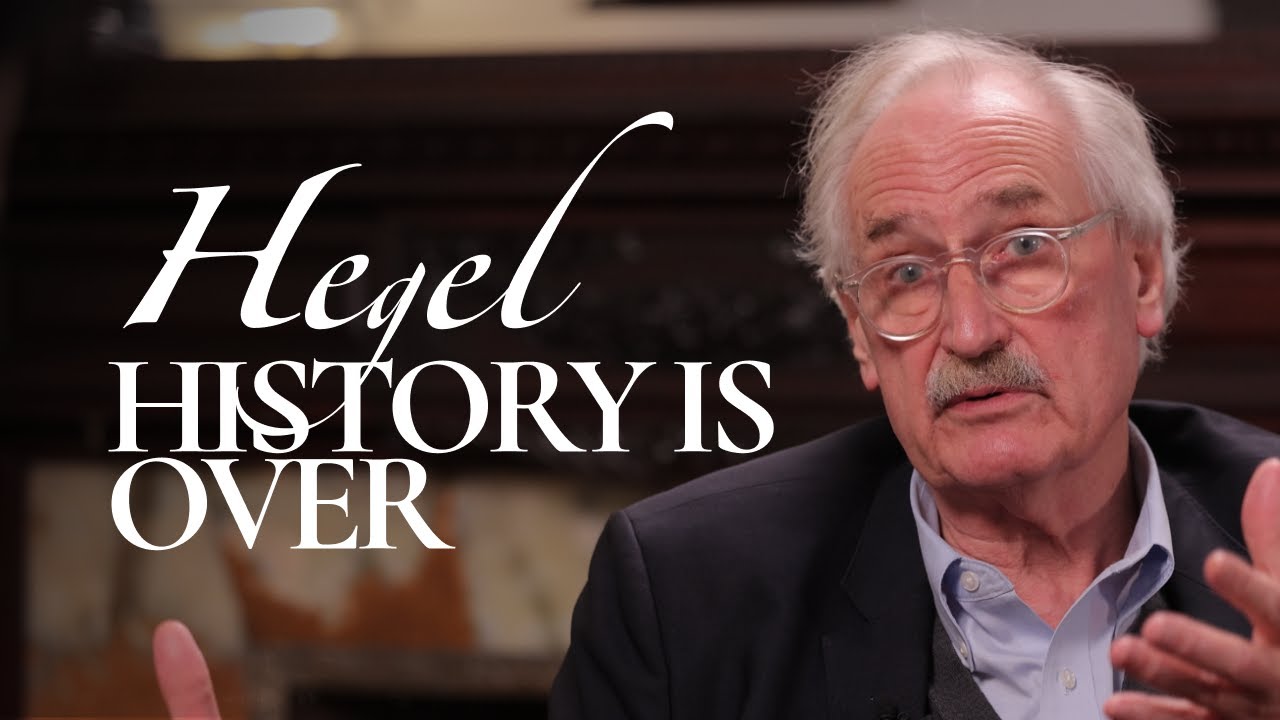
- Axel Honneth, one of the most important living philosophers and a major figure in the Frankfurt School tradition of critical theory, argues that recognition is the fundamental grammar of all moral and social life. Every struggle—whether over class, race, gender, or culture—is ultimately a struggle to be seen, respected, and valued by others. This reframes the familiar left-wing tension between “class conflict” and “identity politics” as a false dichotomy: material demands (fair wages, redistribution) are inseparable from recognitive ones (dignity, esteem, visibility). Honneth’s project, developed across works like The Struggle for Recognition and Freedom’s Right, provides both a diagnostic tool for understanding social suffering and a normative roadmap for building institutions that allow people to live authentically.
Recognition as the Foundation of Moral Life
-
All social struggles are struggles for recognition, not merely for material resources.
- Classical Marxist class conflict is often described as a fight over material interests, but Honneth argues this is misleading. Workers fighting for fair pay are simultaneously fighting for the esteem that fair payment symbolizes. The demand for redistribution is always already a demand for recognition.
- The same logic applies to identity-based movements: the fight for gay marriage, for example, was primarily a legal struggle for recognition as an autonomous person with equal rights, not merely a cultural or symbolic one.
- Material consequences (payment, healthcare, legal status) serve as the verifiable backing of recognition. Without them, symbolic recognition feels hollow; without recognition, material gains feel unjust.
-
Recognition and redistribution are not opposed—they are two dimensions of the same moral experience.
- Honneth rejects the framing (associated with Nancy Fraser) that pits “recognition” against “redistribution.” He argues that interests themselves are culturally shaped and morally interpreted. A worker’s experience of “dying on the job” is not purely physical—it is experienced as an attack on dignity.
- Even in extreme cases of survival (e.g., people in Gaza), the experience of starvation is inseparable from the feeling of being forgotten or disrespected by the world.
-
The rise of identity politics did not undermine class struggle—it extended the logic of recognition to new social groups.
- Honneth traces the shift from working-class movements to multicultural and identity-based movements back to the 1960s, when thinkers like Herbert Marcuse began looking to subcultures (hippies, gay communities) as new forces of social change, because the traditional working class appeared integrated into capitalism.
- The growth of immigration into European countries created new ethnic and religious minorities whose suffering—underpayment, invisibility, cultural marginalization—required a recognitive framework to understand.
- “Woke capitalism” (rainbow branding, progressive advertising) is a surface phenomenon that does not resolve the underlying structural struggles for recognition.
The Three Forms of Recognition
- Honneth identifies three distinct forms of recognition, each corresponding to a different dimension of selfhood and a different kind of social institution. These are not universal constants of human nature but historical achievements of modernity.
1. Love (and Self-Trust)
-
Love is the most basic form of recognition: being cared for in one’s individual needs, desires, and vulnerabilities by concrete others (parents, caregivers, friends, romantic partners).
- It is not limited to romantic or sexual love but includes any relationship of emotional attunement and care.
- It is a precondition for cognition and subjectivity itself. Without early experiences of being loved, a child cannot develop a stable sense of self. Evidence from feral children (Genie, Victor of Aveyron) shows that without recognition, even basic self-consciousness (the use of “I” and “you”) fails to develop.
-
The mechanism: The infant begins in a state of “fantasized omnipotence,” then experiences frustration when needs are unmet, and finally learns dependence when a caregiver reliably responds. This cycle of frustration and satisfaction teaches the child that it is a needy being dependent on another—and this realization is the foundation of self-trust (a concept Honneth borrows from Donald Winnicott).
- Self-trust enables the capacity to be alone with oneself, which is the basis of all later independence. Paradoxically, true independence is built on the right kind of early dependence.
-
Pathologies of love include:
- Inability to be alone with oneself (chronic need for external validation).
- Self-denial or uncertainty about the value of one’s own needs.
- Trauma from rape or torture, which Honneth interprets as an attack on basic self-trust—the victim’s confidence that their needs and bodily integrity matter is shattered.
- These pathologies are not deterministic; coping mechanisms, therapy, and later loving relationships can help repair them.
-
Social pathologies of love also exist: professions that require feigning emotion (flight attendants, service workers) can produce alienation from one’s own feelings. Arlie Hochschild’s research shows that habitual emotional performance creates a discrepancy between inner states and outer expressions, leading to a kind of self-estrangement.
2. Legal Respect (and Self-Respect)
-
Legal respect is recognition as an autonomous, self-determining member of a community, expressed through subjective rights (legal claims and obligations).
- It guarantees a private sphere in which individuals can explore their interests, form relationships, and develop their identities free from arbitrary interference.
- It is the basis of self-respect: the sense that one has equal dignity and a say in how society is organized.
-
Moral respect is a related but distinct concept: the attitude that every person deserves to be treated as morally autonomous, regardless of legal status. Honneth is uncertain whether moral respect can be fully institutionalized or whether it depends more on cultural attitudes.
-
Pathologies of legal respect include:
- Legalization of social life: the tendency to treat all relationships and interactions as legally mediated (e.g., contract-based friendships, over-reliance on litigation). This is especially pronounced in the United States, where legal thinking dominates public life and undermines other forms of cooperation.
- Lack of rights produces a specific kind of suffering: not merely lower esteem (which is a different form of recognition) but the feeling of not having a say, of not being a full member. Frederick Douglass’s experience as a former slave is a clear example—he was denied the legal claims that white citizens enjoyed, which constituted a form of legal disrespect.
- In communities without formal legal systems (pirates, tribal societies), disrespect manifests as lower membership status—being treated as less than a full participant in collective life.
-
The decoupling of legal respect from esteem is a moral achievement of modernity. In premodern societies, your legal status and your social reputation were fused (e.g., feudal lords had both rights and high esteem; peasants had neither). Modernity separates them: you can have equal legal rights regardless of your social standing. This creates space for individualization.
3. Social Esteem (and Self-Esteem)
-
Social esteem is recognition of one’s valuable contributions to the community, especially through the division of labor.
- It is the most contested form of recognition because societies constantly struggle over which occupations, lifestyles, and achievements deserve esteem.
- Honneth argues that a certain degree of social esteem is a basic human good. People who feel they “count as nothing”—whose work and efforts are invisible—experience a specific and severe form of social suffering.
-
The standard for progress in esteem is inclusivity, not alignment with a fixed hierarchy of virtues.
- Honneth rejects the classical view (associated with Aristotle or Nietzsche) that healthy esteem culture means aligning praise with virtue and shame with vice. He argues that in modern, pluralistic societies, there is no agreed-upon hierarchy of virtues that can serve as a standard.
- Instead, progress means expanding the range of activities, identities, and lifestyles that receive esteem. The struggle of nurses for better pay and visibility is a legitimate political struggle over the organization of the division of labor.
- On contested issues like body positivity, Honneth is cautious: he does not think political philosophy can establish “fair” standards for esteem in every cultural domain. But it can and should address the distribution of esteem tied to the division of labor, because that is subject to political intervention.
-
Esteem struggles are won through political and social mobilization, not by individual demand.
- Nurses’ associations, for example, articulate claims for greater esteem and better pay using the language of recognition. These struggles are ongoing and legitimate.
- Agencies (political bodies, administrations) can intervene by making certain kinds of work more visible, better paid, and more autonomous. The GDR, despite its many flaws, had the advantage of making certain occupations highly visible as valuable to society.
-
Esteem is also tied to material conditions: payment, co-determination (having a say in how work is organized), and the development of skills are all mechanisms through which esteem is distributed. Honneth opposes “stupid mechanical work” and supports work that develops human capacities.
Freedom’s Right: Institutionalizing Recognition
- In Freedom’s Right, Honneth reinterprets Hegel’s Philosophy of Right for the 21st century, arguing that freedom is the master value of modernity and that all social movements implicitly appeal to it.
- He identifies three forms of freedom, each corresponding to a sphere of social life and a form of recognition.
Negative (Legal) Freedom
- Negative freedom is the absence of external interference, secured by subjective rights and a protected private sphere.
- It is not Hobbesian freedom but Hegelian: a space of one’s own in which to discover who you are, what you want, and what your interests are.
- It requires minimal property—not ownership of means of production, but enough personal space and resources to develop a sense of self. Without this, individuals suffer from an inability to know who they are.
- Pathology: Over-legalization of social life—treating all relationships as contractually mediated, producing an overabundance of lawyers, legal cases, and security thinking (especially in the U.S.).
Reflexive (Moral) Freedom
- Moral freedom is the capacity to act on principles that could be universally agreed upon (Kantian autonomy).
- It is difficult to institutionalize; it depends more on cultural sensitivity to moral autonomy than on laws or formal institutions.
- Pathology: Over-moralization—the tendency to subject every personal decision to moral scrutiny (e.g., asking “Is it fair to save my wife instead of a stranger?” when a ship is sinking). Bernard Williams’s critique of moralism applies here: sometimes one thought too much.
- Honneth does not believe moral freedom should always trump other concerns. Social freedom may require limitations on both legal and moral freedom (e.g., taxation for collective goods).
Social Freedom
- Social freedom is the most important and distinctive form: freedom that can only be enjoyed with and through others, in communicative relationships of mutual recognition.
- It operates in three spheres:
- Personal relationships (family, friendship, romantic love): Freedom here means being able to be authentic with another person, to find out who you are through the other’s recognition. Friendship is not just pleasant—it is a form of freedom because the friend helps you become who you are.
- The market/economy: Freedom here means experiencing the division of labor as a sphere where others want you to develop your capacities. Honneth favors market socialism—markets regulated so that participants are collective actors with collective property, not isolated individuals competing for survival.
- The political sphere: Freedom is not just voting but active participation in public debate about how to organize collective life (republican freedom). It requires communicative institutions that allow genuine deliberation.
- The core experience of social freedom: The other is no longer a limit to your self-realization but someone who wants your freedom. You feel “at home” in the social world because its principles reflect what you can agree with.
- Honneth opposes universal basic income (UBI) as paternalistic; social freedom requires active participation in the division of labor, not passive receipt of resources.
- It operates in three spheres:
Methodology and Broader Implications
-
Honneth’s method is immanent critique: he derives normative standards from the internal logic of modern social practices, not from transcendent or ahistorical principles.
- He does not claim that modernity is the “end of history” in a triumphalist sense, but he does believe that freedom is the best principle available for organizing social life, and that no superior alternative is visible.
- He is more cautious now than when he wrote Freedom’s Right: democracy is under attack from right-wing movements in the U.S. and Europe, and the process of democratization is not guaranteed.
-
Recognition is not the only human good, but it is arguably the highest.
- Pleasure, health, and other goods exist independently of recognition. But the good life (eudaimonia) is largely constituted by the right kinds of communicative relationships with others—which are relationships of mutual recognition.
- Even Adam Smith, in The Theory of Moral Sentiments, recognized that we want not just to be praised but to desire praise. Honneth builds this into the concept of recognition: we want to be recognized in the right way, and we want to deserve the recognition we receive.
-
Pathology is not necessary for greatness.
- Honneth rejects Nietzsche’s claim that a “pathos of distance” (the disgust of the great for the plebeian) is needed for high culture. He points out that many great artists (James Joyce, Picasso) did not grow up in conditions of systematic disrespect, and that suffering does not reliably produce great art.
- Competition can be fruitful (sports, academia) when organized in ways that do not harm participants. But the deliberate infliction of suffering for the sake of excellence is both descriptively false and normatively wrong.
-
The central lesson: Independence comes from the right kind of dependence. Self-trust, self-respect, and self-esteem are all built through relationships of recognition. The goal is not to escape dependence on others but to find relationships and institutions in which others want you to become who you are.