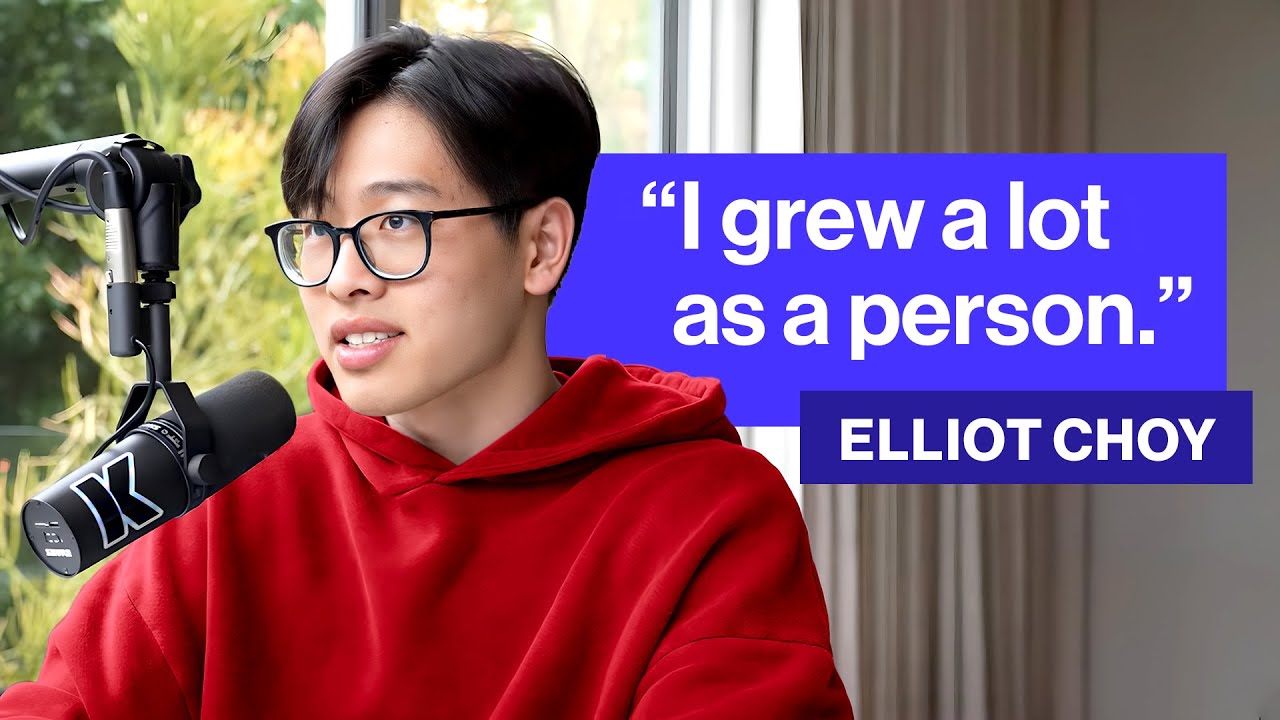
This is a conversation between two friends and content creators, Sean (host) and Elliot Choy, who use a structured vulnerability exercise (based on the “36 Questions to Fall in Love” framework) to deepen their friendship. They discuss personality, self-development, business, content creation, and personal growth, moving through increasingly intimate levels of questions while reflecting on who they are and how they’ve changed.
Personality and Self-Understanding
They open with the Big Five personality test (OCEAN: Openness, Conscientiousness, Extraversion, Agreeableness, Neuroticism), which is scientifically validated, unlike Myers-Briggs.
Openness: Elliot rates himself as not very open, seeing it as a weakness because he forms strong logical opinions and sticks to them, sometimes dismissing other perspectives too quickly. Sean relates similarly.
Conscientiousness: Elliot is highly detail-oriented and organized when it comes to things he owns (apartment, suitcase, workspace). Sean, by contrast, describes himself as one of the least organized people, once traveling with a garbage bag for his belongings.
Extraversion: Elliot started more introverted and has become more extroverted; Sean started more extroverted and has become more introverted. They joke that everyone converges toward the middle with age.
Agreeableness: Elliot used to be highly agreeable and conflict-averse, which he attributes partly to Asian cultural upbringing (“keep your head down”) and having two older sisters. He now actively works on being more vocal about disagreements. Sean shares a similar cultural background and experience.
Neuroticism: Sean rates himself moderately high — he rarely stops thinking about everything going on in his life. Elliot rates himself lower and shares a recent discovery: he only recently realized he has an internal voice in his head, and it’s primarily active when he’s anxious.
Thinking in Sentences vs. Thinking in Thoughts
Elliot shares that he recently discovered he can think in sentences internally, but only when alone and in silence. Most of the time, his thoughts just appear without verbal structure.
He describes this as “hanging out with myself” — an uncomfortable but valuable practice of spending time alone with his own thoughts, similar to journaling but internal.
This has helped him view himself more objectively and with less bias, as if having a conversation with someone else.
Sean jokes that Elliot accidentally stumbled into a meditative state.
Self-Development and Deliberate Discomfort
Elliot describes himself as aspiring to be like a “modern-day monk” — not isolated from society, but working on discipline and control over his mind.
He practices making himself uncomfortable intentionally. One exercise from The 4-Hour Work Week: staring at strangers until they look away, which he did regularly to become comfortable with discomfort.
In college, he would strike up conversations with strangers at the Harvard bookstore to practice being a “functional human being.”
He also took an acting class recently, where he was assigned roles including Zuckerberg from The Social Network and a bullied kid — which he found revealing about how others perceive him.
Sean notes that Elliot’s X-Men superpowers so far are: (1) having conversations with himself in his head, (2) never looking away in a staring contest, and (3) incredibly cold hands (a joke about poor circulation).
Character Types and Pop Culture
When asked what character Elliot would play in a movie, Sean describes him as “The Lancer” — the rival character who exudes quiet authority, is calm and reserved, and serves as a counterbalance to the flashy main character.
Elliot admits he’s terrible at pop culture references, naming only Shrek, Inception, and The Bee Movie as movies he can think of. Sean jokes these are the “three formative movies of Elliot’s childhood.”
Elliot notes that his lack of pop culture knowledge is because he watches YouTube, not traditional media.
Friendship, Business, and Vulnerability
Both discuss how they balance friendship and business relationships. They agree the two aren’t mutually exclusive, but boundaries matter — sometimes you just want to hang out and play video games without talking about work.
Sean’s co-founder Will started as a friend. Their friendship actually became stronger when they acknowledged the business relationship and committed to arguing over things they’d normally let go as friends.
They reflect on a moment at VidSummit (and another at VidCon) where, amid the networking and chaos, they stepped away to just catch up as real people. Both valued the ability to be unguarded and authentic with each other.
Elliot describes himself as someone who is naturally vulnerable but has learned to regulate it — being willing to be open but treading carefully to avoid oversharing with people who don’t care.
Sean agrees, describing their vulnerability as “conscious and deliberate” — being open with the right people at the right level.
Visualization, Manifestation, and Motivation
Elliot learned about visualization from Napoleon Hill’s Think and Grow Rich (despite Hill’s questionable credibility as a fraudster). The practice involves vividly imagining a future memory — not just a metric like “100K subscribers” but the emotional experience of someone approaching you on the street saying your videos impacted them.
Elliot used this in college with a written list of visions for different facets of his life. Some came true, some didn’t.
Sean reflects on his own relationship with external validation. He used to be extremely ego-driven, visualizing outcomes like Forbes 30 Under 30. While he didn’t hit that milestone (he was a few months too old), he’s aware of his need for external validation and is trying to move past it.
He describes a practice he calls a “life bet” — putting everything on the line for something so important that he stakes his life on it. He’s done this twice, and both times it worked out, which reinforces his belief in the power of total commitment.
Both agree that external validation is effective for short-term motivation but unsustainable long-term. The goal is to build internal motivation and self-validation.
Elliot finds confidence by acting in ways he’s proud of when no one is watching — being honest with himself about how he spends his alone time.
Sean notes that starting Carrot (his company) required him to move past external validation, but after four years, some of those mental gains have regressed as he focuses on hitting the next funding round and metrics.
Emotional Pain and Coping
When asked about the most pain they’ve experienced that wasn’t physical, both say breakups.
Sean describes breakups as splitting off a side of yourself. Every breakup he’s been through led to a major positive life change: moving to the West Coast, wanting to do his own thing, actually doing his own thing, and moving to LA.
Elliot notes that emotional pain is harder to deal with than physical pain because the path to healing isn’t clear. He’s found that cold showers (which he’s done for 4-5 months) help — the physical pain temporarily overrides the emotional pain, and overcoming the physical pain builds confidence that he can overcome emotional pain too.
What They Learned About Themselves
Sean’s takeaways: (1) It’s cool that they actually know each other well — this wasn’t a first-date conversation but a genuine catch-up between friends. (2) Elliot’s observation that Sean tends to be on one extreme or the other (very friendly or intensely driven) is a good reminder to work on shifting more gradually.
Elliot’s takeaway: He learned that he has a tendency to appear serious and reserved, but with close friends he’s actually goofy and silly. He wants to be more in touch with that side of himself and not feel the need to always appear serious.
Sean confirms this, noting that playing Smash Bros together revealed Elliot’s goofy side — which only comes out when he’s truly comfortable.
Content Creation and Authenticity
They discuss the difference between curated content and raw authenticity. Elliot’s videos are edited and thematic — he shows aspects of his life that align with the video’s message, not everything.
He acknowledges there’s bias in what he chooses to share: “Maybe this makes me look stupid, so I won’t show it” — when in fact maybe he just is stupid.
Sean notes that having more cameras around (like in a house setting) captures a more authentic, unfiltered version of a person. Live streamers, for example, can’t pretend to be someone for hours on end.
Elliot says he wouldn’t want cameras everywhere all the time — he likes having a motive behind each video and curating the narrative.
Closing Reflections
When asked about their most important similarity, they joke about both being Asian and wearing glasses. More substantively, they agree:
Both are on a journey from being driven by external validation toward building internal motivation and self-worth.
Both value conscious, deliberate vulnerability — being open but careful about who they share with and how much.
Both see each other as good people with good hearts, which they consider an undervalued quality in the business world.
The conversation ends on a warm note: life is hard, it doesn’t necessarily get easier, but they’re both just trying their best.