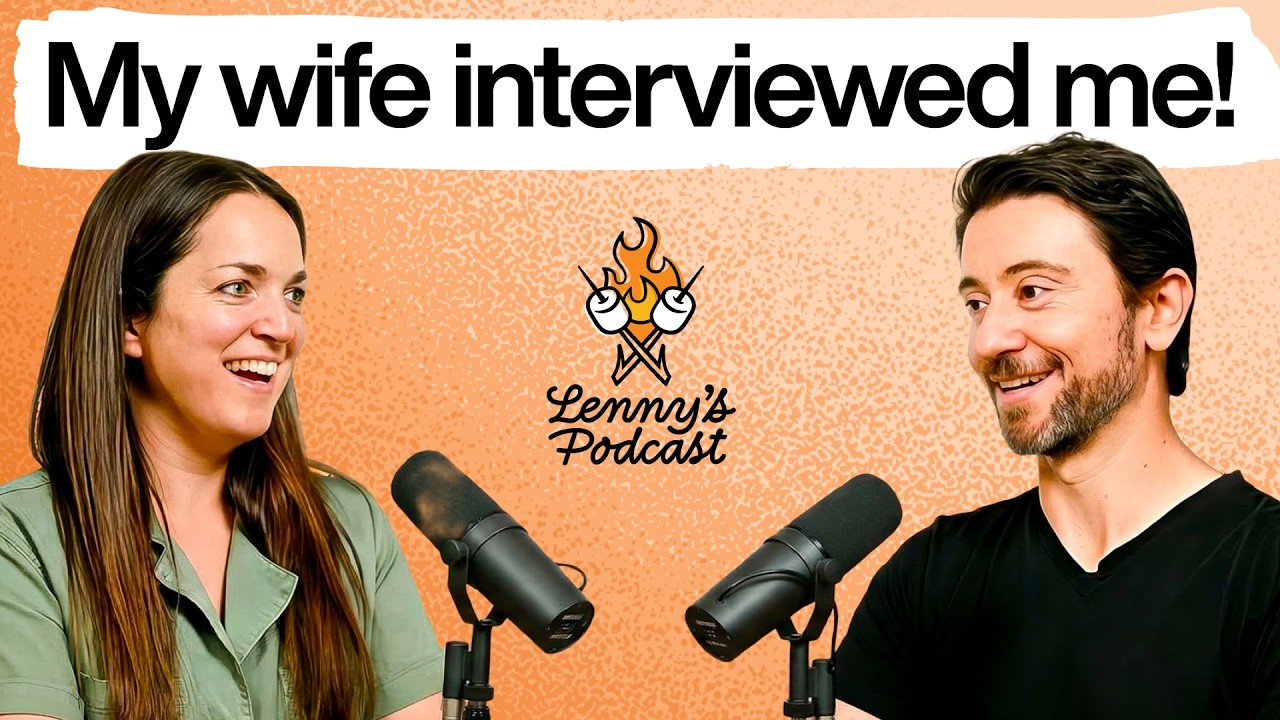
Lenny Rachitsky sits down with his wife, Michelle Rial, for a rare role-reversal interview where she takes the mic and asks him the questions — sharing personal stories he’s never told publicly, including a psychedelic experience that gave him confidence to start his newsletter, a $100M fraud attack on his product partnership, and the terrifying childbirth emergency where Michelle nearly died
The moments that led to starting the newsletter
Lenny started writing on Medium in 2019 while exploring startup ideas after leaving Airbnb, where he’d spent seven years as a product manager
His first post, “What I Learned at Airbnb,” was featured on Medium and widely shared, giving him early confidence
A friend and VC named Lee Jacobs pointed out the rare overlap: Lenny enjoyed it, people valued it, and there might be a way to make money — advising him to double down
Nine months in, he realized he’d been publishing weekly for long enough that he could probably keep going another year (the Lindy effect)
He added a paywall and started charging, which worked almost immediately
COVID hit around the same time, and Airbnb’s IPO uncertainty pushed him to take the newsletter seriously as a real income source
A pivotal psychedelic experience at a bachelor party in Joshua Tree gave him a deep sense of confidence
Sitting on a rock for hours, he kept hearing the phrase “I have wisdom to share” and visualized a Buddha-like figure — this became a turning point in believing he had something worth offering
Does Lenny still enjoy the work?
He finds it the most fulfilling and interesting work imaginable — his job is essentially to explore interesting ideas and extract wisdom from practitioners
But the weekly treadmill of producing a newsletter post and podcast episode every week is relentless
He compares it to the Indiana Jones boulder chase — as soon as one piece ships, the next one is already bearing down on him
He thinks constantly about the long-term sustainability: how long can he keep this up before age or burnout catches him
Stress management and misophonia
Lenny appears calm but is likely more stressed than he realizes or shows — he gets headaches he can’t explain and uses breathing exercises and meditation to manage
He completed a 10-day silent meditation retreat, which had a noticeable physical and mental impact
He also took an online happiness course at the University of Pennsylvania that taught him everyone has a baseline level of happiness, and the key is raising that baseline through optimism and positive thinking rather than chasing temporary highs
He has misophonia — a real neurological condition where certain sounds trigger intense irritation
Open-mouth chewing is a 10 out of 10 worst sound for him
Nails on a chalkboard is only about a 5 or 6
A baby crying during the newborn phase rates around an 8
Hearing his son Jude say “Papa” is the best possible sound
Michelle’s charts and creative process
Michelle creates the viral charts featured in her books (Am I Overthinking This, the upcoming Charts for Babies) and her work gets widely stolen and reposted without credit
She stopped looking at the theft because it didn’t help her
She knows a chart is done when it makes her laugh or tear up even though she made it herself — that internal reaction is her signal that others will connect with it too
Her ideas come from living life and observing, not from sitting and brainstorming
Meditation helps because it trains you to observe your own thinking — she notices her own anxieties and thought patterns, which become chart material
She’s learned that if she focuses too much on work, she stops living and the ideas dry up
Her creative process requires specific conditions:
A single shot of espresso — too much coffee makes her ideas erratic and tangential (she has a chart about this: genius on one end, panic attack on the other)
A deadline or time constraint, ideally about two hours, to create productive pressure
A good night of sleep — bad sleep plus too much caffeine produces frantic energy with no actual ideas
She typically iterates on each chart at least five times
Early projects and the path to the newsletter
Nothing in Lenny’s background obviously predicted he’d become a newsletter writer — he was an introvert who never wrote online before 2019
Earlier side projects included:
AtheistSpot.com — a Reddit-style site for atheist news that ran Google AdWords ads, which were all for religious dating sites like Christian Mingle, creating an absurd mismatch with the audience
Tutorials.com — a “how-to by you, for you” platform where people contributed guides on everything from making eggs to taking a quick shower, essentially a precursor to TikTok and YouTube tutorials
Local Mine — a startup that let you ask questions of people checked in at locations via Foursquare, which he sold to Airbnb (that’s how he got the job)
Being recognized in public
People in the Bay Area frequently recognize Lenny, which started once he launched the podcast (the newsletter alone for four years didn’t do this since his face wasn’t public)
He loves it and has never had a bad experience — people are always kind and complimentary
The first time it happened, a man in a little red car held up traffic in San Anselmo just to yell that he loved the podcast
He struggles with face blindness and is terrible at remembering names, which has gotten worse as his audience has grown
He sometimes has to discreetly ask his wife if he knows someone who’s approaching them
The $100M fraud attack
About a year ago, Lenny launched an offer giving subscribers a free year of Cursor, Lovable, Bolt, Replit, and v0 — an irresistibly good deal
Fraud rings, mostly based in China, discovered exploits in the API he’d built with Stripe and Substack and launched coordinated attacks to steal the free subscriptions
The offer went viral on Chinese student networks, amplifying the problem
His engineer Estee went a week without sleep patching vulnerabilities as fast as the fraudsters found them
Lenny didn’t sleep well for an extended period and was genuinely scared the whole business could collapse if trust was eroded
Michelle’s childbirth emergency
When their son Jude was born, Michelle’s induction wasn’t progressing and she needed an emergency C-section
While Lenny waited outside in scrubs for the epidural to be administered, he heard an alarm, saw the doctor run back in, and watched additional staff rush into the operating room
No one told him anything for about 10 minutes — he paced the hall repeating “it’s going to be okay” to himself
The epidural had gone the wrong direction (a 1 in 50,000 complication), traveling up instead of down, which stopped Michelle’s heart and lungs
The anesthesiologist performed an emergency intubation, delivered the baby, and Michelle was in recovery for about an hour before coming back
Lenny held Jude alone for that first hour — which is part of why Jude is so attached to him
Michelle has no memory of the event itself; she only learned the full details months later by reading the medical report
Lenny describes it as probably the scariest moment of his life
Product management lessons in parenting
Lenny approaches parenting the way he approaches product management: by reading what the smartest people have figured out and implementing their systems
He created a structured bedtime system for their son with a set number of books and a star reward chart
Michelle notes that Lenny’s strength is influence and process — he’s the one who reads three books on a problem and comes back with a plan
When asked to define product management in five words, Lenny struggled — offering impact, collaboration, judgment, alignment, and coordination, then admitting it’s a weird job that resists simple definition
His fuller definition: delivering business impact by prioritizing and solving the most impactful business problems
He believes a PM should think like a mini CEO, channeling what the CEO would do for their specific product or feature
Why Michelle pivoted to children’s books
Michelle wrote two adult books (including Am I Overthinking This) before pivoting to children’s books
She realized charts are packed with early learning concepts — opposites, colors, shapes, feelings, sizes, directions — making them naturally suited for children’s books
The pivot happened organically: while working on another adult book, she found herself writing in a rhythmic, rhyming cadence and turned to the back of her notebook to capture it
She’d tried writing a children’s book before having kids and it wasn’t good — the experience of parenthood gave her the material and the instinct for how to speak to children
Her father, a geophysicist, taught her to think in patterns, visualizations, and math from a young age, which directly shaped how she creates charts
Her new book, Charts for Babies, comes out April 7th and covers sizes, shapes, lines, numbers, directions, feelings, colors, amounts, sharing concepts, relationships, and opposites — aimed at ages 0 to 4
The power of iteration and real experience
Both Lenny and Michelle emphasize that the best work comes from actual experience, not abstract theorizing
Most of Lenny’s newsletter posts are now guest posts from practitioners sharing the one most important thing they’ve learned in their careers
Michelle’s best charts come from living life and noticing, not from sitting at a desk brainstorming
Iteration is central to both their processes:
Michelle iterates on each chart at least 5 times
Lenny goes through a newsletter post roughly 50 times before it ships, then his editor, copy editor, and designer each take additional passes
Both set work aside and come back to it later with fresh eyes, often spotting what’s missing or finding that someone else beat them to an idea