-
Anthropic has achieved what may be the most explosive growth run in business history, scaling from $1 billion to over $19 billion in annual recurring revenue in just 14 months (early 2025 to early 2026), roughly 10x year-over-year growth sustained since the company’s founding.
- For context, companies like Atlassian, Palantir, and Snowflake have taken 15–20 years to reach $4.5–6 billion in ARR; Anthropic is adding that much ARR every few months.
- The company was historically the smallest, least well-funded player in AI, lacking the distribution of Meta/Google or the first-mover advantage of OpenAI, making its trajectory essentially unprecedented.
-
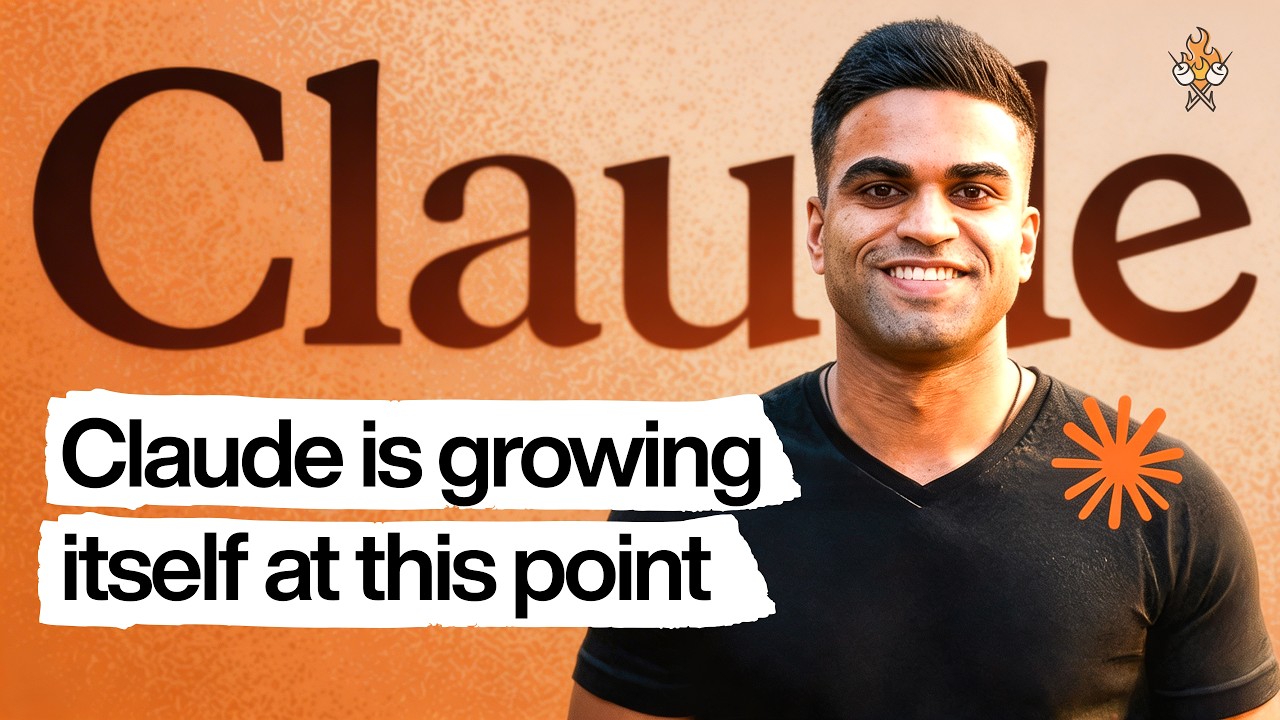
Amol Avaisary is head of growth at Anthropic. He previously led growth at Mercury and Masterclass, was a founder and investment banker, and suffered a severe traumatic brain injury that forced him to spend 9 months relearning basic functions—a experience he credits with making him a dramatically more effective leader and product thinker.
- He landed the Anthropic role by cold-emailing Mike Krieger (CPO, co-founder of Instagram), who had no growth team listed at the time. Krieger responded, and Amol became the only PM he’s ever hired from a cold email.
- Amol’s cold email approach: tested high-open-rate subject lines, targeting personal email rather than oversaturated channels like LinkedIn, keeping the message very short, and following up persistently until told to stop.
-
What it’s actually like leading growth at Anthropic:
- Amol describes it as the hardest job he’s had, despite having been a founder and investment banker. Roughly 70% of his time is spent on what the team calls “success disasters”—firefighting problems created by scaling so fast that systems, funnels, and infrastructure break under the weight of their own success.
- Charts are all “green and up and to the right,” yet the emotional experience is one of constant urgent firefighting.
- The remaining 30% is more proactive growth work: long-term pricing and packaging, deciding which products to invest behind, and planning adoption funnels for new products like Cowork.
- The growth team is roughly 40 people, structured with horizontals (growth platform, monetization) and audience-focused pods (B2B, Claude Code, knowledge workers, API).
- The team skews much more toward large bets than traditional growth teams. At a normal company, Amol might spend 60–70% of time on small-to-medium optimizations; at Anthropic, that ratio is flipped or at best 50/50.
- The reasoning: because the product value delivered by AI models is growing exponentially (estimated at 100–1,000x in two years), the value of identifying and capturing new markets dwarfs the value of micro-optimizations. This logic applies specifically to AI-first products where the core value is underpinned by model capability.
- Amol describes it as the hardest job he’s had, despite having been a founder and investment banker. Roughly 70% of his time is spent on what the team calls “success disasters”—firefighting problems created by scaling so fast that systems, funnels, and infrastructure break under the weight of their own success.
-
Activation is the central challenge for AI products:
- Amol believes early activation (day 0/1 experience) is the highest lever for long-term retention, and its importance is growing exponentially as models improve faster than product teams can adapt.
- The core problem is “capability overhead”: models improve so quickly that by the time a team has tested and shipped on-ramps for a new model’s capabilities, the next model has arrived and made those learnings obsolete.
- The most effective activation strategy Amol has found is adding the right kind of friction—specifically, asking users questions about who they are and what they need, then routing them to the right product or feature.
- This mirrors what he did at Mercury (breaking onboarding into steps that reduced cognitive load) and what MasterClass and Calm do (quizzes before purchase that feel “annoying” but significantly improve conversion and retention).
- The key distinction: cut friction that doesn’t add value, but don’t shy away from friction that helps a user understand why the product is for them. That initial understanding “is juice that keeps on giving” through lifecycle marketing and look-alike targeting.
- One clever activation move: making it easy for users to import memory from ChatGPT into Claude, reducing the cold-start problem by letting new users bring their context with them.
- Amol believes early activation (day 0/1 experience) is the highest lever for long-term retention, and its importance is growing exponentially as models improve faster than product teams can adapt.
-
Automating growth with Claude (CASH: Claude Accelerates Sustainable Hypergrowth):
- Amol’s growth platform team, led by Alexey Komissarouk (who teaches growth engineering at Reforge), is experimenting with using Claude to automate the full growth experimentation loop.
- The loop has four stages: (1) identifying opportunities, (2) building the feature, (3) testing quality/brand fit, and (4) analyzing results and gathering learnings.
- Before Opus 4.5, this wasn’t viable. With Opus 4.6, it’s “headed in the right direction.” Currently it handles small-scale experiments (copy changes, minor UI tweaks) and delivers results comparable to a junior PM with 2–3 years of experience—not yet at senior PM level, but improving rapidly.
- Humans remain in the loop for brand review and cross-functional stakeholder management. Amol believes stakeholder alignment is the hardest thing to automate and won’t go away until other stakeholders also have their own agents.
- The broader implication: AI is moving from “taking orders and building” to “telling us what to do.” Growth is a natural starting point because it’s data-driven with a clear feedback loop, but this will expand across product development.
- Amol’s growth platform team, led by Alexey Komissarouk (who teaches growth engineering at Reforge), is experimenting with using Claude to automate the full growth experimentation loop.
-
How PM, engineering, and design roles are shifting:
- Engineers are getting the most leverage from AI tools like Claude Code. A team of 5 engineers using Claude Code is roughly 2–3x more productive, effectively behaving like 15–20 engineers in the old world.
- This creates a structural squeeze on PMs and designers, whose productivity has increased but not as dramatically. The result: PMs and designers are stretched thin, managing what feels like a much larger engineering org.
- Amol’s response at Anthropic: hire more PMs, but also formally deputize product-minded engineers to act as “mini PMs” for projects under two weeks of engineering time.
- For projects under two weeks: the engineer owns cross-functional coordination (legal, security, stakeholders), with the PM in an advisory role. For projects over two weeks: the PM remains accountable but delegates heavily.
- This dramatically increases the value of engineers who are product-minded—they become “unicorns.”
- Amol’s view on PMs spending time shipping code: at small companies or resource-constrained teams, PMs should absolutely ship. But at scale, with 20+ engineers per PM, the highest-leverage use of a PM’s time is improving the “why and what” of the team’s work by even a small percentage—not shipping the 21st feature.
- That said, prototyping remains valuable for learning and for articulating ideas. Amol himself prototypes to show rather than tell.
- On PRDs: Amol is “averse to PRDs” and estimates 60–80% of what his team ships has no PRD. For small changes, Slack messages suffice. For larger projects, a 30-minute cross-functional kickoff with all stakeholders is more valuable than documentation. When he does write a PRD, he uses a Claude skill with a template.
- Engineers are getting the most leverage from AI tools like Claude Code. A team of 5 engineers using Claude Code is roughly 2–3x more productive, effectively behaving like 15–20 engineers in the old world.
-
How Amol personally uses AI in his workflow:
- Every morning, a scheduled Cowork task analyzes 20–25 charts across products and surfaces what needs attention, what’s concerning, and interesting insights—giving him peace of mind that he’s not missing anything in the long tail of metrics.
- He uses Claude to book meeting rooms, triage email, file expenses and reimbursements in Brex, and identify cross-functional misalignment by scanning Slack channels for his projects.
- He has Claude analyze his direct reports’ weekly activity (goals, OKRs, discussion transcripts) and suggest feedback and observations for him to give them.
- Perhaps most strikingly, he asks an AI model of his manager Ami Arora (trained on her public writing and internal Slack messages) to give him weekly feedback on what he should be doing differently—a form of “soft coaching” that he says is already unlocked today, even if the quality is sometimes “hit or miss.”
- Setup for the Slack analysis: download Cowork desktop app, connect Slack MCP (may need admin permissions in larger orgs), then simply ask Claude to monitor and surface insights.
-
Anthropic’s success is rooted in extreme focus and constraints:
- From its earliest days (a 2021 internal document shows the thesis), Anthropic bet deeply on AI coding and B2B—not just because of the market size, but because coding capability creates a feedback loop: better coding models accelerate research, which builds better models faster.
- The company had a version of Claude before ChatGPT launched but chose not to release it for safety reasons. ChatGPT’s launch pulled the industry toward consumer, but Anthropic’s constraints (no distribution, limited funding, no first-mover advantage) forced a narrow focus that ultimately proved advantageous.
- Amol’s principle: “freedom through constraints.” Having fewer resources and options frees you from excess choice and forces clarity on the path forward.
-
Anthropic’s culture is its most defensible advantage:
- The company is a public benefit corporation (PBC), not a traditional C-corp, meaning it has no legal obligation to maximize shareholder value above all else. Its mission is to ensure the transition to powerful AI goes well for humanity.
- This isn’t just external messaging. Amol was initially skeptical but found the company is even more serious about safety internally than it appears externally. The team has been willing to take significant commercial hits for safety decisions.
- Amol’s framework for controversial growth tests: Category 1 tests (red lines involving safety, brand, values) are simply not run regardless of potential results. Category 2 tests (cringe but not red lines) require a high return threshold to justify shipping.
- He believes this long-term orientation—leaving money on the table to maintain trust and quality—is actually a competitive advantage, not a weakness.
- Every employee has a “notebook channel” on Slack (like an internal Twitter feed) where they share thoughts, priorities, and provocative ideas. This serves two purposes: radical transparency and scaling leadership’s values and principles across a rapidly growing org.
- It also serves as data for AI agents: onboarding documents and notebook channels are referenced by Claude to understand how different teams think, improving its ability to assist.
- Amol describes the talent density as “playing for Real Madrid”—world-class researchers, product leaders like Ami Vora and Mike Krieger, and growth engineers like Alexey Komissarouk who teach at Reforge. He has not met a single person at the company who is “checked out.”
- The company is a public benefit corporation (PBC), not a traditional C-corp, meaning it has no legal obligation to maximize shareholder value above all else. Its mission is to ensure the transition to powerful AI goes well for humanity.
-
Advice for thriving in an AI-first future:
- Use the tools relentlessly. Be on top of every model release, test what’s newly possible in your workflow, and revisit things that didn’t work before—they may work now.
- Lean into your unfair advantage. Identify the skill set where you spike (craft, stakeholder mediation, interdisciplinary knowledge) and double down on becoming the best at it. Don’t try to fix weaknesses.
- Be interdisciplinary. The PM who can design, the engineer who can PM, the growth person with finance background—these combinations become exponentially more valuable as AI commoditizes individual skills.
- Be adaptable. At Anthropic, Amol estimates 50–70% of how you operated in the past is irrelevant. Trying to apply old playbooks creates friction. Accept that the job has changed and move with it.
-
Failure corner: shutting down his startup
- Amol spent 3 years building a mental health startup, raised a couple million dollars, grew to 7–10 employees, and ultimately had to shut it down and tell investors they’d lost their money. He was in his early 20s and “had no idea what he was doing.”
- He kept investors in the loop with monthly updates throughout, even when things were bad—which he credits with maintaining trust despite the outcome.
- The failure was essential to his career: he learned cold emailing, product skills, and the founder/finance/sales combination that later made him uniquely effective in growth roles. He’s now grateful it failed, because it led directly to his current path.
- Amol spent 3 years building a mental health startup, raised a couple million dollars, grew to 7–10 employees, and ultimately had to shut it down and tell investors they’d lost their money. He was in his early 20s and “had no idea what he was doing.”
-
The traumatic brain injury that changed everything
- In early 2022, Amol suffered a traumatic brain injury from a kick to the head during a routine Muay Thai sparring session. He spent 9 months off work, couldn’t look at screens, couldn’t listen to music for more than 20 seconds without nausea, and his wife managed all his communication and daily needs.
- Recovery was a brutal process of slowly increasing tolerance to stimuli without pushing too far and causing setbacks. It was unclear for a long time whether he’d ever work again.
- A month after joining Mercury (mid-2023), he was reinjured by an innocuous hit (bags hitting his head getting off a plane) and had to take 2 more months off. He’s still not 100% healed and manages ongoing dizziness and headaches.
- The injury forced habits that now make him more effective: no alcohol, no caffeine, mandatory breaks even on the craziest days (he uses a meditation area at Anthropic’s office), and an annual meditation retreat (he’s done retreats at Spirit Rock).
- The core lesson: “the true freedom in life is learning how to be content when you don’t get what you want.” You can’t always control outcomes, but you can choose whether your happiness depends on them. This mindset is what allows him to function at Anthropic’s intensity without unhealthy coping mechanisms.
- He wrote about this experience in a guest post for Lenny’s newsletter in 2023, which is how the two first connected.
- In early 2022, Amol suffered a traumatic brain injury from a kick to the head during a routine Muay Thai sparring session. He spent 9 months off work, couldn’t look at screens, couldn’t listen to music for more than 20 seconds without nausea, and his wife managed all his communication and daily needs.
-
Lightning round:
- Books he recommends: Joy of Living by Yongey Mingyur Rinpoche, Awareness by Anthony De Mello (both on meditation and reframing life experience), and Thinking in Bets by Annie Duke (on probabilistic decision-making in product).
- Favorite recent movie: Megalopolis. Favorite recent TV: the Olympics.
- Product he loves: the Maruhachi Pro Pillow from Japan (bead-filled, self-adjusting height)—“changed my life in the last week.”
- Life mottos: “She’ll be right” (Australian saying—it’ll be fine, don’t catastrophize) and “Just go for it” (from Discord CMO Eros Resmini—stop overthinking and act).
- Current hobby: watching football (Michigan Wolverines and San Francisco 49ers), after his wife took him to a game at the Big House.
- Where to find him: LinkedIn (Amol Avaisary). Anthropic is hiring across growth engineering, growth product, and growth design.