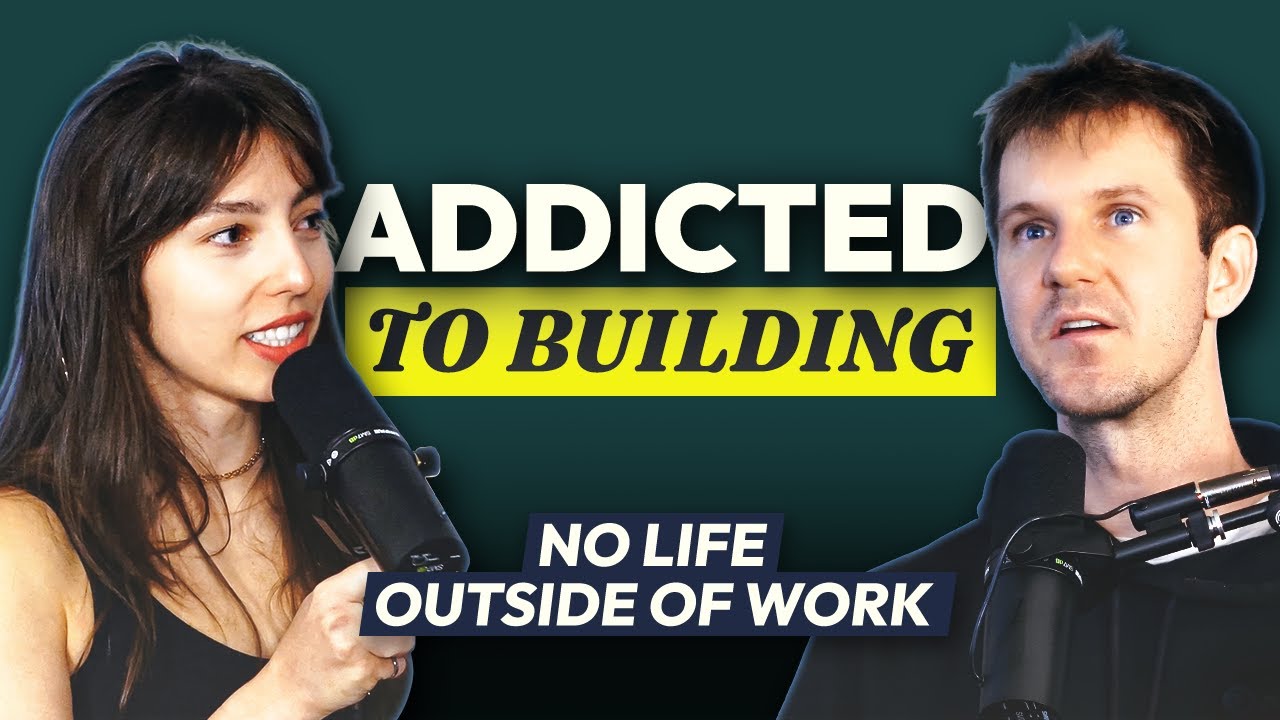
Marty Kausas, co-founder and CEO of Pylon (a B2B customer support software company), joins Luba to discuss the extreme work ethic, psychology, and personal sacrifices behind building a startup aimed at reaching $10 billion in valuation within 10 years. He frames the journey as a board game with clear win conditions, driven not by money or passion for a problem, but by fun, adventure, and an innate need for constant acceleration. Despite grueling hours and minimal personal life, Marty describes this period as the most fulfilling of his life, supported by deeply aligned co-founders and a culture of low ego and high intensity.
Daily Life and Work Rhythm
Marty wakes at 7:30 a.m., showers, and is in the office by 8:00 a.m.—just one block away from where he lives with his co-founder.
He works Sunday through Friday; Saturday is mostly for recovery and sleep.
Sleep ranges from 6.5 to 8.5 hours nightly, though during a recent offsite in Hawaii, he averaged only 3 hours due to Pacific-time calls.
Work has intensified over time: while early startup days had downtime, now with 55 employees and multiple projects, stepping away feels impossible.
Defining Success and Sustainability
The explicit goal: build a $10 billion company in 10 years, requiring ~$1B in revenue growing at 15% YoY.
One of Pylon’s core values is “Sprint the Marathon”—acknowledging that burnout or winning are the only endpoints.
Marty admits this pace isn’t sustainable forever but believes it’s necessary until strong execs can take over day-to-day operations.
He’s already hiring leaders (head of sales, marketing, customer success, engineering) to delegate operational load.
Personal Sacrifices and Relationships
Marty was in a relationship for the first two years of the company; it ended because founder life leaves little room for partnership.
He now sees dating as irresponsible until the company runs more autonomously.
Family remains important—he calls them often and limits travel to visiting relatives.
He doesn’t feel he’s missing out on experiences like travel (he’s visited 26 countries), prioritizing potential fulfillment over immediate gratification.
Co-founder Alignment and Origin Story
Marty’s co-founders are Advith and Robert, both from his KP Fellows network.
After being rejected multiple times when he proposed working together, they reversed course days later upon realizing their preferred candidate was misaligned on equity and work ethic.
The trio bonded over shared values: low ego, high competence, love of puzzles/board games, and a desire to “live in the office” while building.
Roles (CEO, CTO, CPO) were decided casually on a bus—Marty wanted CEO because he identified with storytelling and charisma (inspired by Brian Chesky).
All three are generalists who can operate across functions, making rigid titles less important early on.
Motivations for Starting a Startup
Marty rejects common reasons like money (too uncertain) or passion for a problem (often performative).
For him and his co-founders, the true driver is fun and adventure—treating the company like a strategic game they’re compelled to play.
He romanticized founding since high school (inspired by The Social Network, Steve Jobs) and couldn’t imagine climbing a corporate ladder.
Even after failed ideas (a Parkinson’s tracking app, a senior check-in call system), he kept going—not out of stubbornness, but because not doing it felt worse.
Lessons from Airbnb and Role Models
At Airbnb, Marty loved the tight-knit, mission-driven culture but realized he didn’t want to stay long-term.
He deeply admires Brian Chesky (Airbnb CEO) for his charisma and scrappy origin story (e.g., selling cereal boxes).
He also respects Parker Conrad (Rippling CEO) for building a multi-product company in a large market with relentless execution.
Elon Musk impresses him for his ability to solve the biggest problem at each of his companies weekly through direct intervention.
Biggest Fears and Mental Resilience
Marty’s greatest fear is slowing down—YC partners say most startups fail when founders stop grinding.
He manages stress by acting on it: if something keeps him up, he does it immediately rather than avoiding it.
He rejects “balance” as a concept—it annoys him because intensity is core to his identity.
He uses regret minimization (à la Jeff Bezos): not trying would hurt more than any sacrifice.
Building Pylon and Providing Value
Pylon is a B2B customer support platform positioned as a Zendesk alternative.
It’s mission-critical: every customer interaction flows through it, giving Pylon access to rich behavioral data.
Customers trust Pylon with sensitive data and core workflows—signing a $100K contract signals deep confidence.
The team takes pride in enabling other companies to serve their customers better.
Habits and Joy
Marty follows Brian Johnson’s health protocol (nutty pudding, supplements, longevity mix) for 2–3 meals/day to reduce decision fatigue and optimize health.
A recent joy: recording a podcast episode with his co-founders—their first extended time together in weeks—reaffirmed their bond and shared energy.
Closing Beliefs
He disagrees with the idea that startups should be founded for passion or money—fun and adventure are more honest and durable motivators.
In life, he believes in maximizing intensity and becoming the best version of oneself; he’s saddened when ambitious friends “turn off” their drive.
He’s wired differently—not seeking balance, but purpose through relentless building.