-
TikTok has fundamentally reshaped how modern metal music is written, discovered, and consumed, pushing bands to prioritize short, explosive “clip moments” — breakdowns, extreme vocal performances, and flashy guitar or drum fills — that deliver instant payoff to scrolling listeners, much like jump scares in a horror movie.
- This mirrors earlier shifts in music discovery: MySpace and YouTube replaced radio and physical media for previous generations, and TikTok is now the dominant discovery platform for Gen Z.
- Songs like Bring Me the Horizon’s “Can You Feel My Heart” became massively outsized hits not because they were the best tracks on their album, but because they had moments perfectly suited to be clipped and shared over videos.
- Bands are increasingly writing short-form first, sometimes starting songs at the breakdown or climactic moment and working backward, rather than building organically from start to finish.
- Knocked Loose is cited as a band whose music naturally works in short form because their songs are so well-paced and intense, even without deliberately engineering viral moments.
-
There is a tension between making music for social media and making music that lasts.
- When bands try to create songs specifically for TikTok, the result often lacks replayability and timelessness — it becomes a “meme song” rather than a song people add to playlists.
- The best modern metal bands (Architects, Bring Me the Horizon, Sleep Token, Bad Omens, Loath) succeed because they build deep catalogs of consistently strong songs over years, so that when a viral moment hits, there’s a body of work for new fans to explore.
- Architects is highlighted as a rare example of a band whose popularity has grown linearly across nine or more albums, culminating in their first number one — a trajectory almost unheard of in rock and metal.
-
The 2000s “deathcore” and “metalcore” era is experiencing a major revival, driven by nostalgia and the natural TikTok-virality of that era’s over-the-top moments.
- Bands like Job for a Cowboy, Suicide Silence, and Every Time I Die created music full of extreme bass drops, 808s, and chaotic energy that translates perfectly to short-form clips.
- Bring Me the Horizon’s decision to revisit their deathcore roots (e.g., re-recording Count Your Blessings) is seen as an attempt to redefine a generation with the same songs that defined the first one.
- Bands like Reverend and Psycho Frame are modern acts specifically reviving the 2000s deathcore sound with contemporary production quality.
- That era’s music was created without genre constraints or commercial intent — kids in garages experimenting — which gave it a raw authenticity that resonates today.
-
Genre fusion has become the defining characteristic of modern metal, with bands freely blending deathcore, R&B, shoegaze, pop, electronic, and dubstep elements within single songs.
- Early attempts at genre fusion (e.g., Attack Attack, early Asking Alexandria) were fun but fragmented — clean vocals and heavy breakdowns felt bolted together.
- Modern bands like Sleep Token, Bad Omens, and Loath blend genres more fluidly, creating cohesive songs that shift from extreme heaviness to pop choruses to atmospheric passages.
- Mick Gordon’s Doom soundtrack is credited as a massive influence on modern metal production, pushing bands toward wider, more electronic, synth-layered sound design.
- Production quality has improved dramatically: bands now hire top-tier producers and engineers rather than relying on someone who “knows ProTools.”
-
The line between “real” metal and mainstream pop culture has blurred significantly.
- Metal is now played on mainstream rock radio (Octane), featured in video games (Guitar Hero, Tony Hawk, Madden), and embraced by artists outside the genre (MGK collaborating with Limp Bizkit).
- Parents who grew up on 2000s metal are now sharing that music with their kids, who are discovering bands like Sleep Token on TikTok — creating cross-generational fandom.
- Collaborations between metal and non-metal artists (e.g., Spiritbox with Megan Thee Stallion) are becoming more common, though the metal community often punishes bands for straying too far outside genre boundaries.
- Nashville’s country music scene is full of musicians who grew up as “scene kids” and metalheads, demonstrating how deeply metal culture has permeated the broader music industry.
-
The Geese controversy exposed how viral marketing is now essential — and potentially corrupting — in breaking new bands.
- The Brooklyn band Geese was revealed to have been promoted by a digital marketing firm (Chaotic Good Projects) that used networks of fake TikTok pages, burner accounts, and manufactured discourse to push the band’s music into recommendation algorithms.
- The firm calls this process “trend simulation” and claims they can drive impressions on anything — effectively gaming the system that real fans use to discover music.
- This creates a “race to the bottom” where even excellent music may not break through without paid algorithmic manipulation, making virality a minimum marketing requirement rather than a bonus.
- The metal scene is not immune: labels and PR firms are increasingly using clip farming, paid reposts, and coordinated campaigns to manufacture momentum for bands.
-
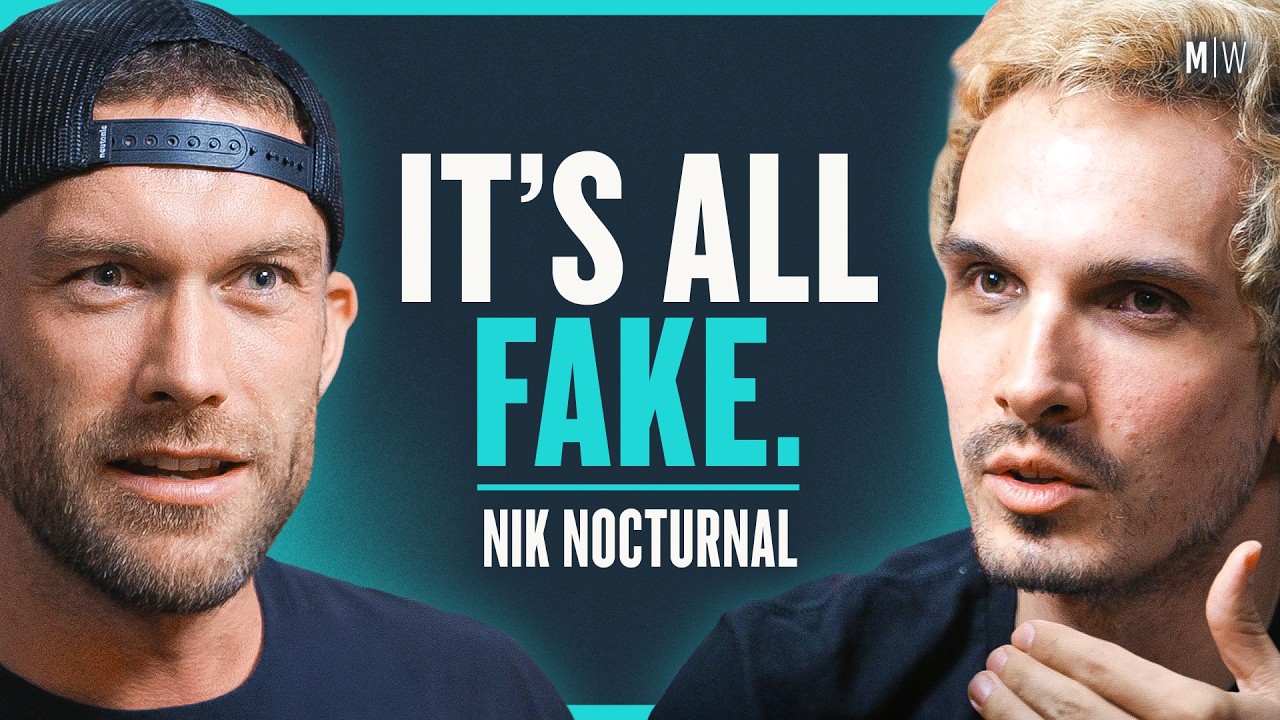
Nik Nocturnal discusses his burnout from 11 years of non-stop content creation and the personal cost of building an identity entirely around YouTube.
- He started his channel at 17–18 doing guitar covers because he was awkward and didn’t know how to talk to people; it became his entire identity, self-worth, and social world.
- He never took a break for 11 years, never had work-life balance, and didn’t go outside for days — his life was entirely consumed by the cycle of news, reactions, and content.
- His wife, also a musician and content creator, shared his world, but he realized he was living a “single-player” career while she was right there — he wanted to write music with her, not alone in a room making videos.
- Taking a break forced him to ask fundamental questions: Who am I without this? Do I still love this? He rediscovered joy in writing music without cameras, without pressure — just him and his wife making funk beats with strobe lights for fun.
- He describes the “fuck you family” pivot — realizing that the only people whose approval truly matter are the ones in the bed next to you or the room across the hall.
-
Creator burnout is disproportionately high among YouTubers and podcasters compared to bands and comedians, despite objectively easier working conditions.
- The theory: creators lack sufficiently loud and fast feedback mechanisms. A band playing to 7,000 people gets immediate, visceral reinforcement; a YouTuber gets emotes and numbers on a screen.
- Content creation is isolating — you’re at home, often alone, editing at 5 a.m., while your partner is asleep. You miss as much life as a touring band but without the shared experiences and memories.
- Even when creators “make it” (hitting a million subscribers), the milestone feels small and quiet compared to selling out an arena.
- The creator lifestyle encourages unhealthy habits: no sunlight, no social connection, no physical activity — all while being mentally “on” 24/7 with no ability to clock out.
-
The music industry’s business side remains exploitative, with artists often unaware of what they’re signing away.
- Many bands sign 360 deals without understanding they’ve taken on debt — the label’s advance, recording costs, promo, videos, and merch are all recouped before the band sees a streaming dime.
- A band with 50 million streams might have made only $20 because of label recoupment, but this context is often left out of viral “streaming doesn’t pay” narratives.
- Standard contracts can bind a band for five or more albums — a decade or more of creative output — which is an extraordinary commitment for musicians who got into music to avoid conventional careers.
- Distribution has improved (DistroKid, CD Baby make it easy to upload independently), but it’s still far more complicated than podcast distribution, and metadata/credits systems remain inconsistent.
- Spotify’s new “Song DNA” feature is a major improvement, showing detailed credits for every contributor (engineers, mixers, session musicians) and letting fans explore collaborative networks between artists.
-
The future of alternative and metal music is splitting in two directions simultaneously.
- Positive: The scene is becoming more genreless, with the focus shifting from subgenre labels to simply “can we make a good song?” This should lead to a higher quantity of quality music.
- Concerning: As metal becomes more popular and mainstream, it’s becoming more formulaic and sterile — “Octane Core” (radio-friendly active rock/metal) incentivizes bands to copy-paste the same structures, melodies, and lyrics with minor variations.
- At the extreme end, bands like Dismembered Tyrant and Marauder are pushing heaviness into weirder territory by fusing deathcore with dubstep, classical music, and electronic elements — because pure deathcore can’t get any more extreme.
- The prestige gap is widening: anyone can upload music independently (low prestige), but being placed on radio, in video games, or at the Grammys carries more value than ever because so much competition exists.
- Bands like Sleep Token face backlash from metal purists when they lean too pop, revealing a sense of ownership within the community: “You’re ours — you’re not allowed to just be a band.”
-
Recommended bands and tracks for listeners looking to explore modern metal:
- Holy Water — supported Architects; progressive metalcore with shoegaze and Death Tones influences; new album as of April 2025.
- Marauder — two-person instrumental band (French/Swedish) blending classical, dubstep, and djent; ~50k monthly listeners on Spotify.
- Boundaries — melodic hardcore/metalcore with dual vocalists (clean singing drummer + screaming vocalist); ambient, emotional choruses with heavy breakdowns.
- Billy Talent — Canadian punk-adjacent band hugely popular in Canada but underknown in the US; “Fallen Leaves” is a standout track.
- Alexandria — Canadian post-hardcore/emo band; Watch Out!, Self-Titled, and Crisis form a trilogy considered by many fans to be among the greatest albums of the 2000s.