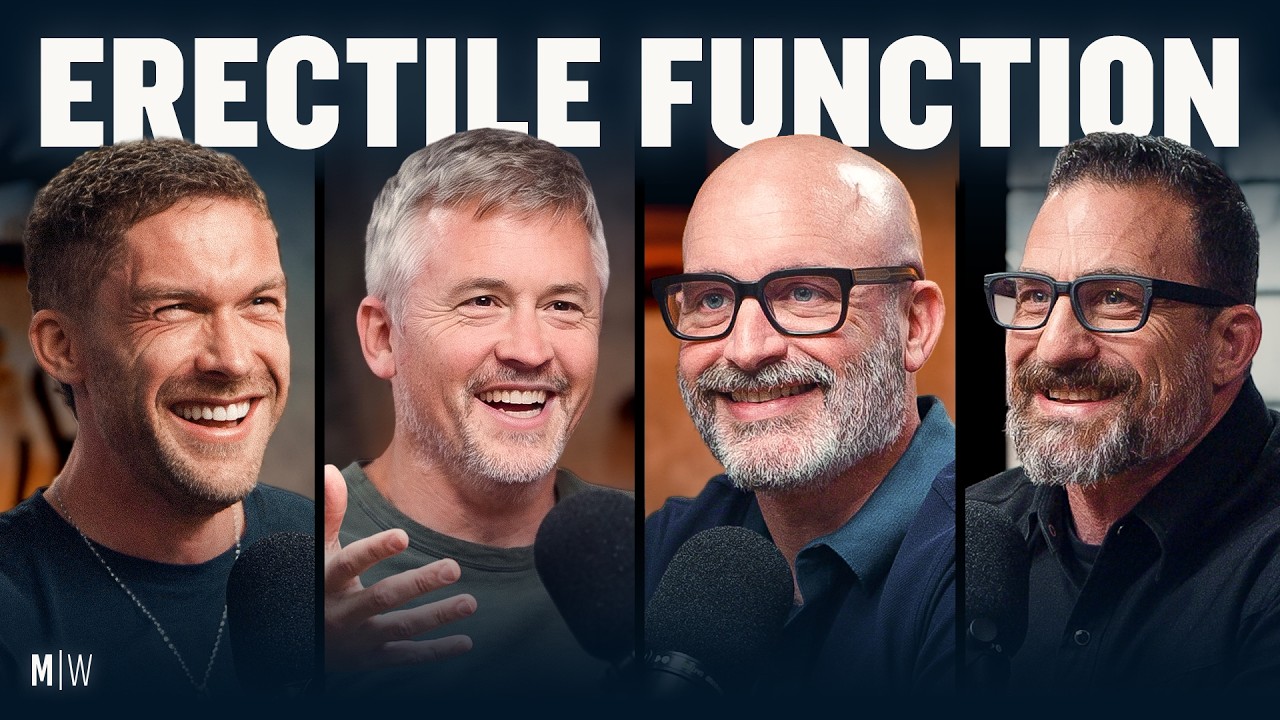
- This episode features a wide-ranging, freewheeling conversation between comedian Tom Segura, neuroscientist Andrew Huberman, and guest Matt McCusker, covering health optimization, comedy, parenting, sleep science, conspiracy theories, AI, and personal anecdotes. The tone is casual and humorous, with each participant sharing insights from their respective fields and life experiences.
Tadalafil (Cialis) and Men’s Health
- Tadalafil was originally developed for prostate health and later found effective for erectile dysfunction at higher doses.
- Low-dose Tadalafil (2.5–5 mg daily) is recommended by Stanford’s Dr. Mike Eisenberg for men over 40 to improve prostate blood flow and cause mild vasodilation in the brain.
- It can enhance erectile strength but isn’t typically used for performance measurement; side effects include slight blood pressure drop and facial flushing due to increased blood flow.
- Viagra’s discovery was accidental—during angina trials, participants refused to return the drug, and nurses noticed male subjects sitting oddly, leading to its repurposing.
Morning Routines and Fitness
- Tom Segura wakes at 6:30 daily, works out almost every day, and is currently losing weight gained over two and a half years of poor eating.
- He previously used GLP-1 agonists but stopped because he wasn’t eating at all; instead, a five-day fast helped him break a weight loss plateau.
- During a film production, he lost 25 pounds by eating minimally due to long shooting hours, then regained 10 pounds afterward.
- Andrew Huberman emphasizes morning routines involving sunlight exposure, caffeine, exercise, and avoiding phone use early to align circadian rhythms.
Comedy vs. Acting
- Some comedians transition well to acting (e.g., Jim Carrey, Robin Williams), often due to underlying emotional depth or darkness.
- Comedians rely on immediate audience feedback (laughter), while actors rarely get real-time validation, making the shift challenging.
- Method acting varies—some actors stay in character between takes (e.g., Tom Cruise in The Outsiders), but most don’t maintain it off-camera.
- Tom Segura describes his own process as obsessively thinking about his facial expressions during performances.
Subjectivity in Art and Comedy
- Unlike music or visual art, where appreciation can grow with exposure, comedy is binary: it either lands or it doesn’t.
- Great comedians like Richard Pryor, George Carlin, and Eddie Murphy are objectively funny—even if someone doesn’t enjoy their style, denying their talent is indefensible.
- Kanye West exemplifies how musical genius can be universally acknowledged despite personal controversies.
- People increasingly conflate art with morality, especially with podcasters and YouTubers, where the persona is the product.
Reality TV and Love Island Experience
- Matt McCusker appeared on Love Island, describing it as “Navy Seal Hell Week” for reality TV—no phones, no internet, sleep deprivation, and constant camera presence.
- Producers manipulated timelines (e.g., changing clocks) and encouraged drama to accelerate romantic developments.
- Contestants were given alcohol (in earlier seasons) and slept in shared beds regardless of relationship status.
- The environment was cultish, with hidden cameras and producers prompting confrontations.
Sleep Science and Optimization
- Perceived sleep quality affects performance: if you think you slept well (even if you didn’t), you perform better—and vice versa.
- Checking sleep scores infrequently (e.g., every 4–5 days) prevents negative bias from poor readings.
- To fall asleep post-performance: take a hot shower (lowers core temperature), practice long exhale breathing (activates vagus nerve), and consider supplements like magnesium, saffron, or chamomile extract.
- Peptides like pinealon may boost REM sleep; avoid eating 2 hours before bed to improve deep sleep.
- Cannabis suppresses REM sleep; quitting leads to vivid rebound dreams.
- Melatonin in high doses may affect hormones; microdoses (300 mcg) are safer, especially for children.
Conspiracy Theories and Public Perception
- High-profile conspiracies (e.g., moon landing hoax, Epstein death, Challenger explosion) persist despite evidence, fueled by distrust and viral content.
- Real-time video evidence (e.g., Diddy assault, Coldplay cheating incident) has raised the threshold for belief—people now demand footage.
- The Epstein files revealed real-time emails connecting powerful figures across politics and academia, yet many ignored his criminal history.
- Thomas Matthew Crooks, who attempted to assassinate Trump in 2023, remains largely unknown—the investigation was quickly closed, and media attention faded rapidly.
Technology, AI, and Identity
- AI replicas of ex-partners are being created using chatbots trained on past messages and photos, allowing users to simulate continued relationships.
- OnlyFans creators are being approached by companies offering payment to let AI run their accounts, generating explicit content without consent.
- AI voice cloning (e.g., 11 Labs) uses voices of real people (like Chris Williamson) without permission, raising legal and ethical concerns.
- AI-generated podcasts and videos are becoming indistinguishable from real ones, threatening authenticity.
Parenting and Child Development
- Modern children exhibit advanced emotional intelligence and self-awareness—e.g., a 10-year-old reassuring his father he loves him equally despite saying he loves his mom more.
- Kids today construct novel sentences and use sophisticated vocabulary likely due to exposure to diverse media.
- Only children may develop stronger adult social skills but less peer interaction; outcomes vary widely.
- Discipline challenges arise when children mirror parental behavior—e.g., a son telling his dad to “bend down” to catch the ball.
- Swearing is common, but kids distinguish between casual expletives and directed insults.
Miscellaneous Topics
- Sunscreen: Mineral-based (zinc oxide) is safer than chemical versions, which may contain endocrine disruptors. Sunlight exposure (especially morning/evening) is vital for mitochondrial health.
- Coffee vs. Alcohol: Coffee enhances productivity; alcohol impairs it. Historical shift from ale to coffee in workplaces boosted societal output.
- Marshmallow Test: Original Stanford study claimed delayed gratification predicted success. Later critiques noted trust in experimenters influenced results, but follow-ups still support self-control as a predictor.
- Extreme Endurance: Backyard Ultra races require running 4.17 miles every hour until only one runner remains—some exceed 500 miles with minimal sleep.
- Celebrity Spending: Johnny Depp spent $75M on real estate, $3M launching Hunter S. Thompson’s ashes from a cannon, and $7K on a Kardashian couch—highlighting extreme wealth dissipation.
The episode blends science, humor, and personal reflection, offering practical advice alongside entertaining stories, all delivered in a relaxed, conversational style.