This podcast episode is a wide-ranging conversation between hosts Sam and Ben that moves through several distinct threads: the hidden economics of pharmaceutical testing on monkeys, a historical financial fraud involving soybean oil and Warren Buffett, the entrepreneurial skill of “noticing” overlooked problems, enthusiasm as an underrated competitive trait, how to find genuine obsession by revisiting childhood interests, and Sam’s recent San Francisco trip where he experienced both natural awe and the high-variance energy of frontier startup ideas.
The wild economics of lab testing on monkeys
The pharmaceutical industry relies heavily on non-human primates (NHPs), with over 20% of all drugs tested on monkeys, primarily long-tailed macaques (cynomolgus) valued for their genetic proximity to humans and cognitive complexity.
Each monkey costs roughly $20,000 today, up from $2,000 pre-COVID; during the pandemic peak, prices hit $50,000 after China — which supplied 60% of global NHPs — abruptly halted exports to retain supply for domestic needs.
The supply shock drew in Cambodia, Vietnam, and Mauritius as alternative sources, but also triggered fraud: a Cambodian wildlife official was detained in the U.S. for allegedly passing wild-caught monkeys off as purpose-bred lab animals with falsified paperwork.
Charles River Labs, a publicly traded company doing ~$4B in annual revenue and working with ~80% of biotech firms, bought a monkey breeding operation for $500M to secure its supply chain, illustrating how a niche link in the drug development chain became a strategic choke point.
The salad oil crisis and Warren Buffett’s American Express trade
In the 1960s, the “salad oil scandal” (Allied Crude Vegetable Oil) involved a fraudster who pledged the same soybean oil inventory to dozens of banks as collateral, then filled tanks with seawater; American Express had verified the fake inventory and faced massive liability when the scheme collapsed.
Warren Buffett recognized that the scandal would not destroy American Express’s core charge-card franchise — consumers and merchants still trusted the brand — and bought heavily while the stock was depressed, making it one of his most famous investments.
The episode uses this story to illustrate how large, profitable businesses often hide in obscure, unglamorous corners (verifying commodity inventories, testing on monkeys) that smart people overlook because they don’t encounter them in daily life or school.
The art of noticing — finding business opportunities in overlooked places
Paul Graham’s essay “How to Do Great Work” frames the process: follow your genuine interest to the frontier of a field, where the map breaks down and gaps appear; the entrepreneurial act is simply deciding to fill one of those gaps.
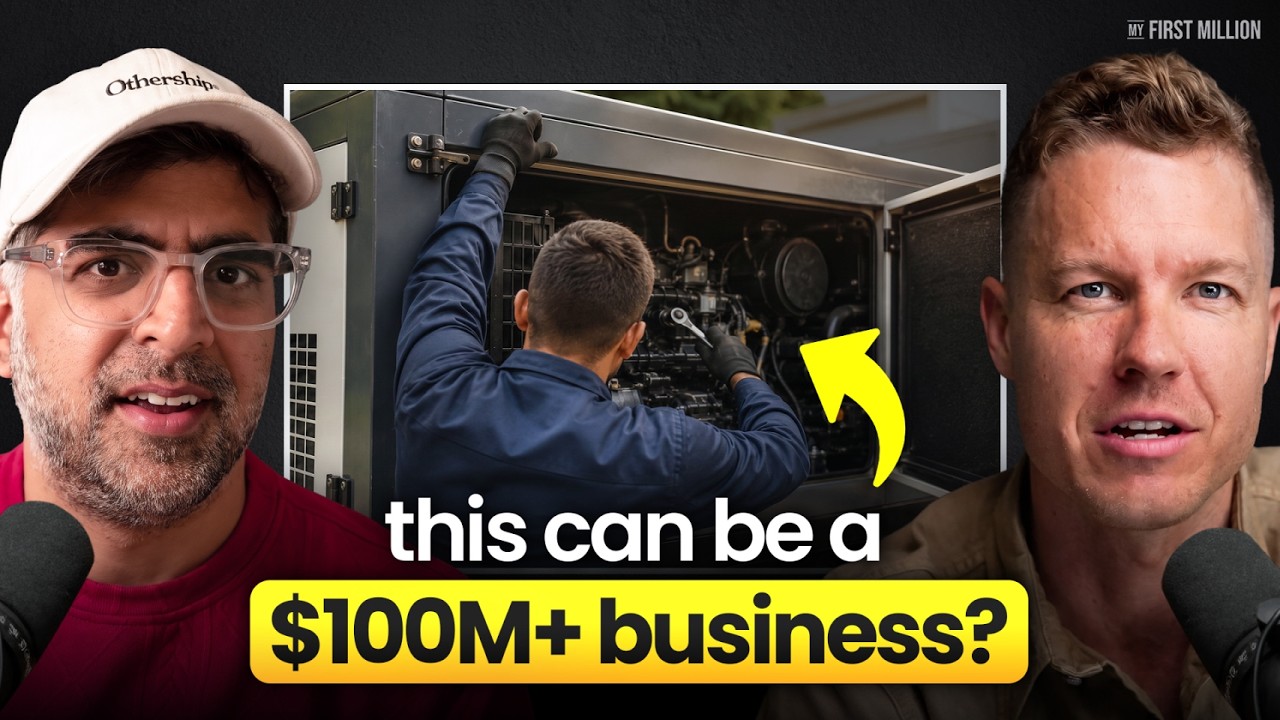
Real-world examples: a Stanford grad who grew up in his mother’s dental practice built Daydream Dental, an AI-enabled back-office service that recovers 15–20% more revenue from insurance claims for dentists, reaching ~$10M ARR in year two; another founder built a generator-servicing business for hospitals and nursing homes, a “dirty tech” niche with potential nine-figure scale.
Comedians and writers model this skill: Jerry Seinfeld’s daily writing habit (“Is this anything?”) and Mark Manson’s book title lifted from a song lyric both stem from noticing small, resonant details that others miss; the insight fades when success insulates creators from everyday friction.
Enthusiasm as an underrated competitive advantage
Enthusiasm is universally valued but treated as low-status by smart people, who fear looking like a “golden retriever”; this stigma creates an uncompetitive playing field where genuine enthusiasm becomes a high-alpha trait.
Eddie Murphy credits his comedic edge to extreme sensitivity — noticing a slight smell or dent on a valet-returned car and turning it into a bit faster than anyone else; Jerry Seinfeld’s 40-year habit of writing jokes every morning on a legal pad is the same muscle applied systematically.
The hosts argue that traits like noticing and enthusiasm are “games with few players” — unlike Fortnite, where millions compete, these meta-skills have massive payoff and almost no deliberate practitioners.
How to find your obsession — childhood clues and shamelessness
First principle: look at what you obsessed over as a child, before “shoulds” crowded out “wants.” The speaker traces his own thread — video games → online poker → business → investing — all strategy games with scoreboards, competitors, and trial-and-error learning.
Dan Brown (The Da Vinci Code) loved treasure hunts because his father replaced Christmas presents with a hand-drawn map and scavenger hunt; that childhood spark became the engine of a billion-dollar franchise.
Second principle: be shameless about those interests instead of dismissing them as childish. Elon Lee (co-creator of Exploding Kittens, seven of Target’s top-10 selling games) lives this: his office is a toy store, he lets guests kiss a fossilized dinosaur egg, he travels the world with a crew of “neck-beard guys” testing escape rooms — he never put a governor on his 8-year-old self.
The payoff: letting your “freak flag fly” repels mismatched people and attracts true collaborators, turning idiosyncrasy into a honeypot for the right partnerships.
Sam’s San Francisco trip — awe, nature, and entrepreneurial energy
Sam defines awe as encountering vastness (scale, age, horizon) that breaks your mental schema, forcing “accommodation”; research suggests awe reduces anxiety and depression by shrinking the self and quieting rumination.
In SF, he found two flavors: natural awe (riding through the Presidio, overlooking the ocean from hills) and entrepreneurial awe (a day of back-to-back meetings with nine founders building wildly varied, often weird-sounding companies — e.g., an Indian founder using a robot to make fettuccine alfredo).
SF’s idea distribution is high-variance: most sound terrible and will fail, but the occasional gold strike keeps the ecosystem digging; Sam argues it’s still the best place for a 22-year-old technologist to be, precisely because the spread of attempts is so wide.
The art thief — obsession, codes, and childhood roots
Sam references The Art Thief, a true story of a man who stole ~$3B in art but never sold a piece; he kept masterpieces in his childhood bedroom at his mother’s apartment, believing art belongs in intimate contact, not behind museum glass with a tour guide’s script.
The thief’s code — steal only in daylight, no violence, no heist theater — and his bedside placement of a priceless Adam and Eve statuette reflect a purity of obsession rooted in childhood: his grandfather hunted treasure on beaches with a metal detector, seeding the same “treasure hunt” impulse that drove Dan Brown.
The hosts acknowledge the weirdness of admiring a criminal, but note the pattern: extreme, shameless obsession — whether directed at board games, escape rooms, or stolen art — traces back to an unfiltered childhood spark that most people learn to suppress.