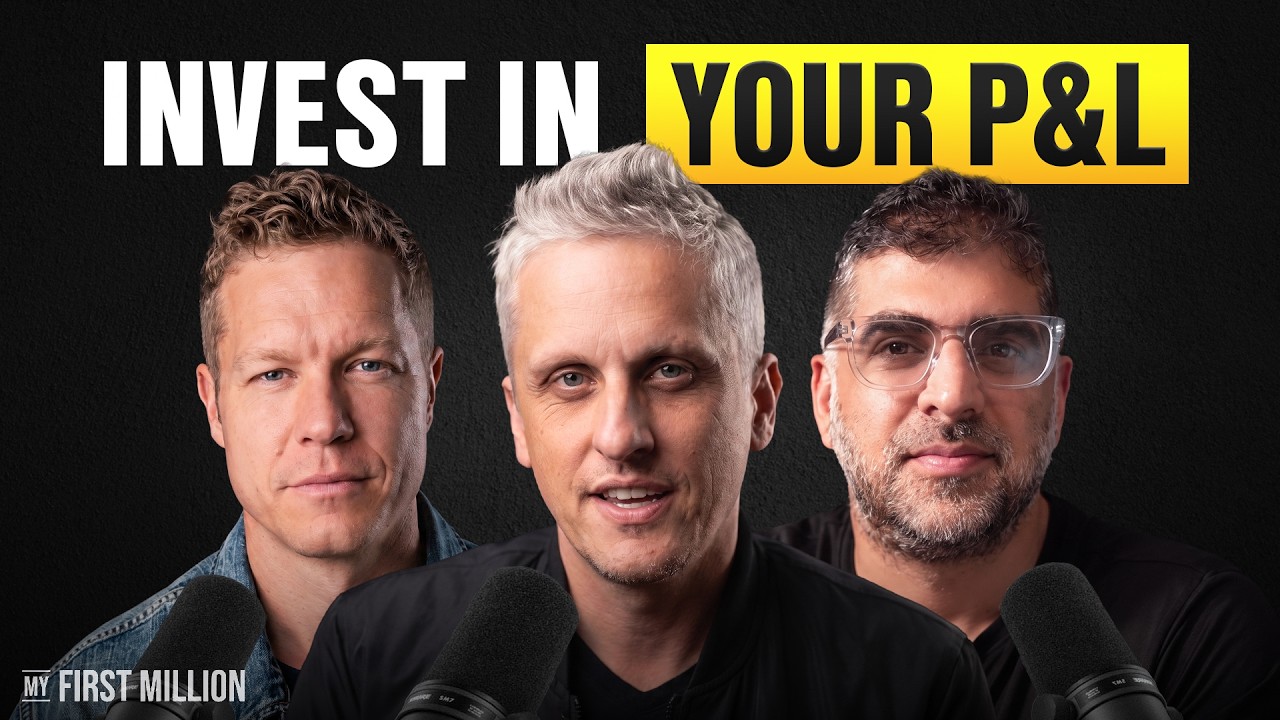
Aaron Levie, co-founder and CEO of Box, reflects on 20 years building a public enterprise software company, the strategic pivot that saved it, the acquisition offers he turned down, and his contrarian views on AI’s impact on jobs, work, and the future of SaaS.
Origin Story: Four Friends, 30 Years of Collaboration
Box began with four friends who met in middle and high school, tried many ideas together, then reunited in college and dropped out in 2005–2006 to build the company.
Three of the four co-founders remain at Box today: Dylan Smith (CFO), Jeff Queisser (now farming), and Sam Ghods (retired from Box six years ago, now at Anthropic on Claude Code); Levie jokes that Sam’s departure still generates viral “CTO leaves for Anthropic” headlines.
The early culture was intense: Levie recalls Dylan pulling out a laptop at a scavenger hunt to keep working, a pattern that persisted for decades.
The Enterprise Pivot: Why Box Chose Businesses Over Consumers
Box started agnostic — just “secure access to files from anywhere” — but growth revealed two totally different markets: consumers wanted $5/month and photo/music features; enterprises would pay millions but needed 100x more functionality (security, governance, workflow).
Levie was the last co-founder to accept the pivot; the team debated for months, then “burned the boats” and committed fully to an enterprise-only model (keeping only a premium sign-up path for knowledge workers).
In retrospect, Levie believes the consumer route was a “death pit” — Google Drive, iCloud, and OneDrive would commoditize it — and that the only way to build a large independent company in content management is enterprise focus.
He extends the lesson to AI: most dollars will be enterprise dollars, just as most software dollars are, because that’s where intelligence and data governance are valued.
Turning Down Life-Changing Acquisition Offers
First offer: Yahoo corp dev (post-Flickr acquisition) called them in 2005; they drove a broken-down minivan to HQ, dreamed of $5–10M, and got a polite rejection email two weeks later — a lucky break in hindsight.
Later, in their mid-20s, they received a serious offer “in the half-billion range”; no meaningful secondary liquidity existed then, so it was all-or-nothing.
They ran a regret-minimization framework: the market was 100x larger, they were compounding product/strategy daily, and they’d likely just start another company to get back to this exact spot — so they stayed.
Levie admits it was gut-wrenching; they did an offsite with the four founders to decide, and the decision was far from obvious at the time.
Angel Investing: “Invest in Your P&L”
Levie’s portfolio includes Stripe, Robinhood, Airtable, Instacart, Plaid (he missed Figma — met Dylan Field at seed but couldn’t imagine designers doing real-time collaboration in the browser).
His best insight: just buy the public stocks of the tools in your own tech stack. Over 20 years, Box’s vendor list (Seagate, Western Digital, SanDisk, etc.) would have beaten almost any index.
He calls this “investing in your P&L” — engineers adopt the best tools first, so your expense line is a leading indicator of winners; 90% accuracy, freely available data.
Contrarian AI Takes: More Jobs, More Work, SaaS Wins
Jobs: Bullish. Human creativity and appetite for new things (cures, entertainment, products, podcasts) are insatiable; agents won’t eliminate the need for human accountability and in-person services (childcare, restaurants, financial advice, tax prep).
Work hours: The 4-day week is implausible — if one competitor uses AI to work 5 days, they get 20–25% more output and force everyone back to 5 days; no collective agreement holds.
Jevons paradox for knowledge work: AI makes starting work so easy that people kick off far more projects, then must finish them — every AI-pilled founder Levie knows is drowning in more work, not less.
SaaS isn’t dead: Systems of record (ERP, CRM, content management) sit at the core of enterprises; “vibe-coded” prototypes don’t replace SEC-accountable, supply-chain-critical software.
Agent upside: Agents need deterministic software with permissions, guardrails, and workflow logic — exactly what incumbents already provide. Box sees increased usage as agents roam its data; monetization will shift toward consumption/headless models.
Founder Psychology: Anxiety, Therapy, and the COO Hack
Levie sees a therapist to manage catastrophization — the tendency to extrapolate one bad signal (a key hire leaving) into total company collapse.
Naming the pattern shortened his anxiety cycles from days to hours; he now recognizes “I’ve seen this 50 times, it’s survivable” — though he sometimes over-corrects and under-reacts to real problems.
Closest to quitting: 18 years ago, he doubted his CEO fit vs. product role; hiring a COO solved it — “God created a role for people like me” — and removed that self-doubt permanently.
He stays because the intellectual curiosity and adrenaline of building on each new model drop (and the unstructured data Box manages) still exceed the stress.
Business Strategy Canon: Six Books That Predict Tech
Levie’s “lock-in-a-room” curriculum: Seven Powers (Hamilton Helmer), The Innovator’s Dilemma + The Innovator’s Solution (Christensen), Positioning (Ries & Trout), Blue Ocean Strategy (Kim & Mauborgne), Crossing the Chasm / Inside the Tornado (Moore).
These frameworks explain 100% of competitive moves: whether an incumbent will pursue a startup’s business model (Innovator’s Dilemma), where defensibility lies (Seven Powers), how to own a category (Positioning), and how markets evolve (Chasm/Tornado).
Example: Google had to pursue AI search because the business model was attractive; cloud infrastructure incumbents didn’t want to move to cloud because it collapsed their customer count from 10,000 to 3–4.
Anti-read list: leadership books that feel trite (“Leaders Eat Last,” “Start With Why,” “Make Your Bed”) — he respects the genre but finds them unactionable.
AI Tool Stack & Public Market View
Daily drivers: Codex, Cursor, Perplexity (especially computer-use mode), Claude, Figma — no surprises, just the standard builder stack.
On software stocks: Levie avoids specific buy/sell calls (macro noise like chip trade weeks dominates short-term multiples) but argues systems of record are structurally sticky — a Missouri plumber won’t build their own CRM.
Vibe coding will customize on top of trusted data stacks, not replace them; IT teams will extend workflows on reliable foundations.
Signal: Anthropic launched Claude Code in Slack because Slack already has the permission boundaries and user base — intelligence substrates embed inside deterministic software, not replace it.