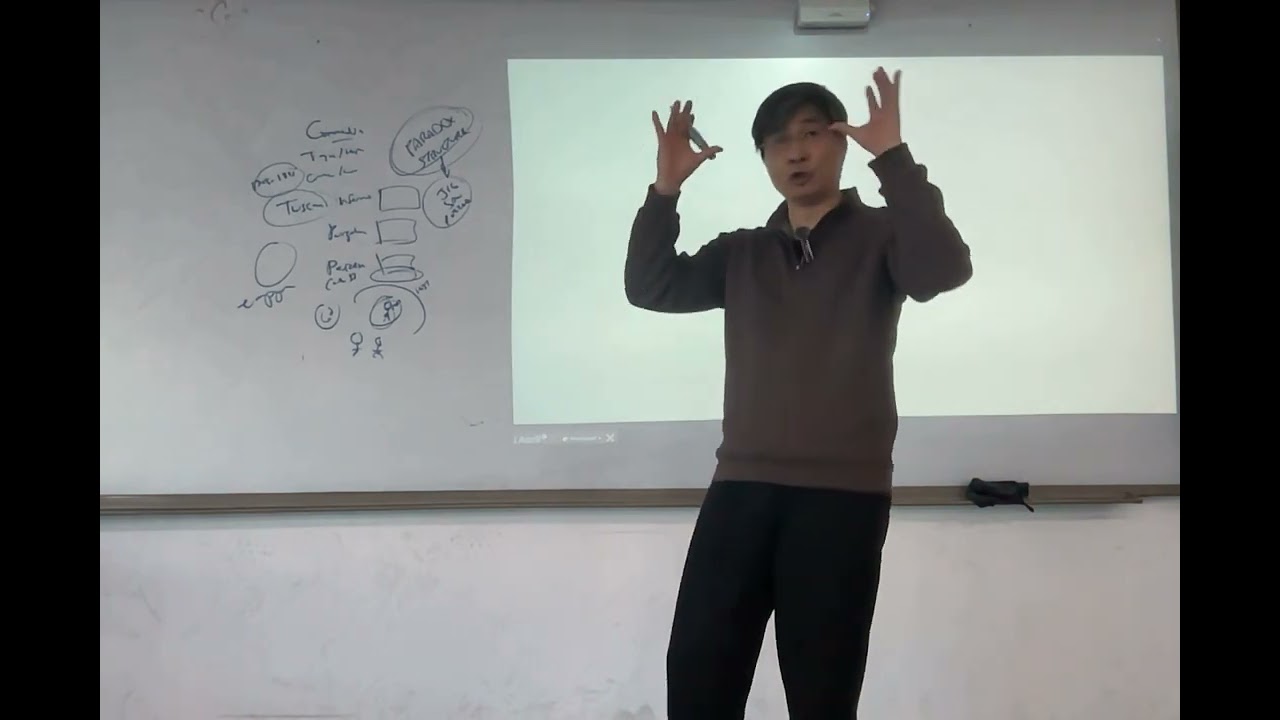
Dante Alighieri’s Divine Comedy (written 1308–1321) is presented as the height of civilization—an epic poem that restructures Christian theology, overturns the dominant Augustinian worldview of the Dark Ages, and plants the intellectual seeds for the Renaissance, the Protestant Reformation, and the Scientific Revolution. Written in Tuscan vernacular rather than Latin, it helped establish Tuscan as the basis for modern Italian. The poem is structured as a mathematically precise 100-canto journey through Hell (Inferno), Purgatory, and Paradise, culminating in Dante’s direct encounter with God in the Empyrean. The instructor argues that the Divine Comedy functions as an intellectual jigsaw puzzle filled with paradoxes that, when unraveled over a lifetime of study, restructure the reader’s mind and imagination.
The Augustinian Worldview Dante Rebuts
Augustine’s City of God established the theological framework of the Dark Ages, which Dante directly challenges:
Humans are born in sin, created out of nothing, and are fundamentally flawed—like the devil if they live by human rather than divine standards.
Pride is the root of all evil; the ego strives for godhood and must be suppressed.
Love is suspect: Adam’s love for Eve led him to eat the fruit, so love itself is a source of sin.
The body is corrupt because it is made of dust; only the soul, breathed into by God, is perfect.
Salvation means the negation of human will, desire, and agency—in heaven, freed from bodies, humans will have no desires and will exist in passive eternal bliss.
The earthly city is built on self-love; the heavenly city on love of God.
Dante’s Divine Comedy systematically overturns every one of these claims, affirming human love, imagination, and will as divine rather than sinful.
The Structure and Mission of the Poem
The Divine Comedy is an epic in three parts—Inferno, Purgatory, Paradise—following Dante’s spiritual journey through the cosmos to seek truth and ultimately meet God.
Dante begins in a midlife crisis and is guided first by Virgil through Hell and Purgatory, then by Beatrice (a woman he loved since childhood, who died at 24) through Paradise, and finally by St. Bernard into the Empyrean—the highest heaven.
The Empyrean is where God dwells as a pristine ball of light, surrounded by the Heavenly Host (angels, Mary, biblical figures). Crucially, even the angels and God Himself do not fully know what God is—God lacks imagination because He is omniscient and omnipresent.
Dante’s mission is to use his human imagination to see and understand what even angels cannot, and to return with that truth.
Mary at the Center of Theology
In a radical restructuring of Christian theology, Dante places Mary—not Jesus—at the center of the Empyrean.
The reasoning: it is a greater miracle that a mortal woman could give birth to God than that God could become human. Mary’s ability to give birth to God proves she cleansed herself of sin through the power of maternal love.
This establishes love as the ultimate redemptive force—love cannot contain sin; it purifies it.
Love as the Divine Force
Dante redefines love as the fundamental force of the universe, directly contradicting Augustine’s suspicion of love:
True love is not desire or attachment but selfless care—a mother who refuses to give her child chocolate every day because she cares for the child’s wellbeing is expressing true love.
Love is without sin; it is the mechanism by which humans redeem themselves and approach God.
The famous final line of the Divine Comedy—“the love that moves the sun and the other stars”—identifies love as the unifying force of the cosmos, equivalent to God Himself.
Love exists only between humans because God is within humans; you cannot love abstractions or objects, only other people who carry the divine spark.
Imagination and the Human Mind
A central theme is that God cannot be seen—only imagined. Dante must use his will and imagination to perceive what is invisible.
Bernard, the highest angel, says he burns for truth that only Dante, a mortal human, can access. This is revolutionary: humans, not angels, have the imaginative capacity to know God.
After his vision of God, Dante must turn imagination into memory—a process the instructor notes mirrors modern neuroscience: the brain imagines the world, then converts those imaginings into narrative memory.
The vision is so overwhelming that Dante is blinded; his mind cannot contain it. He spends the next 10–20 years writing the Divine Comedy to reconstruct what he saw.
The Vision of God and the Holy Trinity
When Dante finally sees God, he perceives the universe before the Big Bang—all substances, accidents, and dispositions bound together in a single volume, interconnected and chaotic.
After 20 years of reflection, he discerns three circles of the same dimension but different colors—the Holy Trinity—separate but equal, reflecting each other like rainbows, the third like fire breathed equally from the two.
Within the Trinity, Dante sees a human effigy—an image of humanity within God. This is the deepest mystery: how can flawed humans be within the essence of God?
He cannot solve this paradox through reason alone (“as the geometer who cannot square the circle”), but is struck by a flash of light—an inspiration—that allows him to imagine the answer.
The Experiment of the Three Mirrors
Earlier in Paradise, Dante and Beatrice debate the dark spots on the moon. Dante offers a physical explanation (dense and rare matter); Beatrice rejects it and proposes an experiment:
Place three mirrors at different distances from a candle. The farthest mirror produces a smaller image but equally bright reflection.
This can be repeated with five mirrors, a million layers—the brightness never diminishes.
The experiment proves that light (goodness/God) reflects equally brightly regardless of distance or medium. In the spiritual universe, all light reflects brightly because it comes from God’s essence.
The instructor interprets this as the key to Dante’s entire vision: God is the candle that burns within every person. Love makes the candle burn brighter. The more you love, the closer you are to God, and the more you are without sin. This is why humans can be within God—because God’s light burns in us.
The Ending: A Puzzle Left for the Reader
Dante refuses to explicitly state what he discovered. The poem ends with the image of his desire and will moving “like a wheel revolving uniformly by the love that moves the sun and the other stars.”
The reason for the silence: the Divine Comedy is designed as a jigsaw puzzle that only works if the reader spends the time assembling it themselves. It is a lifetime journey, not a doctrine to be passively received.
Dante is writing not for the Catholic Church (which would have burned the manuscript if it understood the content) but for the universe—leaving a secret box for future readers to discover and be transformed by.
Dante as Father of Modern European Civilization
If Homer was the father of Greek civilization, Dante is the father of modern European civilization.
The Divine Comedy is imprinted with the seeds of three major European movements:
The Renaissance: because it starts in Florence and affirms human creativity, imagination, and dignity.
The Protestant Reformation: because it challenges Catholic Church authority and places truth-seeking in the individual’s hands.
The Scientific Revolution: because Beatrice’s insistence on experiment as a method of proof (“an experiment, were you to try it, could free you from your cavil”) prefigures the empirical method.
The poem’s use of paradox, mathematical structure, and vernacular language all contribute to its revolutionary character.