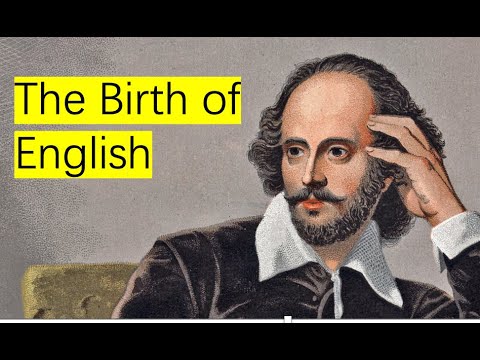
This lecture situates William Shakespeare within a broader framework of four modern civilizations—Russian, German, British, and American—that have competed for global dominance over the past two centuries, each claiming a Christian-Roman heritage but interpreting it differently due to geography and culture. The professor argues that Shakespeare is the founder of English cultural identity and transformed English into a global “linguistic internet” through his innovative use of language, particularly in vocabulary, metaphor, and iambic pentameter, enabling the spread of Anglo-American soft power.
The Four Civilizations Framework
Russia: The largest landmass, cold and dark, producing a “dark imagination” reflected in literature (Tolstoy, Dostoyevsky), music (Tchaikovsky, Stravinsky), and geopolitical genius (Stalin, Putin). Russians see themselves as heirs to the Byzantine Empire and protectors of Eastern Orthodoxy—a mystical, collectivist form of Christianity. Their geopolitical goal is border defense against many enemies.
Germany: Lacks natural boundaries, historically invaded, leading to the concept of Lebensraum (living space)—the need to colonize surrounding territories (Poland, Russia, Austria) for survival. This drove German military strategy in both World Wars. German culture emphasizes the “will to power” (Nietzsche), the capacity to impose one’s will on reality, which the professor links to Hitler and the Nazis.
Britain: An island fortress, heir to the Roman Empire, with Anglicanism as its religion (nearly identical to Catholicism except allegiance is to the King, not the Pope). British philosophy is utilitarian and empirical—focused on what works rather than what is right. The British Empire was justified by the “white man’s burden,” the belief in inherent cultural superiority and a duty to civilize others.
America: A continental fortress, invincible and resource-rich, capable of isolationism. Americans see themselves as heirs to the Roman Republic (not the Empire), with a deist elite and diverse Protestant sects. Their ideology is “manifest destiny”—the belief that God wills America to control the entire Western Hemisphere, which the professor connects to modern rhetoric about annexing Canada and Greenland.
Shakespeare’s Role in Building the British Empire
Shakespeare is presented as the founder of English cultural identity and historical memory, despite dying at 52 and never publishing his plays himself. His 38–41 plays (tragedies, histories, comedies) were published posthumously by friends using his notes and actors’ recollections (the First Folio), which is why there are textual debates among scholars.
He used 20,000–30,000 words and introduced 1,700–3,500 new word uses (diction), expanding the English language during a period (1500–1650) when 10,000 new words were entering English due to revolutions in agriculture, trade, and technology.
Shakespeare’s innovation was not inventing new stories but reimagining existing ones (Hamlet, Julius Caesar, Othello were already part of British theatrical tradition) through radical character psychology and linguistic creativity.
How Shakespeare Transformed Language
Diction as reimagining: Shakespeare took common words and used them in inverted or novel ways to force audiences to see the world differently. Examples with “dagger”:
“Here’s a dagger, fat and short”—reversing the expected thinness of a dagger to suggest hidden cleverness beneath a stupid appearance.
“I daggered him with questions”—using “dagger” as a verb meaning to stab with questions.
“His voice is daggerly”—inventing an adjective to describe a voice that feels like it stabs.
Language as neurological surgery: Shakespeare understood that manipulating language could rewire the brain’s synapses, changing how a civilization thinks and feels. His plays were mass entertainment for ordinary people, not elite art.
Iambic pentameter as music: His plays were performed as musicals with dance, and the rhythmic pattern (deep-high × 5) made speeches memorable and soul-touching, like songs. This is why reading Shakespeare aloud is the best way to master English.
Shakespeare’s Genius in Practice: Hamlet and Julius Caesar
Hamlet: The story of a prince paralyzed by analysis after his father’s ghost commands him to kill his uncle Claudius. The professor argues this is Shakespeare’s most personal play—his own son Hamnet died young. The “To be or not to be” soliloquy operates on four simultaneous levels of meaning:
To die or to live (suicide vs. enduring pain)
To kill or not to kill (whether to murder Claudius)
To follow fate or defy it (free will vs. determinism)
What is the point of existence? (the deepest, most philosophical level)
Visual language: Shakespeare’s words create images in the audience’s mind (e.g., “slings and arrows of outrageous fortune,” “shuffled off this mortal coil”), functioning like a movie in an oral culture where most people couldn’t read.
Julius Caesar—rhetoric as brain surgery: In the speech competition after Caesar’s assassination, Brutus uses antithesis (opposing ideas: “I am honorable, Caesar is ambitious”) to justify the murder. Mark Antony responds with chiasmus (ABBA structure: “Caesar was ambitious and as honorable as Brutus”) to collapse the dichotomy and turn the crowd against the conspirators. This demonstrates how language can rewire the neurological structure of an audience.
Comparing the Three Great Poets of Western Civilization
Homer: Founded Greek civilization after the Bronze Age collapse (tabula rasa). Language as a window into the human soul—what drives us (Achilles’ thirst for fame, Odysseus’ love of family).
Dante: Founded modernity by writing the Divine Comedy in vernacular Tuscan instead of Latin, making it accessible to ordinary people. Language as a portal into the mind of God—the deepest and most divine of the three poets.
Shakespeare: Founded the British Empire. Language as a “reality onto itself”—not necessarily containing deep truths, but creating beauty, imagery, and sensory experience that transforms the soul. The professor considers Shakespeare less deep than Homer or Dante, describing his work as potentially “pretty nothingness” compared to Dante’s divine vision.
Commonalities: All three were “democrats” who reached ordinary people, emerged during periods of cultural upheaval, operated in oral cultures with strong memory and imagination, and were driven by a divine mission rather than money or fame.
The Problem with English as a Global Language
Shakespeare turned English into the world’s “linguistic internet”—a flexible, beautiful platform where all cultures and ideas can meet and crossbreed.
However, this exchange is mediated through Anglo-American civilization, which is fundamentally utilitarian (what works, not what is right), skeptical (doubting reason), and empirical (only trusting experience). The professor argues this makes Anglo-American culture narrow-minded and mediocre compared to Russian and German cultural achievements.
He struggles to name great American novels or art despite America’s wealth and power, and considers Paradise Lost (Milton) a limited, narrow-minded epic compared to Homer, Virgil, and Dante.
Shakespeare and Imperialism
Shakespeare himself was not an imperialist—he was provincial, interested only in London, and likely never traveled. There was no concept of race in his time; people identified by community, not race.
However, his legacy was co-opted by British imperialists: the argument became “We have Shakespeare, you don’t, therefore we are superior and will civilize you.” His plays became a tool of cultural justification for colonization.
The professor criticizes modern readings of Othello through the lens of race and identity, arguing Shakespeare was interested in universal psychology (what drives a person to kill someone they love) rather than racial politics. He sees modern cultural readings as degrading the plays and reinforcing stereotypes.
Shakespeare’s Lack of Formal Education as an Advantage
Shakespeare never attended university, which the professor argues was precisely what enabled his genius. Without elite indoctrination, he observed people without prejudice, treating himself as equal to others and developing tremendous empathy.
He was essentially an anthropologist and psychologist of common people, interested in what drives human behavior (Iago’s jealousy, Othello’s pride, Hamlet’s paralysis). The professor contrasts this with elite university education, which he believes inhibits empathy and genuine psychological insight, and notes that self-taught historians often know more than Ivy League PhDs.