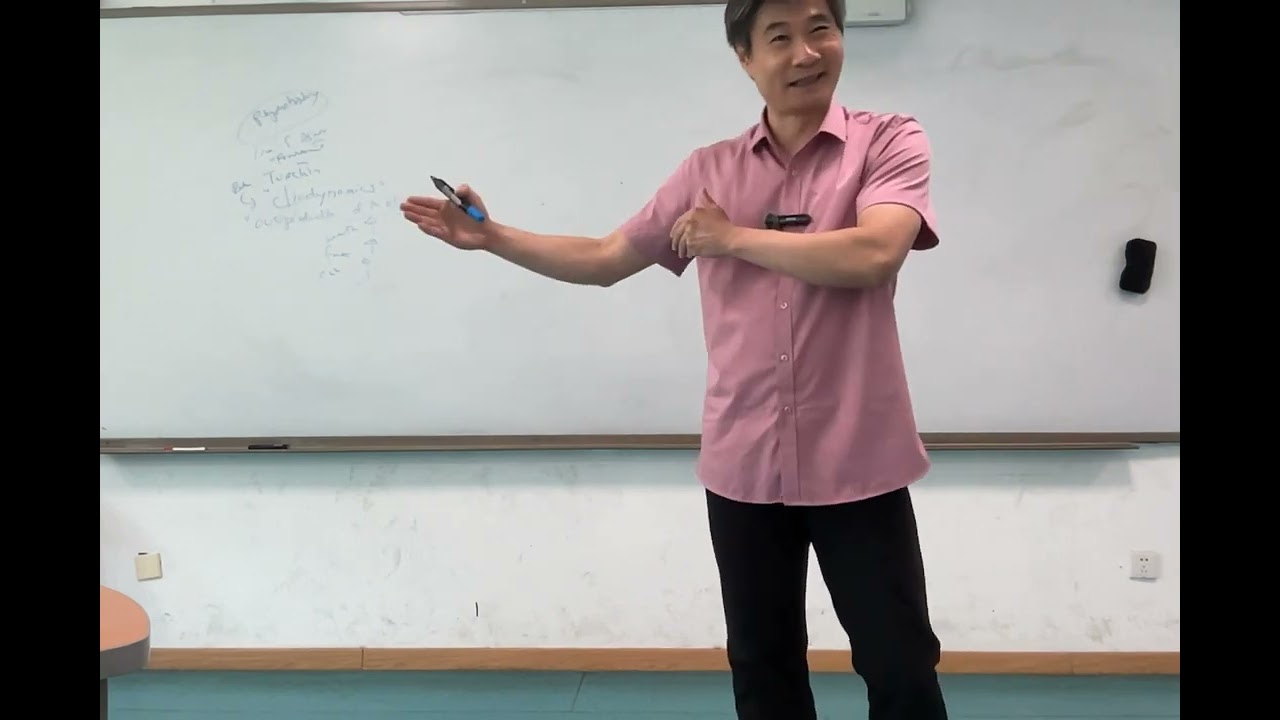
This is the final class of a two-semester course. Last semester the class read great books (The Iliad, The Odyssey, The Bible, The Republic, Divine Comedy); this semester they analyzed the geopolitical state of the world and arrived at a bleak set of predictions — Trump’s re-election, a disastrous US war with Iran, the end of the American Empire, a multi-polar world of endless war, and eventual civilizational collapse from climate change. The teacher now wants to end on a message of hope: that the future is not something that happens to us but something we imagine and fight for, and that a framework called “psycho history” — predicting and shaping the future through mathematical modeling of human behavior — could be humanity’s path forward.
Psycho History: From Science Fiction to Serious Proposal
Origin in Asimov’s Foundation: Isaac Asimov introduced the concept of psycho history in his 1950s science fiction series Foundation. In the story, a Galactic Empire is collapsing and a new science called psycho history uses mathematics to map human behavior over a million years, identify patterns, predict the future, and manipulate events to shorten a projected 30,000-year dark age.
Real-world attempts — Peter Turchin and Cliodynamics: Historian Peter Turchin founded “Cliodynamics” (named after Clio, the goddess of history, plus “dynamics” meaning movement), which attempts to model history mathematically. His key discovery is the concept of elite overproduction — societies collapse not primarily from debt, inequality, climate change, or war, but from having too many elites competing for a finite amount of power.
Power is a zero-sum game: only a few can hold it, so when the number of wealthy, famous, ambitious people grows faster than available positions of power, internal elite struggle leads to social collapse.
Historical examples: Imperial China’s exam system produced too many qualified candidates (juren) for too few official positions; failed candidates like Hong Xiuquan (leader of the Taiping Rebellion) became revolutionary threats. The Roman Empire collapsed for similar reasons.
The proposal: Use artificial intelligence to go beyond Turchin’s work and build a real psycho history — not just analyzing the past but predicting and shaping the future.
What AI Actually Is
The technically correct term is supervised machine learning, not “artificial intelligence.”
Traditional programming: write an algorithm → input data → get output.
Supervised machine learning reverses this: provide input and desired output, and the computer iteratively refines the algorithm to minimize the gap between its predictions and the correct answers.
Facial recognition as an example: Every face is converted into a topological mathematical model (measuring distances between eyes, nose size, etc.). The computer is trained on a database of labeled faces, adjusting its model until it can match new faces to the database. If a face isn’t in the database, it cannot be recognized.
Three requirements for any AI system:
Clear, quantifiable outputs — you must be able to define success numerically (e.g., profit per flight). Subjective claims like “best ice cream” cannot be modeled.
Clean, labeled data — the input data must be well-organized and accurately tagged.
A working algorithm structure — humans must design the initial framework; the computer can only optimize within that structure, not create it from scratch.
What AI can do well: facial recognition, translation software, recommendation engines.
What AI cannot do: self-driving cars — because of the edge case problem. Every scenario can be planned for except a human who intentionally wants to crash into the car (e.g., a displaced taxi driver). No algorithm can prevent deliberate human adversarial behavior. AI is a limited tool, not a general intelligence.
Building a Psycho History AI Model
The teacher’s geopolitical predictions (Trump’s election, US-Iran war, elite overproduction dynamics) are examples of the kind of models that could be formalized into an AI system.
Process:
Define clear outputs (e.g., “will this country go to war?”).
Gather clean historical data on wars, political transitions, social cohesion metrics.
Build a working algorithm structure based on theoretical principles.
Test the model against hundreds of historical conflicts (e.g., Athens’ invasion of Sicily in 415 BCE, Operation Barbarossa in 1941) and refine it iteratively.
Combine many such models (war causation, election outcomes, economic cycles) into a unified psycho history framework.
Core Principles for the Model
Game Theory: There is no absolute good or evil — only self-interested players developing strategies to win. International relations, elections, and wars can all be modeled as games.
The Human Heart: Drawing on Homer and Dante, the teacher argues there is a fundamental underlying structure to human motivation. All humans seek structure, meaning, and purpose — specifically the capacity to love, create, and grow. When society conforms to these needs, it prospers (the Greeks called this eudaimonia). When society represses them, it eventually collapses.
This is not about individual uniqueness but about universal underlying drives. The specific expression may differ, but the fundamental needs are shared by all people.
Love and hate are one force: if love cannot express itself, hate will. Creation and destruction are one force: if people cannot create, they will destroy. A society that nurtures love, creation, and growth flourishes; when elites consolidate power and turn others into slaves who cannot love, create, or learn, those people rebel and destroy the society.
Sociality (social cohesion): A measure of how willing people in a society are to follow rules, trust one another, and cooperate — driving courteously, giving up seats, picking up garbage. High sociality (Japan, Germany) means a resilient, growing society. Low sociality (India, Brazil, China) means fragility.
Mass Society as Historical Accident: Mass society is an unnatural deviation from human history. It requires an artificial elite to manage it, but these elites are not inherently superior — they maintain power through fictions (pedigree, IQ, institutional prestige). As these fictions are exposed as incompetent (economic mismanagement, COVID response, war management), the elite must resort to force and repression to maintain control, which further suppresses the human heart and accelerates collapse.
Challenges and Edge Cases
Great Man Theory as edge case: The model can account for structural historical forces, but occasionally a “great man” (Homer, Dante, Plato, Jesus, Caesar, Augustus, Putin) appears who steps outside history and redirects it entirely. These individuals cannot be predicted by any model.
In Asimov’s Foundation, the solution is the Second Foundation — a hidden group of specialists who monitor the AI and correct it for edge cases. In the novel, these people are telepaths who can read and control minds.
The teacher suggests that “great men” may actually possess something like telepathic abilities — an extraordinary capacity to read and influence others’ minds. Putin is offered as a modern example: someone from a non-elite background who amassed enormous power in mere decades through an uncanny ability to understand and manipulate people.
The future Second Foundation would be a team of scholars, mathematicians, computer programmers, and historians who collaboratively build and correct the AI, accounting for edge cases as they arise.
Practical Requirements and Timeline
Building this AI would take 50 to 100 years minimum because:
Predictions must be validated against real outcomes over decades.
History itself must be rewritten: most existing historical accounts are inaccurate or incomplete, so the model must be used to reconstruct a more factually correct history (re-examining the Peloponnesian War, World War I, the Tang Dynasty, etc.).
It requires collaboration among mathematicians, computer programmers, and historians working simultaneously on prediction and historical revision.
Modeling love, creation, and growth requires quantifying:
Agency/freedom — people must have liberty to pursue what they want.
Social interaction — love, creation, and learning all require other people.
Compassion — societies where people cooperate out of genuine compassion (e.g., survival on an island) foster love and creation; societies organized around ruthless competition (e.g., bonus-driven banking) foster hatred and destruction.
Who controls the AI? It must be open, transparent, and democratic — managed by a Second Foundation of dedicated scholars, not by any elite or nation. If controlled by one group, it becomes a tool of oppression. If it belongs to all of humanity, it becomes a platform for agreeing on shared goals and mapping out the consequences of different choices (e.g., “if the US attacks Iran, here is what happens”).
The Teacher’s Personal Motivation
The teacher has a prestigious education and career background and could have been a wealthy lawyer or professor but chooses to teach high school in China because he has three young children (eldest is six, youngest is eight months).
As a father, he believes in a better world and wants to fight for it — to leave a legacy for his children.
The message to students: through imagination and hard work, you can create a better world. You don’t have to wait for the future; you can make it happen.
The psycho history project is not something that will happen tomorrow — it requires many people working together over a lifetime — but the teacher hopes the students may return to this dream later in life.
He expresses pride in the students’ growth over the year: their engagement with difficult great books, their increasingly logical and critical thinking, and their choice to work hard in a course that didn’t require it.