The Western world is experiencing a structural decline driven by the political and economic dominance of elderly populations, a system the lecture calls gerontocracy — rule by old people. This is not a conspiracy theory but an observable demographic and political reality: older people vote at higher rates, hold most wealth and political power, and shape policy to serve their own interests at the expense of younger generations. The result is a society that is reactionary, risk-averse, financially extractive, and increasingly authoritarian.
Immigration and Social Fracture
Rapid immigration into Western countries has intensified ethnic tensions, housing crises, and cultural anxiety, but the lecture argues this is not accidental — it serves the economic interests of elderly property owners and pensioners who need cheap labor.
The Southport stabbing in the UK (2024) triggered nationwide anti-immigrant riots after false rumors spread that the attacker was an asylum seeker. In reality, he was a British citizen born in Wales to Rwandan parents. The riots revealed deep public anger over demographic change.
Demographic maps show immigrant populations have tripled in many areas over the past decade, creating pockets where locals feel culturally displaced.
The same pattern is visible across the West: Australia has seen its largest immigration spike from India, China, and the Philippines; France and Germany have absorbed large numbers from Africa and the Middle East; Canada now has 25% first-generation immigrants.
The Canadian government plans to grow the population to 100 million by 2100, primarily through immigration from India and China, despite public backlash.
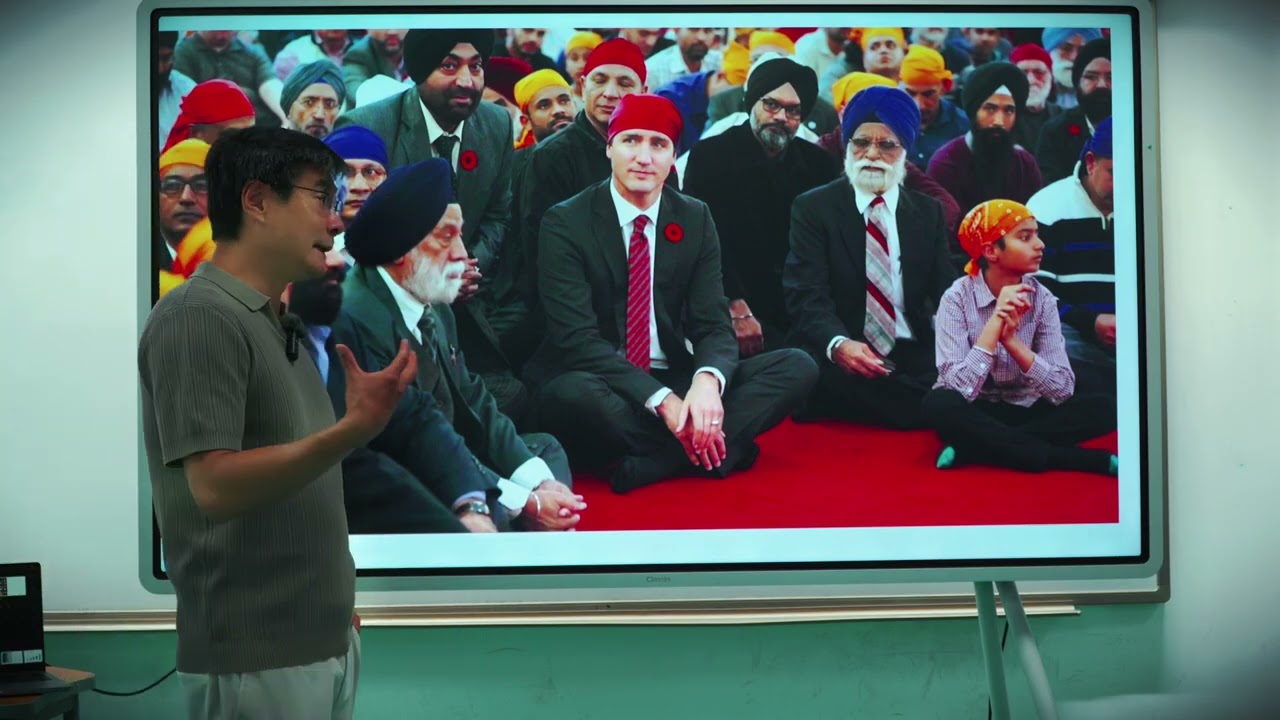
Indian immigrants in particular have become a powerful political force in Canada — 22 MPs of Indian descent were elected in the most recent federal election, outnumbering Chinese-Canadian MPs despite the Chinese community being older and larger.
Indian students on visas often live in extreme overcrowding (eight to a room) while competing for minimum-wage jobs, yet simultaneously build political influence through superior organizing skills rooted in democratic traditions.
Housing, Inflation, and the Real Economy
Housing prices in Canada have skyrocketed while housing supply has remained flat, even as immigration surges. This is not a policy failure — it is a policy choice that benefits existing homeowners, who are disproportionately elderly.
In the US, housing prices roughly track income growth. In Canada, housing prices have decoupled entirely from GDP, making homeownership impossible for young people.
The beneficiaries are property owners and real estate developers — when supply is constrained and demand rises, asset values increase artificially.
Inflation (CPI) has spiked across the West, making food, rent, and basic goods increasingly unaffordable, especially for young people.
Meanwhile, the financial economy (stock markets) has boomed while the real economy (jobs, productivity) has declined. The top 10% of Americans own 90% of stocks. This divergence means the system is generating wealth on paper while actual living standards collapse.
Government debt is at historic levels: the US government owes $37 trillion, and American households owe $17 trillion in mortgages and credit card debt. The middle class is functionally insolvent.
Euthanasia as Population Management
Canada legalized Medical Assistance in Dying (MAID) in 2016, initially for terminal illness, but the criteria have expanded dramatically. Deaths rose from ~1,000 in 2016 to ~10,000 by 2021.
Approval rates have climbed to 81%, and wait times have shrunk to as little as 10 days — suggesting the system operates more like a conveyor belt than a last resort.
The most common reason cited for seeking MAID is not terminal illness but loss of ability to engage in meaningful activities or loss of ability to perform daily living tasks — criteria that apply broadly to the poor and disabled.
Cancer is the leading cause of euthanasia requests, and cancer is the most expensive disease to treat. The lecture argues this creates a financial incentive to encourage death over costly care.
The shift reflects a broader cultural change: 25 years ago, society valued social cohesion and the sanctity of life; now it values cost efficiency and financial metrics. The poor are being eliminated because they are a burden on the system.
The Gerontocracy Thesis
The core argument is that rich pensioners are the primary beneficiaries of nearly every negative trend in the West, and therefore are the most likely drivers of policy.
High property prices benefit homeowners, who are disproportionately elderly.
High stock market valuations benefit those who own stocks, who are disproportionately elderly.
Euthanasia for the poor frees up healthcare resources for the elderly.
Mass immigration provides cheap labor (gardeners, nurses, cooks) for elderly households.
Inflation, low birth rates, gaslighting, and debt do not significantly harm the elderly, who are on fixed incomes or own hard assets.
Bureaucratic incompetence and neoliberalism are partial explanations, but the gerontocracy framework is more precise: follow the beneficiaries.
Demographic Inevitability
In 1900, people over 75 were a tiny fraction of the population. Today, their numbers are exploding. In the US, there are projected to be 65 million people over 65 by 2040, including 15 million over 85.
Pension systems were designed assuming retirees would die within 5–7 years of retiring at 65. People are now living to 100+, creating massive unfunded liabilities.
The ratio of workers to pensioners has inverted: where once there were 3 workers per pensioner, now there are fewer workers than pensioners in many countries.
Pension funds are also poorly managed — the lecture claims the “dumbest people in finance” work at pension funds, which are systematically exploited by smarter investment banks.
Young people are told not to invest in pension funds because the money will be gone by the time they retire.
Political Power of the Elderly
The most powerful political figures in the West are elderly: Joe Biden (80s), Mitch McConnell (80s, visibly incapacitated), Dianne Feinstein (died in office at 90), Chuck Grassley (90, still in the Senate).
These individuals refuse to relinquish power and only leave office through death.
The lecture contrasts generational temperaments: the young are rebellious, creative, and open-minded; the mature want stability and consensus; the elderly are reactionary, stubborn, and safety-obsessed.
A gerontocracy produces a police state — not necessarily violent, but intrusive, surveilling, and controlling. Examples include Canada’s child discipline laws (where parents are encouraged to call the police on their own children) and Britain’s Online Safety Act (2023), which criminalizes certain speech.
The Future Under Gerontocracy
The lecture predicts several trends will intensify:
Lockdowns and restrictions whenever there is a health threat, because the elderly are risk-averse.
Digital currency to eliminate cash and monitor all transactions.
Microchip implants as the next step beyond facial recognition.
More immigration to supply cheap labor for elderly care.
More prisons because the elderly fear crime and prisoners provide free labor.
Perpetual war because elderly leaders are willing to send young people to die for their interests.
600,000 Chinese students are being invited to the US under new Trump-era policies — framed as educational opportunity but functioning as a pipeline for cheap, obedient young labor to care for the elderly.
Why Young People Cannot Resist
When asked how young people can fight back, the lecture gives a blunt answer: they cannot.
Humans are biologically wired to respect elders — this is true across species. Young people do not want to overthrow their grandparents.
The elderly have enormous free time to organize, vote, and make trouble. Young people are busy working and surviving.
Even when pension funds go bankrupt, money will be diverted from education, healthcare, and other public services to fund pensions, because no one wants to be seen as denying their grandparents’ retirement.
Modern medicine allows the extremely wealthy to remain alive almost indefinitely — the lecture cites a 90-year-old woman who is “literally brain dead” but kept alive because she can afford it. A doctor estimates a wealthy vegetable can be maintained for 20 additional years.
The cycle is self-replacing: as one generation of elderly dies, the next generation ages into the same role, and the young remain permanently subordinate.
The only potential disruptions would be catastrophic events — nuclear war, civilizational collapse — which would kill the young, not the old.