This episode presents a speculative, highly controversial theory about how evil operates in the world, arguing that horrific acts of violence—including what is happening in Gaza—function as ritual sacrifices designed to create group cohesion, synchronize a secret elite, and ultimately concentrate global power. The speaker frames this as a thought experiment and theoretical model, not established truth, but a lens for understanding history and current events.
The Gaza Situation as Ritual Sacrifice
The speaker argues that what is happening in Gaza is not merely a military campaign but a deliberate ritual sacrifice, drawing a direct line to historical practices of human sacrifice by the Aztecs, Phoenicians (specifically Carthaginians), and Romans.
The Aztecs built temples filled with thousands of human skulls from pre-war sacrifices.
The Romans conducted “triumphs” where captured enemy leaders were paraded through Rome and then strangled at the temple of Jupiter.
The Carthaginians practiced child sacrifice, documented by Roman historians.
The speaker claims Israel’s actions are intentionally visible and provocative—almost designed to make the world hate Israel—because this serves an eschatological purpose: extremist elements within Israel allegedly believe that uniting the entire world against Israel accelerates an end-times scenario in which God ensures Israel’s ultimate victory.
The speaker notes that nearly half of Gaza’s population is under 18, meaning the majority of those killed are children.
Israel could have used covert methods (poisoning water or food to cause cancer) but instead chose maximum visibility, which the speaker argues is the point: to create an ultimate taboo that galvanizes both global opposition and internal Israeli unity.
The “River at Your Back” Strategy
The speaker uses an analogy from Chinese military history: the strategy of fighting with a river behind your army, leaving no option but to fight to the death. This forces soldiers to unify and find extraordinary energy.
For Israel, the “river” is the taboo of killing children—the worst transgression in modern society. There is no retreat from this; Israel must either go all the way or face destruction.
The speaker claims Israelis deliberately provoke hostility worldwide (shouting slurs on buses, starting fights) to deepen the divide and strengthen internal cohesion.
The Monkey Island Thought Experiment
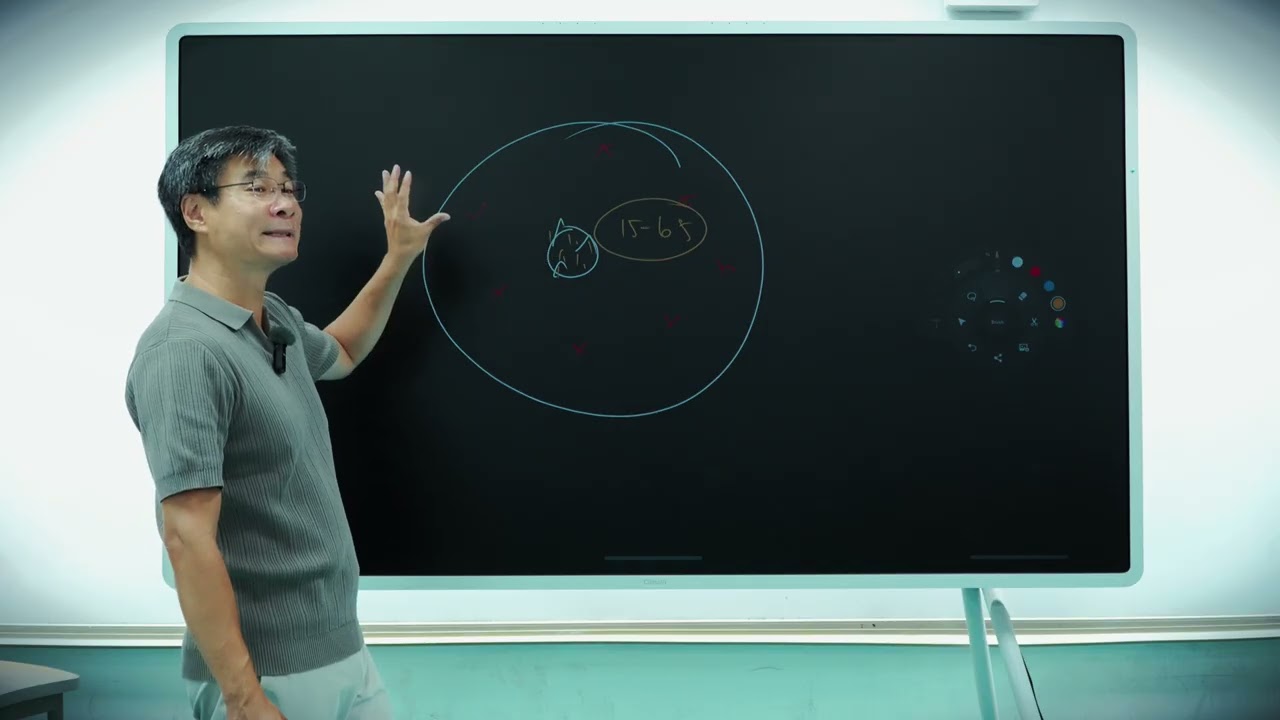
The speaker introduces a thought experiment: 100 men from different countries, languages, and backgrounds are stranded on an island surrounded by flesh-eating monkeys, with only one safe spot.
Despite hopelessness, they rapidly develop a common language, then a founding myth (believing God chose them to save the world), then rituals involving sex and bonding.
Leadership emerges not from wisdom but from extreme sacrifice: a 15-year-old who cuts off his hand without crying is chosen over a wise 65-year-old, because the group follows whoever is most willing to die for them.
Over years, the group develops synchronicity—a hive mind where members can sense each other’s danger or thoughts without communication, likened to a mother instinctively knowing her child is in danger thousands of miles away.
Examples include a soldier jumping on a grenade instantly to save comrades, or someone cutting a rope bridge to save the group at the cost of their own life.
If these 100 men were returned to the real world with these capabilities, they would become a secret elite—controlling power behind the scenes across generations, invisible to the public, with puppet leaders serving as the visible face of power.
Strange rituals develop, including funeral cannibalism (eating pieces of those who sacrificed themselves) to honor and internalize the commitment of the fallen.
Historical Analogies: Sparta, Thebes, and Macedonia
Sparta: Boys were taken from families at age 5-6 and subjected to brutal hazing by older boys, building solidarity through shared suffering. At puberty, they became lovers with older soldiers (28-30), creating hive-mind bonding. To graduate, they had to sneak out at night and murder Helots (slaves) who violated curfew—a form of human sacrifice. This made Sparta the dominant military power in Greece, despised by other city-states but internally unified.
The speaker emphasizes that this was not considered “homosexuality” as a concept—it was simply practical bonding in an all-male military environment.
Thebes: Copied the Spartan system but made it voluntary, creating the Sacred Band of 300—pairs of lovers who served as the ferocious vanguard of the Theban army. They became the dominant military force after Sparta.
Macedonia: Philip II studied Theban methods and built the greatest army in the world. At the Battle of Chaeronea (338 BCE), when all was lost, the Sacred Band stood their ground and died to allow the rest of the army to escape—demonstrating that honor and sacrifice, not survival, were their values. Alexander the Great (Philip’s son) then used this army to conquer Persia.
Game Theory and the Logic of Transgression
The speaker introduces game theory: in a competition where only one can win, the optimal strategy is cheating—specifically, secret coordination with others.
Once coordination begins, it triggers an arms race of coordination (pairs force quartets, etc.), so the only sustainable advantage is conspiring secretly.
Obvious coordination methods (family, religion, ethnicity, language) are visible and provoke counter-coordination. The superior strategy is transgression—breaking taboos and social laws.
Transgression forces cohesion because the group must keep the secret to avoid punishment. Anyone who betrays the group destroys everyone.
Transgression is addictive: breaking rules feels empowering and liberating, releasing energy. Small transgressions (pranks, theft) escalate to larger ones.
The ultimate transgression (which the speaker writes but does not say) releases what practitioners believe is divine energy—the “secret of the universe.”
Other transgressions include incest, which the speaker claims some secret societies practice publicly to generate both group unity and perceived divine power.
The visible leaders of the world are puppets; real power lies with secret societies that practice these rituals, maintain absolute secrecy, and coordinate through shared transgression.
The Philosophical Framework: Kant, Hegel, Plato, Gnosticism, and Dante
Kant: Argued that we never perceive objective reality (the noumenon) directly. Our brains act as filters, adding space and time, creating the phenomenon—the world we experience. This raises three questions: What is the noumenon? Who gave us these filters? How do we know we’re seeing the same world?
Hegel: Proposed that the noumenon is the Geist (German: spirit/ghost), a combination of three concepts:
Ghost: a parallel spiritual reality alongside us.
Geyser: a force constantly expanding and becoming.
Gist: the essence or core of things, the invisible truth behind appearances.
The Geist creates the material world; it gives us our filters, which is why we all perceive the same world.
Plato and Gnosticism: The universe originates from the Monad (the One, the supreme God, the spiritual sun). The Monad “breathes” and vibrates divine power, creating pairs of forces called aeons, which generate layered realities. Earth is the outermost shell. The purpose of life is to return to the Monad.
This framework is shared by Hinduism and Buddhism (nirvana = return to the Monad).
Plato’s path: Return to the Monad through the pursuit of knowledge, especially geometry (the secret language of the universe). This is elitist—only those capable of advanced mathematics can access it.
Dante’s path: Return to the Monad through the pursuit of love. The Monad is love itself, and every person carries a divine spark. Love is accessible to everyone, not just the elite. Dante explicitly rejects Plato’s approach as exclusionary.
The problem of evil: Why do evil people control the world?
Plato’s answer: This world is a fake shadow world. Who cares if they control it? Focus on knowledge and ignore them.
Dante’s answer: The Monad is love, and love requires free will. The Monad gave us free will as its greatest gift and cannot interfere without taking it away. Occasionally, the Monad sends messengers (Plato, Dante, Jesus) to remind us of our divine spark, but we must choose whether to listen.
The powerful deny the spiritual world and validate only the material world because their power depends on making the “prison” of earth seem like all that exists. Science, in this view, is the negation of the spiritual and the validation of the material.
Transgression works in this model because it allows the powerful to align with a specific part of the multi-layered universe—locking onto the same “website,” so to speak, enabling synchronicity. But they align with lower, evil forces within the model, not the Monad.
The powerful rationalize their power by reinterpreting the model: in their conception, the Monad is evil and their god is good, and they are “liberating” people by keeping them focused on the material world.
Why Different Religions Share the Same Conception
The speaker argues that the reason Plato, Dante, Hinduism, Buddhism, and other traditions independently arrived at the same model of the universe is the Geist—thoughts do not originate in the brain but come from and return to the Geist, a shared spiritual system. This explains why geographically and culturally separated traditions have identical conceptions of the divine.
The Nature of Evil in This Model
Evil is defined as moving away from the Monad—denying the spiritual world, denying free will, and denying love.
Society is constructed to be anti-love: parents prioritize grades and career prospects over their children’s happiness and free will, making children feel unloved. The education system and economic structure prevent normal human relationships from flourishing.
The powerful maintain their power by keeping everyone focused on the material world, even though this moves humanity further from the Monad. They benefit from this system and therefore perpetuate it, rationalizing their denial of truth to preserve their control.