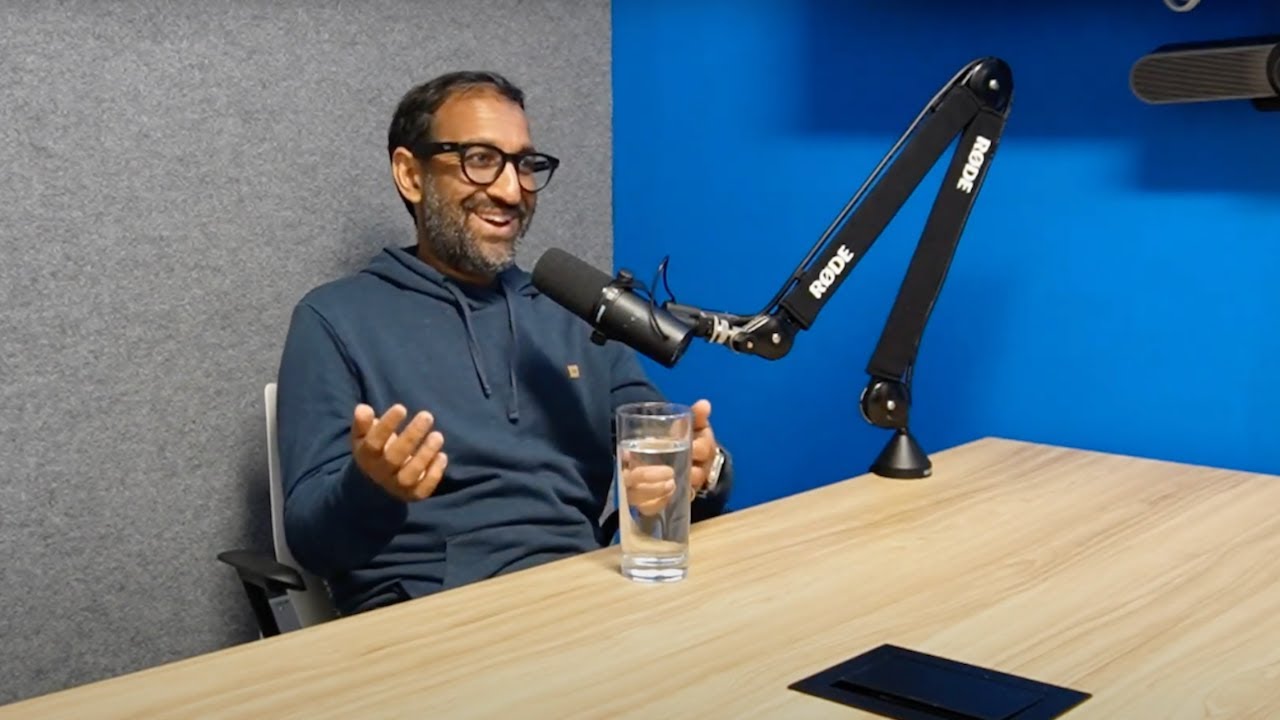
Sheel Mohnot is a serial entrepreneur, investor, and podcast host whose career has been defined by saying “yes” to unusual opportunities, building businesses in niche markets, and leveraging serendipity. He’s the founder of Innovative Auctions (which ran high-stakes domain name auctions), co-creator of The Pitch podcast (acquired by Gimlet/Spotify), and a venture capitalist at Better Tomorrow Ventures. His story is one of immigrant hustle, creative problem-solving, and an appetite for unique experiences.
Family background and early hustle
His father grew up extremely poor in a village in India, lost his father at age three, and was pulled out of poverty by a high school principal who helped him get a scholarship to a better school, then into IIT Bombay to study chemical engineering.
In 1974, his father came to Kansas State for a master’s degree after a classmate told him he could earn more on a U.S. stipend than in India, allowing him to send money home.
He had to crowdfund his plane ticket and the required $300 proof of funds (more than a year’s salary at ~$20/month in India) by writing letters to his community.
Once in Kansas, the stipend wasn’t enough, so he sold encyclopedias door-to-door in the Deep South (Mississippi, Alabama, Louisiana)—a short Indian man with a heavy accent—and was so good he won a national award from Ronald Reagan (before Reagan was president). He used the earnings to buy a one-room condo in India for his brother, which the family still occupies nearly 50 years later.
As a kid, Sheel was always starting small businesses: collecting coins from his dad’s apartment building washing machines, DJing Indian weddings in high school and college, and going door-to-door offering to fix computers (even when he wasn’t sure he could).
Early entrepreneurial ventures
In 2004, after his Apple headphones broke and replacements weren’t available in stores, he went to China and sourced 11,000 headphones in colors matching the iPod Mini, selling them online for $15–$20 each (cost: ~$0.80). He used early shopping cart software (not Shopify, which didn’t exist yet) and eventually outsourced fulfillment to a third party. The project taught him internet marketing.
In 2006–2007, he moved to India through Indicorps (a fellowship for diaspora Indians, modeled after the Peace Corps). His project was with Kiva, helping bring microfinance to India. He says he got far more out of the experience than he gave: he learned what he valued, realized he didn’t need much money to be happy, discovered his love of emerging markets, and started a blog that gained a real readership and led to lasting friendships.
Intel Capital and early exposure to venture
During business school, he worked on a project with Intel Capital, traveling to former Yugoslavian countries (Slovenia, Croatia) to evaluate startup markets. He recommended investing in a company called Zima (a blog recommendation/ad platform based in Ljubljana), but Intel passed because it was off-thesis. The company later raised money from Fred Wilson and others.
FeeFighters and the Groupon acquisition
He co-founded FeeFighters with Sean, a friend who had been burned by credit card processing fees (he lost more to processing than he made in profit his first year). They built a reverse-auction marketplace where payment processors bid for merchants’ business, similar to Kayak for flights.
The marketplace became too efficient, squeezing margins, so they vertically integrated by building their own payment processor and gateway called Samurai—very similar to Stripe, which launched around the same time. The Collison brothers had actually used FeeFighters’ marketplace and read their blog before building Stripe.
They sold FeeFighters to Groupon in Chicago. The acquisition was announced and Groupon’s stock jumped $600 million on the news. But within a year, Groupon’s business faltered, there was a boardroom coup, and CEO Andrew Mason was ousted in February 2013. Sheel describes the culture shifting under new CEO Eric Lefkofsky (more private equity, less fun) and started planning his exit almost immediately.
Despite the remorse and internal debate about the acquirer, the exit gave him credibility, allowed him to start angel investing, and set the stage for his next ventures.
Innovative Auctions: domain name contention sets
ICANN (the body that governs internet domain names) allowed organizations to apply for custom top-level domains (TLDs) starting in 2012. When multiple parties applied for the same TLD (a “contention set”), they had to resolve it themselves or ICANN would intervene.
Sheel and a co-founder (a PhD in auction theory) created a sealed-bid ascending auction where the winner pays, but the losers also get paid. For example, if three parties bid $1M, $8M, and $9M, the highest bidder wins at $8M, and the two losers each get $4M. This “sellers get paid” model meant there were no real losers.
They branded it the “Deloitte Auction” (Deloitte was just their auditor) for credibility, and won ~80% market share despite being industry outsiders. They settled most of ICANN’s contention sets.
Marketing required extreme hustle: flying around the world, attending quarterly industry conferences, and tracking down hard-to-reach parties. In one case, he almost flew to Gibraltar to find a key party, but instead found the man smoking a cigarette at a conference in Argentina—bought a pack of cigarettes, started smoking (he hates it), struck up a conversation, and closed the deal.
They secured Google, Amazon, and Microsoft as participants by offering custom terms (e.g., escrowing hundreds of millions of dollars so sellers couldn’t use their payout to bid against Amazon in future auctions). Once the big players committed, it became a network effect: others had to use Innovative Auctions too.
GMV transacted was in the hundreds of millions; the highest-ticket domain sold for north of $100 million (though they took less than their standard 4% fee on that one). Most auctions settled in the single-digit millions.
They sold the company to another auction firm so Sheel could exit and focus full-time on investing.
The Pitch podcast
In 2015, while recovering at home and watching Shark Tank, he thought the show wasn’t realistic and decided to create a real version: a podcast of actual startup pitches with his honest feedback as an angel investor.
They launched on Product Hunt and immediately became the most-hunted podcast that day, reaching #15 on Apple Podcasts. In January 2017, Apple featured them on the top panel of the podcast app, which drove another surge in downloads.
Gimlet Media acquired the podcast in early 2017; they relaunched under the Gimlet banner that June with a full team and studio. When Spotify acquired Gimlet, they eventually canceled The Pitch (along with much of Gimlet’s original content, as Spotify pivoted to big-name talent like Barack Obama). Sheel’s co-founder bought it back from Spotify and still runs it.
Saying “yes” to everything: a philosophy of unique experiences
Sheel’s general approach to life is to say “yes” to things that excite him, even if they seem crazy. This has led to a string of unusual experiences:
First guest to book Brian Chesky’s Airbnb: He had been tweeting product suggestions and critical feedback at Chesky (including about cleaning fees, which Chesky later changed). When Chesky announced he’d host guests but hadn’t listed yet, Sheel found his profile (user #4 on Airbnb) and was the first to book. Chesky was an exceptional host—cooking together, going out, messaging throughout the stay.
Justin Bieber music video: During the pandemic, he was on a dating show called The Zoom Bachelor. Scooter Braun (Bieber and Ariana Grande’s manager) was watching the show while producing the “Stuck with U” music video and put Sheel in it. Sheel is the only person in the video without millions of followers.
Taco Bell-sponsored metaverse wedding: He and his wife had a series of weddings (6–9, depending on how you count) to the same person, including one in the metaverse sponsored by Taco Bell.
He also gamed Uber’s referral system early on with Ryan Petersen (now Flexport’s founder), buying AdWords against their referral codes to get cheap rides—until Uber caught him with ~$10,000 in credit and banned his account.
Imposter syndrome
He struggled with heavy impostor syndrome for most of his life—a pervasive feeling of not deserving to be where he was. Over the past 5–6 years, it’s largely faded, which he attributes to realizing that nobody fully knows what they’re doing; everyone is figuring it out together.
Influences
C.K. Prahalad, the business thinker who wrote The Core Competence of the Corporation and The Fortune at the Bottom of the Pyramid, was a major influence. Sheel worked with him in business school, co-writing cases. Prahalad’s three pieces of advice: work on hard problems, work in emerging markets where help is needed, and write about it.