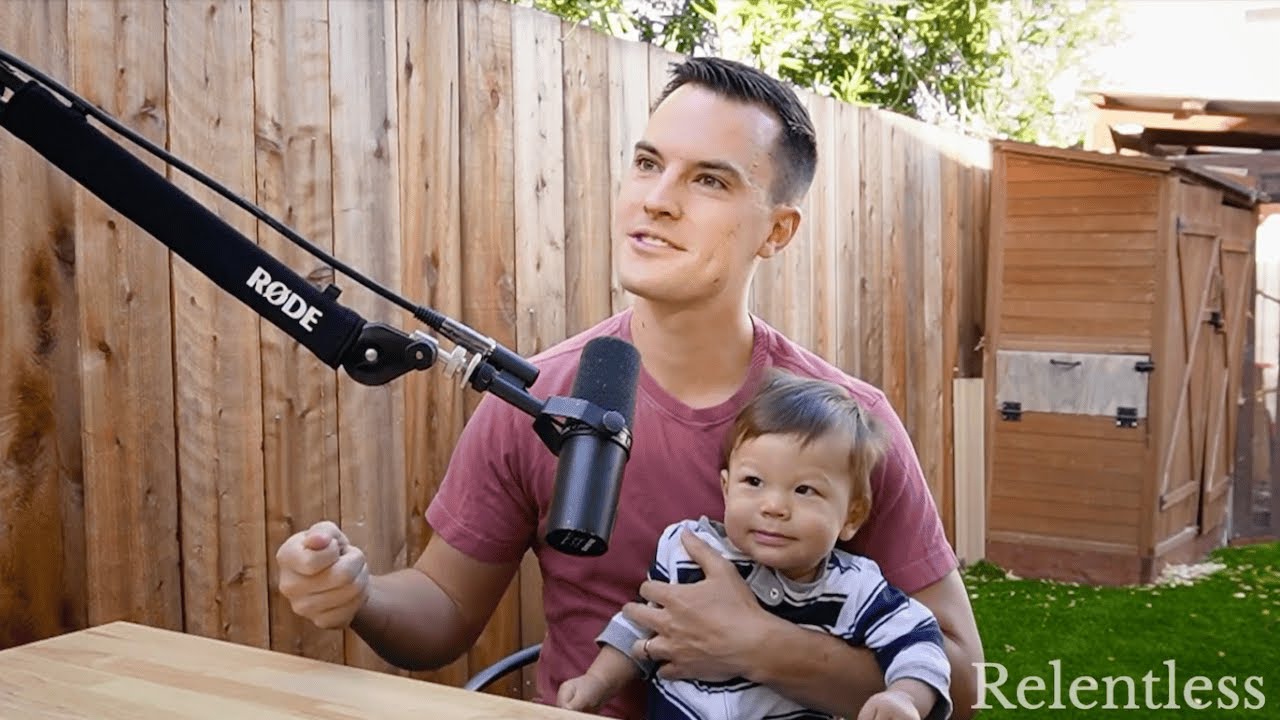
Christian Keil is a VP at Astranis, a company building high-orbit satellites to connect the world, and hosts the First Principles podcast, where he explores how to build hardtech startups. His path to this role was shaped by early experiences in debate, corporate consulting, and a failed telecom startup, all of which taught him about competition, incentives, and the difference between pursuing success for its own sake versus pursuing meaningful work.
Early Life and Formative Experiences
Grew up in Minnesota in a highly religious household; his father worked in mergers and acquisitions (eventually becoming CEO of franchise businesses like Honey Baked Ham), and his mother was an economics professor who brought him to her lectures as a child.
Fell away from religion not out of active disbelief but from a lack of reason to believe, which sparked a deep dive into science, philosophy, and apologetics—eventually leading him to write a book titled Agnostic.
Was deeply involved in competitive youth sports until a growth spurt left him too small for high school teams, forcing an identity shift.
Found a new identity in Lincoln-Douglas debate, rising from a novice to having the second-most bids in the nation his senior year—a trajectory that taught him how to operate at the top of a competitive field through preparation, judge research, and relentless practice.
Education and Early Career
Applied only to elite schools (Harvard, Yale, Princeton, Stanford) based on the norms of top debaters but was rejected from all, largely due to unfamiliarity with upper-class social cues (e.g., not knowing art history was a major).
Chose the University of Michigan for its Big Ten culture and family legacy; majored in psychology, then added economics and statistics.
Interned at Target headquarters, where he finished a four-person project in weeks and spent the rest of the summer confused about what others were doing—earning the superlative “most likely to look over your laptop.”
Landed a job at Deloitte through a connection via his father; worked in strategy consulting on telecom projects (AT&T, Verizon, Sprint), experiencing intense 60–80-hour weeks and rapid exposure to different companies and industries.
The Consulting Experiment
Ran a two-year experiment at Deloitte to test what drove promotion: one year he worked extremely hard (top 15–25% rating), the next he focused on networking with decision-makers (top rating).
Realized he didn’t want to win a game where politics outweighed merit, so he left for business school when Deloitte required it for advancement.
Applied to Stanford, Berkeley, and MIT; was waitlisted at Stanford until the final 10, then rejected just as he drove cross-country to California—ultimately attending Berkeley Haas.
First Startup: Drect
Founded Drect during business school with the idea of decentralizing telecom roaming record processing using blockchain, eliminating costly centralized clearinghouses.
Raised interest from VCs and received a term sheet, but turned it down after realizing he lacked conviction to spend a decade on the idea—even though it was technically sound and later adopted as an industry standard.
Learned a critical lesson: don’t pursue funding unless you’re willing to dedicate years to the problem; advice from MyFitnessPal’s co-founder Albert Wenger was pivotal.
Joining Astranis
After rejecting the startup path, sought a small, mission-driven startup in telecom; Astranis (founded 2016) fit perfectly—connecting the world via satellites.
Initially rejected for a supply chain role (lacked experience), but reapplied for a finance role after securing another offer, using it as leverage.
Impressed the team by preparing 12 ready-to-present stories for his interview and spending 20+ hours on a take-home project (vs. the suggested 3–5).
Astranis’s recruiting strength lies in hiring “10 standard deviations above average” people—those who break the distribution, not just top performers within it. Early hires included Elon Musk’s favorite structural engineer and Qualcomm radio designers.
The company values hands-on hardware experience, intense interview projects (e.g., designing a CubeSat navigation system), and universal participation in recruiting.
Building the Hardware Startup Playbook
Noted that while software startups have decades of documented playbooks (e.g., Andreessen Horowitz’s frameworks), hardware lacks equivalent guidance.
Observes that current hardtech founders overfit on SpaceX/Tesla models (vertical integration, premium-first), ignoring context and scale.
Launched the First Principles podcast to extract reusable frameworks for hardware startups—focusing on technical feasibility (does it violate physics?), market existence, and founder capability.
Emphasizes distinguishing between “sounds crazy” and “is impossible,” citing Reflect Orbital (space mirrors for solar farms) as an example of a polarizing but plausible idea unfairly dismissed due to unfamiliarity.
Advocates for engineering-first evaluation over pattern-matching (e.g., trusting founders