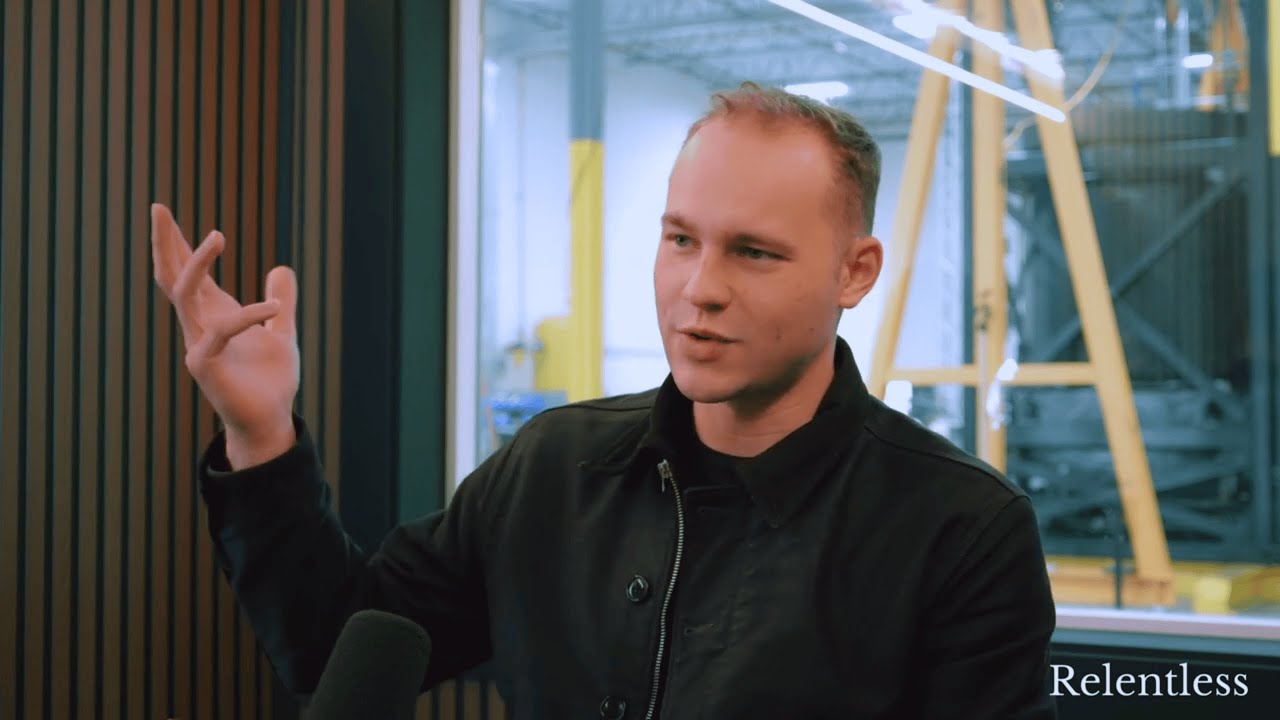
Valar Atomics, founded by Isaiah Taylor, is building nuclear reactors at unprecedented speed by treating nuclear energy like a manufacturing problem rather than a construction problem. The company’s core philosophy is simple: to build nuclear reactors, you actually have to build nuclear reactors. They are developing mass-manufactured, small-scale nuclear reactors (around 25 megawatts electric each) that can be deployed in arrays of hundreds to create gigawatt-scale power sites, with the ultimate goal of producing the cheapest energy in the world and making tens of thousands of reactors.
Why nuclear slowed down and what’s changing
The first nuclear reactors (Chicago Pile 1, Chicago Pile 2, X-10 at Oak Ridge) were built in as little as 4–9 months in the 1940s. Today it takes roughly 15 years to license and build a commercial reactor in the United States.
The slowdown came from two sources: the licensing process ground to a near halt (the NRC granted only four new reactor licenses from 1979 to today), and the industry stopped innovating by building test reactors. The original AEC ran dozens of reactor experiments rapidly; after it was split into the DOE and NRC, neither agency effectively supported innovation.
The regulatory framework was designed in 1946 to protect a US monopoly on nuclear technology, but it ended up slowing the US more than any competitor. Russia and China developed nuclear capabilities anyway, while the US eroded its own ability to build and innovate.
Recent executive orders from the Trump administration aim to reset American nuclear policy, shifting from protecting a monopoly to actively building and dominating global nuclear construction. The president mandated that three advanced reactors must turn on and split atoms on American soil by July 4, 2026 (the 250th birthday of the United States).
The Valar Atomics approach: build fast, learn by doing
Valar’s first prototype, called Ward Zero, is a non-nuclear thermal prototype built in 12 months on a seed round. It is a 1:1 scale replica of a nuclear reactor core but uses silicon carbide and grid power instead of uranium, allowing the team to test materials, seals, and systems at temperatures approaching 2,000°C without the regulatory burden of handling nuclear fuel.
The paperwork and licensing to put uranium in the device would take 2–3 times longer than building it, so the team built everything else first to learn as much as possible.
Isaiah argues that real learning comes from real hardware: bolts break, seals leak, suppliers miss deadlines. You can spend years in analysis and planning and still not be close to the goal. The only way to gain experience is to build, test, break, fix, and iterate.
The company moved through four locations in about 14 months, each time outgrowing the previous space. When a lease negotiation stalled, Isaiah found a new facility and had a lease signed within three days, with the team moving in within three weeks.
Before even occupying the new building, the manufacturing team was already procuring and setting up an in-house machine shop, which was operational before Thanksgiving. This allowed them to fix supplier errors and hit their build timeline to the day.
Product strategy: start small, scale through manufacturing
Valar deliberately avoided committing to a specific commercial reactor design before building any hardware. After building and testing Ward Zero, they converged on a 25 megawatt electric unit (internally called W3) as their commercial product, roughly 1.7 times larger than the prototype.
A gigawatt-scale site would use 40 of these units. The philosophy is to manufacture many small reactors rather than construct one large one, avoiding the labor cost, tooling, and environmental regulation problems that plague large construction projects.
Isaiah compares this to SpaceX’s Falcon 9: a reliable, repeatable unit that can be produced at scale and deployed in volume.
International strategy and the Philippines partnership
Valar reviewed over 80 countries to find the best regulatory environment for moving quickly. The Philippines emerged as a key partner through a public-private partnership focused on turning on a nuclear reactor as fast as possible, with both sides gaining experience.
The company plans to build reactors in US allied countries where it is fastest and easiest to build, then work its way back to the United States as the domestic regulatory environment improves.
The lawsuit against the NRC
Valar is suing the NRC (along with co-plaintiffs Texas, Utah, Louisiana, Arizona, and Florida) over a regulatory inconsistency dating back to 1954. The Atomic Energy Act was amended to allow smaller, safer test reactors to exist outside federal oversight, but the NRC never updated its rules and continued regulating everything that splits atoms regardless of size or risk.
The lawsuit argues this is illegal and that Congress intended a class of small reactors beneath federal concern. If successful, states could regulate their own small nuclear reactors, dramatically accelerating deployment.
Hiring: anger as a filter
Valar’s team has grown to about 35 people. Isaiah hires for technical capability but also for drive and a specific emotional quality: anger. He looks for people who are angry that nuclear technology has been sitting on the shelf for 40 years, who cannot coexist with the status quo of nothing being built.
This often means hiring people who started in nuclear, got frustrated, went to other industries to build things, and came back ready to actually execute.
Fundraising philosophy: pre-seed is different
Isaiah went through over 80 rejections before Riot Ventures funded the entire pre-seed round. He argues that pre-seed is fundamentally misunderstood as a category.
Pre-seed founders, by definition, lack the track record and network to raise a seed round. Investors should evaluate whether the person is a killer who will get it done regardless, and if so, wire money immediately rather than waiting for a lead investor. Treating pre-seed like a traditional round with leads and valuations causes investors to miss the best founders.
If the founder is right, they will find the money; if you wait, you get competed out. If they are wrong, the money goes to zero anyway.
How Valar thinks about planning and time
The long-term north star is making the cheapest energy in the world. Everything else, including the exact reactor design, is held loosely and expected to change based on real-world learning.
Isaiah argues against the common approach of spending 5–6 years designing a full commercial operation on paper before building anything. Technology does not work like construction; it requires iterative hardware milestones, increasing sophistication, and rapid adaptation to new data.
He frames the time step as the most important variable in exponential growth. A shorter iteration cycle (one month vs. two years) matters more than a higher growth rate with a longer cycle. Valar compounds through real-world learning, hardware experience, and problem-solving, keeping the time step as short as possible.
This is also why they are not going through the NRC for their first reactor: the mandated timeline of five to six years per iteration is incompatible with rapid learning.
What’s next
Valar has a partnership with the state of Utah to turn on a reactor at the San Rafael Energy Research Center in Emery County by July 4, 2026, aiming to be one of the first three advanced reactors to split atoms on American soil under the president’s mandate.
In the immediate term, the team is focused on refueling operations for Ward Zero, learning how to stack and unstack the core, manage gaskets and seals, and push to higher pressures and temperatures to find failure points.
Isaiah’s personal life is entirely consumed by the company. He has four children and a supportive wife, and outside of family time, there is nothing else. He describes the focus as total and all-consuming, with the singular goal of splitting an atom within the next year.