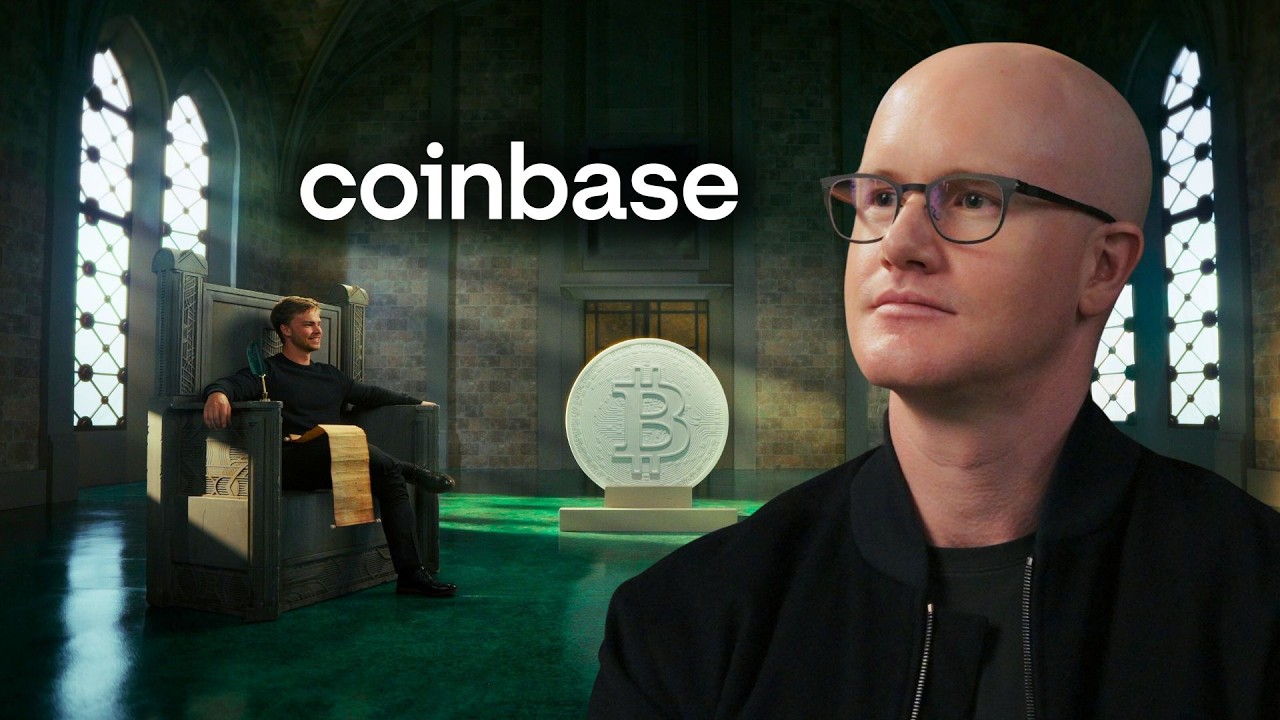
Brian Armstrong, co-founder and CEO of Coinbase, reflects on building one of the world’s largest crypto companies over 13 years, discussing leadership, decision-making, crisis management, and his long-term vision for economic freedom through cryptocurrency.
He describes himself as a “well-trained introvert” who learned to lean into his strengths rather than emulate a stereotypical charismatic CEO, and who found his voice around a simple narrative: crypto increases economic freedom by updating the financial system.
He is strongly biased toward action, believing most people fail because they never take the first step, and that launching imperfect products early produces more information than prolonged planning.
Wartime CEO mentality
Armstrong says he used to think he was better as a peacetime CEO but has completely flipped: he now thrives in wartime and even gets bored without a crisis.
He finds competition energizing and motivating, and believes the best companies are defined by how they handle crises.
He acknowledges this could mean running on cortisol, but balances it with exercise, morning routines, and scheduled downtime.
Defining moments of crisis
Early cold storage rebuild: Three to four years into Coinbase, the amount of crypto stored on live servers was growing so fast that a hack within 60 days would have made the company insolvent. Two cryptography experts said building a proper system would take a team of ten about two years. Armstrong and a small group of employees designed and built a new cold storage architecture in days, then migrated all funds while sleep-deprived, pair-programming every keystroke to avoid errors. He calls it one of the most important moments of his career.
Mission First blog post: Coinbase declared it would not engage in political or social activism in the workplace, focusing solely on its mission. It was controversial and many predicted mass departures, but far fewer people left than expected.
Suing the SEC: Armstrong chose to sue the SEC when he believed its chair was unlawfully trying to kill the crypto industry in the US. Most advisors told him not to, but Coinbase won the lawsuit, and customers frequently cite this as the reason they trust the brand.
Market structure legislation: Coinbase publicly criticized a draft of crypto market structure legislation it believed would be harmful, showing a pattern of speaking up even when it riles people up.
Decision-making and judgment
Armstrong believes leaders must develop judgment over time about when to be contrarian and when to defer to their team.
He has forced through decisions he later regretted, and has also been talked out of bad calls by his executive team, such as a full company acquisition that became a minority investment instead.
He uses a simple risk-reward framework: weigh the upside against the probability and magnitude of downside, and remember that inaction also carries risk.
He believes litigation is sometimes necessary to create legal precedent when the law is unclear, and that lawyers should take intelligent risks rather than just trying to avoid all lawsuits.
Anti-authority streak meets regulatory compliance
Armstrong describes himself as anti-authority as a child and individual, yet Coinbase has pursued the most regulated and compliant path in crypto.
He sees no contradiction: being anti-authority means not liking being told what to do, but building trust through legitimacy allows Coinbase to land the largest institutions and store more crypto than any other company.
He credits board member Fred Wilson with mastering the Socratic method, guiding Armstrong to answers by asking questions rather than giving direct orders.
Communication and storytelling
Armstrong describes three levels of communication: (1) simply telling people what’s in your head, (2) tailoring the message to the audience’s interests, and (3) starting by asking the other person what they want so you can frame your pitch around their answers.
He emphasizes simplicity: install one idea at a time, repeat it in the exact same words, and use multiple formats and messengers.
Physical demonstrations and tangible artifacts (like the Coinbase credit card) stick in people’s minds more than data alone.
Building the team and culture
Working with Fred Ehrsam: Coinbase’s co-founder was a beast from day one, adding value across recruiting, customer support, finance analysis, and external-facing work. Armstrong gave him more equity early to ensure he would stay through the inevitable ups and downs. Fred shielded Armstrong from many external obligations while Armstrong focused on coding, and together they played to complementary strengths.
Personnel decisions: Early on, Coinbase had a scarcity mentality because it was hard to recruit talent against Google and Meta. As the company went remote-first and the zero-interest-rate environment ended, it developed a healthier culture with less tolerance for people who didn’t collaborate or live the values.
Next Bets program: Twice a year, any employee can pitch a new idea to a panel of leaders. They only need one yes to get funded, modeled after pitching VCs. This program produced USDC and the Base blockchain. Resources are allocated 70/20/10 across core business, adjacent bets, and venture bets.
Acquisitions: Armstrong has looked at roughly 50 deals and completed about 10 in a year. While the team uses structured scoring, he believes the best acquisitions come down to whether the people are great and whether the combined potential feels like a “hell yes.” The best acquisitions in Coinbase’s history were people who became killer executives, regardless of what the acquired company originally did.
Fundraising, recruiting, and getting truth from people
Armstrong says getting truth out of people is hard, especially when you’re their boss. He tries to reward public disagreement and surface examples where he was wrong, but also recognizes that a company can’t just be a complaint inbox.
He looks for people who are high agency, great communicators, high integrity, and who raise his energy.
He uses dinners as a tool to convene experts in any field he’s trying to learn about, and has even started companies from ideas that emerged at such dinners, including two companies from a dinner series on embryo gene editing.
Burnout and sustainability
Armstrong experiences burnout every couple of years and has learned to delegate, hire people better than him at certain tasks, and let go of ego.
He schedules four week-long vacations a year in advance because there’s never a natural good time. He typically sleeps in, goes to the gym, has brunch, does one hike, and spends the rest of the time reading, calling people, and thinking about the future.
He believes building a company should be hard enough to be fulfilling, like a video game where every level is challenging.
Proof of work and leaving a trail
Armstrong values proof of work, both quantitatively (revenue numbers, growth graphs) and anecdotally (stories of people sending money home without paying 10% fees).
He believes in leaving a trail of remarkable moments that are self-evident, whether through iconic product launches or stories of teams rising to impossible challenges.
Bitcoin, stablecoins, and the future
Armstrong sees the financial system being updated in real time onto crypto rails. His three current priorities are: (1) the “everything exchange” where all asset classes trade on-chain 24/7, (2) stablecoin payments that are instant and cost less than one cent, and (3) self-custodial wallets and DeFi to get a billion people on-chain.
He views Bitcoin as the new gold standard, a check and balance on fiscal discipline. If the US maintains low inflation and deficit spending, the dollar thrives; if not, Bitcoin serves as the provably scarce, decentralized alternative.
Long-term, he envisions special economic zones and even crypto cities where governance, land rights, and the entire economy run on blockchain, creating sandboxes for innovation in biotech, energy, drones, and more.
Personal philosophy and vices
Armstrong channels his addictive personality into business, which gives him the same resource-collection and civilization-building satisfaction as games like Civilization and Starcraft.
He believes people are born with predispositions to different addictions, and that some are lucky enough to have ones that produce value in society.
He is highly disciplined in work mode, wearing the same thing every day, keeping consistent routines, and optimizing meals and exercise, but loosens up on weekends and vacations.
He never leaves a meeting without clear next steps: who is doing what by when, written down and reviewed on screen before the room disperses.